Biblical mystery solved: Ancient Canaanites DNA lives on in Lebanese

Screen Shot at PM

The Canaanites lived at the crossroads of the ancient world. They experienced wars, conquests and occupations for millennia, and as a result evolutionary geneticists expected that their DNA would become substantially mixed with incoming populations.

Astonishingly, new genetic analysis shows that scientists were wrong. According to a new study in the American Journal of Human Genetics, today’s Lebanese share a whopping 93% of their DNA with the ancient Canaanites.

canaanites
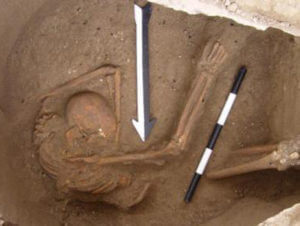
One of five Canaanites found buried in present-day Lebanon from which scientists extracted and sequenced DNA. Photo by Dr. Claude Doumet-Serhal/the Sidon excavation

Archaeologists at the Sidon excavation site have been unearthing ancient Canaanite secrets for the last 19 years in the still-inhabited Lebanese port city…

They sequenced the whole genomes of five individuals found in Sidon who lived about 3,700 years ago. The team then compared the genomes of these ancient Canaanites with those of 99 Lebanese people currently living in the country, along with the previously published genetic information from modern and ancient populations across Europe and Asia.
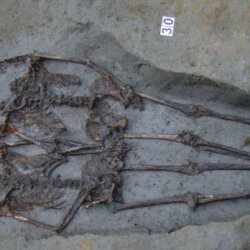

…This evidence supports the idea that different Levantine cultural groups such as the Moabites, Israelites, and Phoenicians may have had a common genetic background, the authors said.

The findings have powerful cultural implications…In a country struggling with the ramifications of war and a society fiercely divided along political and sectarian lines, religious groups have often looked to an uncertain history for their identities.

The GLP aggregated and excerpted this article to reflect the diversity of news, opinion, and analysis. Read full, original post: The DNA of ancient Canaanites lives on in modern-day Lebanese, genetic analysis shows


{{ reviewsTotal }}{{ options.labels.singularReviewCountLabel }}
{{ reviewsTotal }}{{ options.labels.pluralReviewCountLabel }}
{{ options.labels.newReviewButton }}
{{ userData.canReview.message }}

Related Articles

Infographic: Global regulatory and health research agencies on whether glyphosate causes cancer

Infographic: Global regulatory and health research agencies on whether glyphosate causes cancer

Does glyphosate—the world's most heavily-used herbicide—pose serious harm to humans? Is it carcinogenic? Those issues are of both legal and ...

Most Popular

ChatGPT-Image-Mar-10-2026-01_39_01-PM
Viewpoint—“Miracle molecule” debunked: Why acemannan supplements don’t work
afb-a-b
As the EU loosens restrictions on agricultural gene editing, it remains years behind the rest of the world on equally-safe GMO foods
ChatGPT-Image-Jul-8-2026-12_32_48-PM
Viewpoint: SCOTUS strikes a blow against junk science in Bayer glyphosate case. Will it deter mass tort litigators?
Screenshot-2026-07-10-at-2.02.54-PM
Viewpoint: In abortion-restricting Florida, misinformation abounds when Republican congresswoman faces an ectopic pregnancy
ChatGPT-Image-Jul-7-2026-01_57_55-PM
Viewpoint: Europe’s rejection of air conditioning is the poster child for misunderstanding how to mitigate the impact of climate change
Screenshot-2026-07-10-at-3.10.50-PM
Snake-oil cures throughout history
ChatGPT-Image-Jun-25-2026-12_23_17-PM
No, Bill Gates did not secretly engineer ticks to promote veganism
Screen-Shot-at-PM-pe-vra-kipgaprbdo-vd-ms-jpule-n-jqqaxf-l-e
Viewpoint: Will new breeding techniques help make European agriculture more competitive?
Screenshot-2026-07-10-at-12.55.21-PM
Cancer health facts are particularly susceptible to online misinformation
Screenshot-2026-07-10-at-3.25.10-PM
Using AI for health questions? Here are 4 tips for the most accurate answers.
ChatGPT-Image-Jul-1-2026-03_33_49-PM
‘Alternative’ cancer treatments that could kill you
Screenshot-2026-07-08-at-11.25.14-AM
AI being mobilized to target misinformation about vaccines–on AI
glp menu logo outlined

Get news on human & agricultural genetics and biotechnology delivered to your inbox.