Polygamy and disease: Intermarrying Mormon town faces genetic disaster

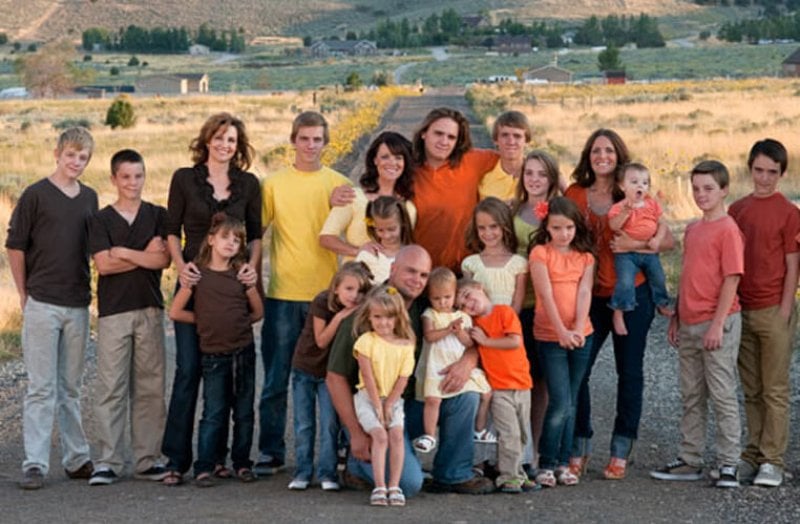
abc polygamy family jef wmain

Brigham Young, who led the [Mormons] back in the mid-19th Century, was a passionate believer in [polygamy]. By the time he died, his family had swelled to 55 wives and 59 children.

Fast-forward to 1990, a century after polygyny was abandoned, and the upshot was only just beginning to emerge….[A] 10-year-old boy was presented to Theodore Tarby, a doctor specializing in rare childhood diseases. The boy had unusual facial features [and] was also severely physically and mentally disabled.

[S]oon Tarby had diagnosed a total of eight new cases…from the same region on the Arizona-Utah border, known as Short Creek…In this small, isolated community of Fundamentalist Church of Jesus Christ of Latter-Day Saints (FLDS), the likelihood of being born with fumarase deficiency is over a million times above the global average.

p n p
Colorado City is one of the two towns where the remote community live (Credit: iStock)

According to local historian Benjamin Bistline, 75 to 80% of people in Short Creek are blood relatives of the community’s founding patriarchs, Joseph Jessop and John Barlow.

“With polygyny you’re decreasing the overall genetic diversity because a few men are having a disproportionate impact on the next generation,” says Mark Stoneking, a geneticist at the Max Planck Institute for Evolutionary Anthropology, Germany.

The GLP aggregated and excerpted this blog/article to reflect the diversity of news, opinion, and analysis. Read full, original post: The Polygamous Town Facing Genetic Disaster

{{ reviewsTotal }}{{ options.labels.singularReviewCountLabel }}
{{ reviewsTotal }}{{ options.labels.pluralReviewCountLabel }}
{{ options.labels.newReviewButton }}
{{ userData.canReview.message }}

Related Articles

Infographic: Global regulatory and health research agencies on whether glyphosate causes cancer

Infographic: Global regulatory and health research agencies on whether glyphosate causes cancer

Does glyphosate—the world's most heavily-used herbicide—pose serious harm to humans? Is it carcinogenic? Those issues are of both legal and ...

Most Popular

Screenshot-2026-04-23-at-11.00.36-AM
Regulators' dilemma: Thalidomide, Metformin, and the cost of getting drug approvals wrong
Picture1-5
Science Disinformation Gap: The transatlantic battle over social media and censorship
ChatGPT-Image-May-13-2026-11_56_08-AM
After slashing global health aid by $19 Billion, Trump moves to tap $2.1 billion more—to cover shutdown costs
ChatGPT-Image-May-12-2026-08_39_41-PM
GLP podcast: Big Pharma, Big Ag, Big Food—health harming industries or life-saving innovators?
ChatGPT Image May 10, 2026, 08_16_59 PM 2
Overmedicalization? RFK Jr.’s antidepressant crackdown raises conflict questions over his fee stake in Wisner Baum, the tort firm built on suing drug makers
Screenshot-2026-05-12-at-9.58.31-PM
'He seems fine': Marty Makary out as FDA commissioner
Screenshot-2026-05-01-at-1.29.41-PM
Viewpoint: What happens when whole grains meet modern food manufacturing? Labels don’t tell the whole story.
Picture1-1
Cooling the planet with balloons: Could a geoengineering gamble slow global warming?
ChatGPT-Image-Apr-13-2026-02_20_22-PM
Viewpoint: Misinformation infodemic? Why assessing evidence is so challenging 
Screenshot-2026-05-11-104424
Hantavirus outbreak research: Trump administration shut down study last year on rodent-to-human transmission
S
As vaccine rejectionism spreads, measles may be taking a more dangerous turn
ChatGPT Image May 12, 2026, 10_19_00 AM 2
Viewpoint— 'Muscular governance': How authoritarianism is surging corporate-linked energy misinformation
glp menu logo outlined

Get news on human & agricultural genetics and biotechnology delivered to your inbox.