Healthcare inequality and genetic screening: Will the poor be left behind?

BN EW edp GR e

Today in America, if you are poor, you are also more likely to suffer from poor health…

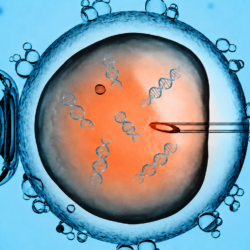
Imagine now, that in the future, being poor also meant you were more likely than others to suffer from major genetic disorders like cystic fibrosis, Tay–Sachs disease, and muscular dystrophy. That is a future, some experts fear, that may not be all that far off.

…

Most genetic diseases are non-discriminating…But for some parents, prenatal genetic testing has turned what was once fate into choice. There are tests that can screen for hundreds of disorders…That is, if they can pay for it. Without insurance, the costs of a single prenatal test can range from a few hundred dollars up to $2,000.

…
“Genetic disease has always been our shared vulnerability,” [Laura Hercher, a genetic counselor and professor at Sarah Lawrence College] wrote in Genome. “When one part of society can opt out of risk, will they continue to feel the same obligation to provide support and resources to those who remain vulnerable, especially if at least some of them have deliberately chosen to accept the risk?”

Hercher presents what is really a common vision of dystopia: a future of genetic haves and have-nots in which inequality becomes encoded in our basic biology.

The GLP aggregated and excerpted this blog/article to reflect the diversity of news, opinion, and analysis. Read full, original post: Will Healthcare Inequality Cause Genetic Diseases to Disproportionately Impact the Poor?

Related Articles

Infographic: Global regulatory and health research agencies on whether glyphosate causes cancer

Infographic: Global regulatory and health research agencies on whether glyphosate causes cancer

Does glyphosate—the world's most heavily-used herbicide—pose serious harm to humans? Is it carcinogenic? Those issues are of both legal and ...

Most Popular

ChatGPT-Image-Mar-10-2026-01_39_01-PM
Viewpoint—“Miracle molecule” debunked: Why acemannan supplements don’t work
Screenshot-2026-09-22-at-12.26.15-PM
‘Forever chemical’ concerns: Separating hysteria from reasonable concern in the debate over PFAS danger
Screenshot-2026-10-06-at-2.36.47-PM
Is organic farming really more sustainable? 100 recent studies say ‘no’
Screenshot-2026-10-06-at-11.13.59-AM
RFK Jr.’s plan to curb America’s appetite for ultra-processed foods and artificial dyes blocked by the White House
Screenshot 2026-10-08 at 1.34
Hooked on kratom: The unregulated, natural, alcohol-free “social tonic” that is destroying lives 
Radioactive-Americana-Collage-2
The kooky logic behind the raft of spurious cancer claims from Harvard’s T.H. Chan School of Public Health
Screenshot-2026-09-28-at-11.26.17-AM
Viewpoint: Wellness movement activists reposition nicotine from a killer addictive drug into a cure-all for brain ills
Resolute-Portrait-with-Injured-Teddy-Bear
Anti-vax Texas Senate candidate Ken Paxton alleges conspiracy by doctors, drugmakers, and insurers to push childhood vaccination for profit
Supreme-Court-Amid-Climate-Crisis
Should fossil fuel companies be shielded from lawsuits over climate change damage? The Supreme Court takes up the question
Screenshot-2026-09-22-at-10.54.12-AM
‘They misunderstand science’: Research attempting to tie autism to changes in the gut microbiome comes under fire
strand of dna genetics
No, GMO foods do not “damage genes, natural disposition and hormones, or decrease physical health and intelligence”
Childrens-Health-Defense-Press-Briefing
Court links patient’s death to anti-vaccine doctor promoted by Kennedy’s Children’s Health Defense
No-Data-Center-Farm-Protest-Sign-2
Rural revival or corporate windfall? Trump’s One Big Beautiful Bill tax law opens the door to big breaks for data centers—but tech giants aren’t cashing in
glp menu logo outlined

Get news on human & agricultural genetics and biotechnology delivered to your inbox.