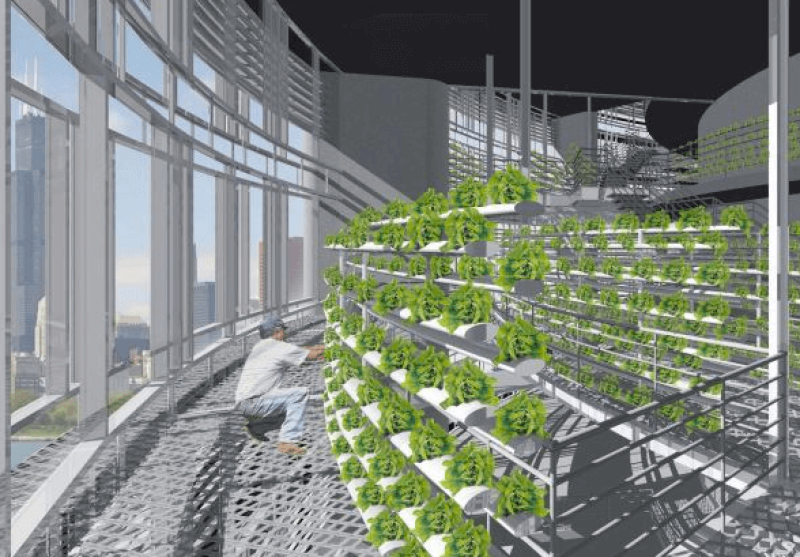
[In] their efforts to develop a system that sustainably supplies cities with a large share of their food, theorists and practitioners of vertical farming face insurmountable obstacles.
…
Consider what it would take to provide fresh produce to just 15,000 city dwellers; that would be about 2 percent of the population of the District of Columbia.
That was the objective of a favorable 2013 analysis of vertical gardening by GIZ, a German engineering group. They estimated that the project would require a 150 x 150 square-foot building with 37 stories. It would cost a quarter billion dollars to construct and equip and would consume $7 million worth of electricity annually. Those estimates led them to conclude, “It is possible to grow only high value crops for consumers who have disposable income for such products.”

In other words, such buildings would not serve 15,000 people of modest means. Were vertical gardeners ever to venture beyond leafy greens into growing a full range of vegetables, the sky-high inputs of capital, resources (especially electricity) and labor would limit the reach of their produce to a boutique market.
So the original aim of vertical cropping’s proponents — to protect the soils of America’s farm country by taking much of that land out of production — was well-meant but futile.
The GLP aggregated and excerpted this article to reflect the diversity of news, opinion and analysis. Read full, original post: Enough with the vertical farming fantasies: There are still too many unanswered questions about the trendy practice