How one farmer stood up to anti-GMO activists and the Italian state—and won

WCCOR L C BAP MGZOOM
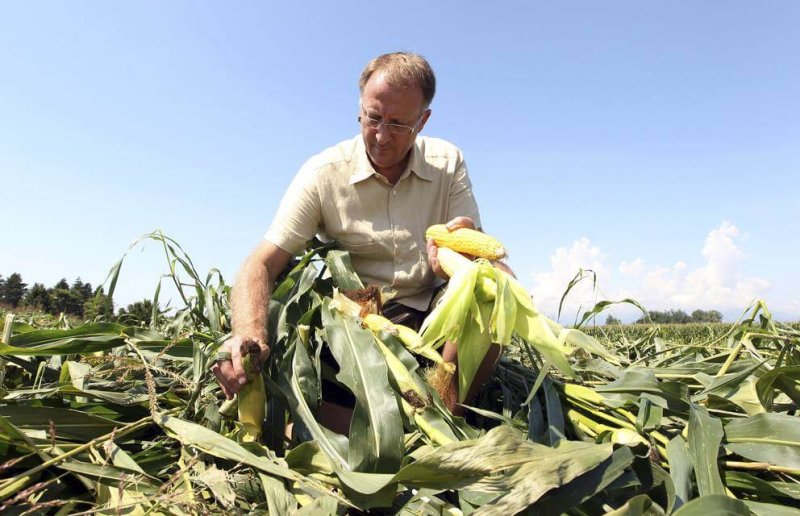
Giorgio Fidenato's corn fields were destroyed by anti-GMO activists.

As chair of the local farmers federation [Giorgio Fidenato, a small-holder farmer growing corn, tomatoes and soybeans in Italy] pushes for more sustainable agriculture and lower pesticide use — an effort that has driven him into an unlikely confrontation with environmentalists and even the Italian state.

Fidenato knew there was a solution to spraying: maize containing the insecticidal protein Bt, which has been cultivated for decades in North and South America, and was approved for cultivation by the European Union in 1998.

However, because it is classed as a “GMO,” insect-resistant maize is highly controversial in Europe. Farmers who try to cultivate it in order to reduce pesticide applications are persecuted and even taken to court, and national governments such as Italy and France have introduced bans to try to prevent farmers from exercising this choice.

Fidenato is no exception. When he first began to grow MON810 maize, anti-GMO activists invaded his field and destroyed it.

Seeing that the Italian government had failed to produce any real scientific evidence against GMOs, Fidenato and his farmer allies were determined not to back down. They pressed their case all the way up to the European Court of Justice. And on Sept. 13, 2017, much to everyone’s surprise, they won.

The GLP aggregated and excerpted this article to reflect the diversity of news, opinion and analysis. Read full, original post: Italian farmer wages lonely battle against a continental tide of superstition

{{ reviewsTotal }}{{ options.labels.singularReviewCountLabel }}
{{ reviewsTotal }}{{ options.labels.pluralReviewCountLabel }}
{{ options.labels.newReviewButton }}
{{ userData.canReview.message }}

Related Articles

Infographic: Global regulatory and health research agencies on whether glyphosate causes cancer

Infographic: Global regulatory and health research agencies on whether glyphosate causes cancer

Does glyphosate—the world's most heavily-used herbicide—pose serious harm to humans? Is it carcinogenic? Those issues are of both legal and ...

Most Popular

79d03212-2508-45d0-b427-8e9743ff6432
Viewpoint: The Casey Means hustle—Wellness woo opportunism dressed up as medical wisdom
Screenshot-PM-24
Viewpoint: The herbicide glyphosate isn’t perfect. Banning it would be far worse.
ChatGPT-Image-Mar-27-2026-11_27_05-AM
The myths of “process”: What science says about the “dangers’ of synthetic products and ultra-processed foods
Screenshot-2026-04-03-at-11.15.51-AM
Paraben panic: How a flawed study, media hype, and chemophobia convinced the public of the danger of one of the safest classes of preservatives
Screenshot-2026-05-01-at-11.56.24-AM
‘Science moves forward when people are willing to think differently’: Memories of DNA maverick Craig Venter
ChatGPT-Image-Mar-3-2026-01_17_14-PM
MAHA wellness influencers deride proven anxiety medications, tout lifestyle fixes
ChatGPT-Image-Mar-10-2026-01_39_01-PM
Viewpoint—“Miracle molecule” debunked: Why acemannan supplements don’t work
ChatGPT-Image-Apr-30-2026-12_21_05-PM-2
The tech billionaires behind the immortality movement
d-b
Blocked arteries, kidney stones, nausea, constipation, fatigue: Long list of health problems caused by too much vitamin D 
glp menu logo outlined

Get news on human & agricultural genetics and biotechnology delivered to your inbox.