How plants learn and use memories for prediction and decision-making

Plants Have Their Own Internet

[Editor’s note: Laura Ruggles is a philosophy PhD candidate at the University of Adelaide in Australia.]

The idea that plants can behave intelligently, let alone learn or form memories, was a fringe notion until quite recently. Memories are thought to be so fundamentally cognitive that some theorists argue that they’re a necessary and sufficient marker of whether an organism can do the most basic kinds of thinking. Surely memory requires a brain, and plants lack even the rudimentary nervous systems of bugs and worms.

However, over the past decade or so this view has been forcefully challenged. … Plants are not simply organic, passive automata. We now know that they can sense and integrate information about dozens of different environmental variables, and that they use this knowledge to guide flexible, adaptive behaviour.

For example, plants can recognise whether nearby plants are kin or unrelated, and adjust their foraging strategies accordingly.

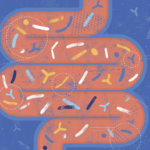
Plants also communicate with one another and other organisms, such as parasites and microbes, using a variety of channels – including ‘mycorrhizal networks’ of fungus that link up the root systems of multiple plants, like some kind of subterranean internet. Perhaps it’s not really so surprising, then, that plants learn and use memories for prediction and decision-making.

Read full, original post: The minds of plants

{{ reviewsTotal }}{{ options.labels.singularReviewCountLabel }}
{{ reviewsTotal }}{{ options.labels.pluralReviewCountLabel }}
{{ options.labels.newReviewButton }}
{{ userData.canReview.message }}

Related Articles

Infographic: Global regulatory and health research agencies on whether glyphosate causes cancer

Infographic: Global regulatory and health research agencies on whether glyphosate causes cancer

Does glyphosate—the world's most heavily-used herbicide—pose serious harm to humans? Is it carcinogenic? Those issues are of both legal and ...

Most Popular

Screenshot-2026-03-13-at-12.14.04-PM
The FDA wants to make many popular prescription drugs OTC—a great idea. Here’s why it’s unlikely to happen
Screenshot-2026-04-20-at-2.26.27-PM
Viewpoint — Food-fear world: The latest activist scientists campaign: Cancer-causing additives
Screenshot-2026-05-04-at-12.54.32-PM
How Utah became the country’s supplement capital  — and a haven for unregulated, ineffective and fake products
Screenshot-PM-24
Viewpoint: The herbicide glyphosate isn’t perfect. Banning it would be far worse.
images
The never-ending GMO debate: Pros and cons
Screenshot-2026-05-01-at-11.56.24-AM
‘Science moves forward when people are willing to think differently’: Memories of DNA maverick Craig Venter
Screenshot-2026-04-03-at-11.15.51-AM
Paraben panic: How a flawed study, media hype, and chemophobia convinced the public of the danger of one of the safest classes of preservatives
Screenshot-2026-04-30-at-2.19.37-PM
5 myths about summer dehydration that could damage your health — or even kill you
Screenshot 2026-05-06 at 2.56
Singularity crisis ahead? Can super babies save us from rogue AI geniuses?
bigstock opioids on chalkboard with rol
GLP podcast: 'Safe injection sites': enabling drug addiction or saving lives?
79d03212-2508-45d0-b427-8e9743ff6432
Viewpoint: The Casey Means hustle—Wellness woo opportunism dressed up as medical wisdom
ChatGPT-Image-May-1-2026-02_20_13-PM
How RFK, Jr.’s false vaccine claims are holding up $600 million to fight diseases in poor countries
glp menu logo outlined

Get news on human & agricultural genetics and biotechnology delivered to your inbox.