Bee-friendly pesticides? Protein discovery could lead to less toxic neonicotinoid insecticides

index
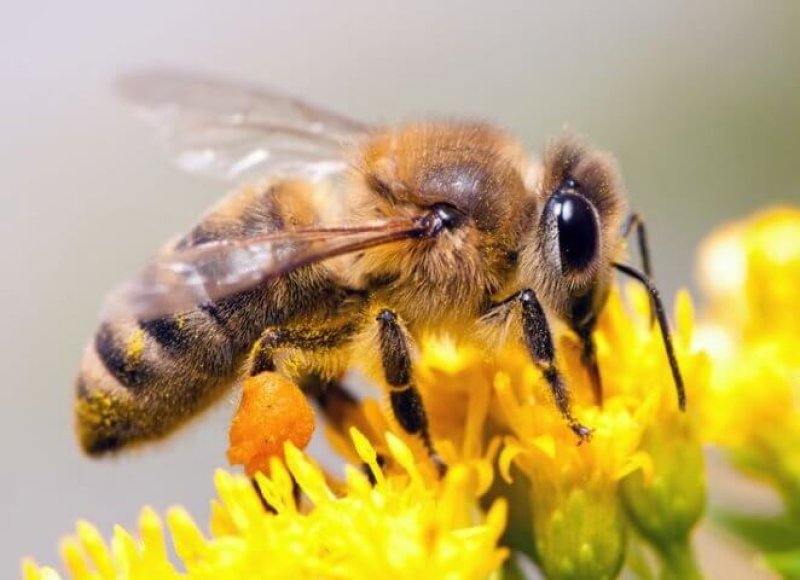
[S]tudies have shown that not all the compounds are equally toxic to [honeybees], suggesting that there might be variation in how the insects metabolize [neonicotinoids].

[A] team of academic and industry scientists in Europe have traced this differing sensitivity to an enzyme in the cytochrome P450 superfamily of proteins that can metabolize at least one neonicotinoid into a less toxic derivative. The findings, published [March 22] in Current Biology, raise the possibility of identifying bee-friendly pesticides based on their vulnerability to detoxification via this mechanism.

“They’ve provided an incredibly useful service in illuminating how honeybees process toxins,” says May Berenbaum, an entomologist at the University of Illinois at Urbana-Champaign who was not involved in the work. Given bees’ routine exposures to pesticides as they forage for food and pollinate crops, “it’s incredibly important to know this.”

Berenbaum emphasizes that the larger debate on neonicotinoid usage in agriculture needs to be understood in the context of additional bee stressors, from other pesticide classes to large-scale ecological disruptions such as habitat loss. “It’s an enormously complicated situation out there,” she says. “Focusing just on neonics, and thinking that banning neonics is going to fix things, I think really underestimates the magnitude of the problems that bees are dealing with.”

Read full, original post: Bees’ Molecular Responses to Neonicotinoids Determined

{{ reviewsTotal }}{{ options.labels.singularReviewCountLabel }}
{{ reviewsTotal }}{{ options.labels.pluralReviewCountLabel }}
{{ options.labels.noReviewsLabel }}
{{ options.labels.newReviewButton }}
{{ userData.canReview.message }}

Related Articles

Infographic: Global regulatory and health research agencies on whether glyphosate causes cancer

Infographic: Global regulatory and health research agencies on whether glyphosate causes cancer

Does glyphosate—the world's most heavily-used herbicide—pose serious harm to humans? Is it carcinogenic? Those issues are of both legal and ...

Most Popular

ChatGPT-Image-Mar-10-2026-01_39_01-PM
Viewpoint—“Miracle molecule” debunked: Why acemannan supplements don’t work
file-f-d-d-
Facts & Fallacies Podcast: Europe's AC debacle underscores fatal flaw in green activism
Screenshot 2025-09-17 at 12.41
Misinformation alert: No, glyphosate use in Canadian forests is not spurring more wildfires
ChatGPT-Image-Jul-9-2026-02_39_22-PM
Viewpoint: Polyphenols or NAD+ supplements to combat aging: No, Gwenyth Paltrow and followers, don’t waste your money.
ChatGPT-Image-Jul-8-2026-12_32_48-PM
Viewpoint: SCOTUS strikes a blow against junk science in Bayer glyphosate case. Will it deter mass tort litigators?
ChatGPT-Image-Jul-6-2026-02_25_26-PM
40 million Americans take glucosamine. If you have memory loss, it could accelerate cognitive decline.
afb-a-b
As the EU loosens restrictions on agricultural gene editing, it remains years behind the rest of the world on equally-safe GMO foods
Screenshot 2026-07-11 094410
Growing animal muscle and fat cells inside rice grains and calling it beef: One of numerous genetically engineered products shaking up our ecosystem
ChatGPT-Image-Jul-17-2026-12_42_10-PM
Viewpoint: RFK, Jr. is setting up a panel to compensate people who claim they were injured by a COVID vaccine–no proof needed 
ChatGPT-Image-Jul-7-2026-01_57_55-PM
Viewpoint: Europe’s rejection of air conditioning is the poster child for misunderstanding how to mitigate the impact of climate change
ChatGPT-Image-Jun-25-2026-12_23_17-PM
No, Bill Gates did not secretly engineer ticks to promote veganism
ChatGPT-Image-Jun-17-2026-03_29_08-PM
Viewpoint: What’s the impact of the U.S. abandoning support for global health?
px-Minced-beef-meat-cow-cattle
Can we trust Trump’s USDA to accurately report farm data? Beef export numbers suggest ‘no’.
glp menu logo outlined

Get news on human & agricultural genetics and biotechnology delivered to your inbox.