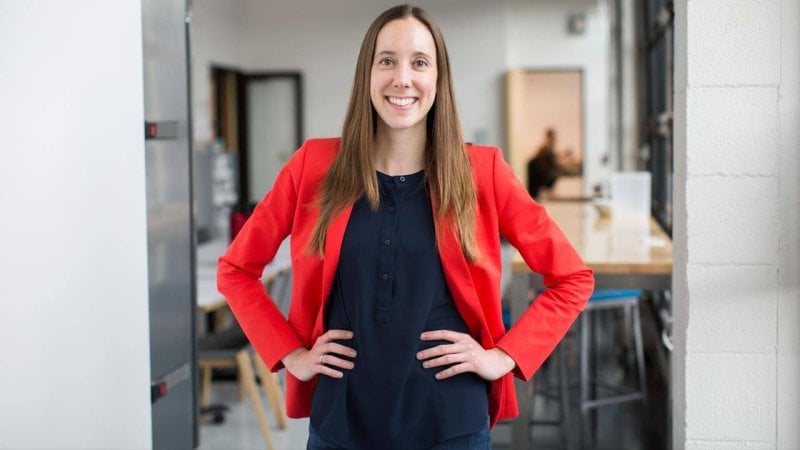
In a fashionable fitted blazer, Rachel Haurwitz looks the part of a polished executive when she meets me in the largest conference room of her company, Caribou Biosciences. She’s sharp and tactical as she speaks, even though it was just a few years ago that Haurwitz traded her lab coat for a tailored suit and stepped up to lead a staff of 46 as Caribou’s CEO.
…
[T]ucked away in back is a bright white laboratory where Haurwitz, 32, and her team are using CRISPR, a first-of-its-kind gene editor, to revolutionize food and medicine.…
Haurwitz has sharpened Caribou’s focus on medicine. They’re currently developing in-house products aimed at cancer treatment that will target microbes instead of cancer cells. “It’s using CRISPR to modify some of the bugs that live in and on us as a way to solve specific health issues,” Haurwitz explains, unable to reveal more at this early stage of development.

…
Despite the legal and logistical complexities of working with genetic technology, Haurwitz intends to put CRISPR-edited produce on grocery store shelves and offer CRISPR treatment options for cancer patients within the next five years. [Former board chairman Rodolphe] Barrangou thinks that’s possible given Haurwitz’s track record, but he cautions, “Five years in the age of CRISPR is an eternity. Five years ago, nobody knew we would be here right now.”
Read full, original post: This scientist turned CEO wants to gene-edit a way to cure cancer