California court rejects challenge of state’s decision to label glyphosate herbicide as possible carcinogen

PHVVZ IL NB TGKIJR KFYDRGQ
Image: Richard Levine/Sipa USA/TNS

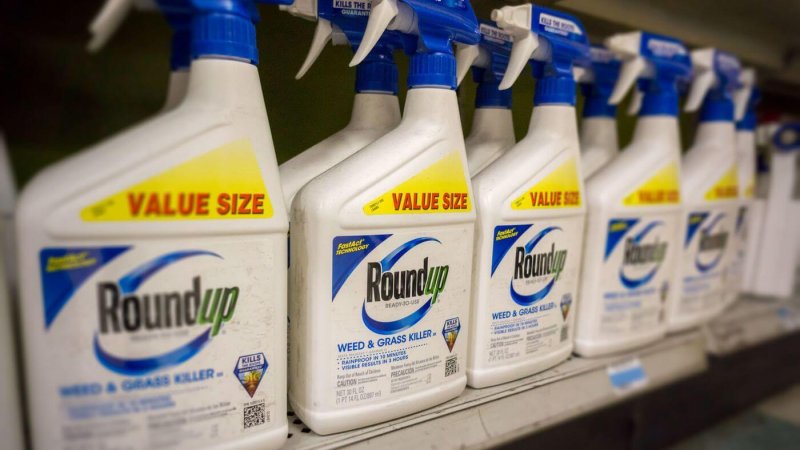
A state appeals court on [April 19] backed California’s listing of the widely used herbicide glyphosate as a possible cause of cancer and the state’s prohibition against discharging it into public waterways.

Citing new findings by the International Agency for Research on Cancer, state health officials added glyphosate to their list of potential carcinogens in July 2017….

Monsanto, backed by agricultural groups, immediately challenged the listing in both state and federal court. In February, a federal judge in Sacramento blocked the state from requiring Monsanto to put a warning label on glyphosate products, an action that had been scheduled to take effect in July.

U.S. District Judge William Shubb said the international agency’s findings had been contradicted by other studies, including one by the U.S. Environmental Protection Agency that found no link to cancer.

[The April 19] ruling involved a separate issue, Monsanto’s claim that the state was illegally delegating lawmaking powers to an unaccountable foreign agency, the International Agency for Research on Cancer. In rejecting that argument, the Fifth District Court of Appeal in Fresno preserved California’s authority to list glyphosate as a possible carcinogen and prohibit discharge of the chemical into waterways.

Monsanto could ask the state Supreme Court to review the ruling.

Read full, original post: State can label widely used herbicide as possible carcinogen

{{ reviewsTotal }}{{ options.labels.singularReviewCountLabel }}
{{ reviewsTotal }}{{ options.labels.pluralReviewCountLabel }}
{{ options.labels.noReviewsLabel }}
{{ options.labels.newReviewButton }}
{{ userData.canReview.message }}

Related Articles

Infographic: Global regulatory and health research agencies on whether glyphosate causes cancer

Infographic: Global regulatory and health research agencies on whether glyphosate causes cancer

Does glyphosate—the world's most heavily-used herbicide—pose serious harm to humans? Is it carcinogenic? Those issues are of both legal and ...

Most Popular

Screenshot-2026-07-09-at-1.09.25-PM
Anti-vaccine myths rattle health care
ChatGPT-Image-Mar-10-2026-01_39_01-PM
Viewpoint—“Miracle molecule” debunked: Why acemannan supplements don’t work
Screenshot 2026-07-28 at 3.22
Hidden hunger: Climate change is speeding up the decline of important nutrients in our food
Screenshot 2026-07-22 at 1.38
Viewpoint: Are the U.S. and Europe headed towards a repudiation of agricultural biotechnology red tape?
Screenshot 2026-07-28 at 3.03
What is cyberchondria?
Screenshot 2026-07-28 at 2.04
Viewpoint: How AI supercharges conspiracy theories and oversimplifications to distort online health information
organic scaled
Facts & Fallacies podcast: Organic food cuts pesticide exposure? A response to Dr. Rhonda Patrick
ChatGPT-Image-May-26-2026-11_51_01-AM
Viewpoint: RFK, Jr.’s depressingly misguided (and litigator-funded) crusade against antidepressants
png-terrace-Farm-asia
Europe’s tentative embrace of agricultural gene editing could revolutionize food production and health in Asia
ChatGPT-Image-Jul-9-2026-11_33_49-AM
Viewpoint: High-dose resveratrol supplements to extend health and life? Don’t waste your money.
Screenshot-2026-07-27-at-3.23.14-PM
Prioritizing AI, robotics, and nuclear energy: Trump administration is guiding research funding away from independent universities to private companies
ChatGPT-Image-Jun-25-2026-12_23_17-PM
No, Bill Gates did not secretly engineer ticks to promote veganism
ChatGPT-Image-Jul-10-2026-09_42_12-AM-1
Peptides, patient autonomy, and the limits of medical freedom
glp menu logo outlined

Get news on human & agricultural genetics and biotechnology delivered to your inbox.