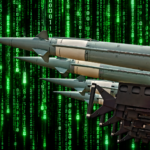
How artificial intelligence could push us closer to nuclear war

nuclear
Image credit: Laura Seydel Turner

As AI slowly erodes the foundations that made the Cold War possible, we may find ourselves hurtling towards all-out nuclear war. There’s a “significant potential” for artificial intelligence to undermine the foundations of nuclear security, according to a new report published [April 24] by the RAND Corporation, a nonprofit, nonpartisan research organization.

…

At the very core of this discussion is the concept of nuclear deterrence, in which the guarantee of “mutually assured destruction” (MAD), or “assured retaliation,” prevents one side from launching its nuclear weapons at an equally armed adversary. It’s a cold, calculating logic that has—at least to this stage in our history—prevented an all-out nuclear war.

…

But this arrangement could weaken and become destabilized in the event that one side loses its ability to strike back, or even if it starts to believe that it runs of the risk of losing that capability.

…
[A]dvanced artificial intelligence, in conjunction with surveillance technologies such as drones, satellites, and other powerful sensors, could erode the technological equilibrium that maintains the delicate Cold War balance. AI will achieve this through the mass surveillance of an adversary’s security infrastructure.

…

[T]he RAND authors propose international discussions, new global institutions and agreements, acknowledgement by rival states of the problem, and the development of innovative technological, diplomatic, and military safeguards.

Read full, original post: AI Could Dramatically Increase Risk of Nuclear War by 2040, Says New Report

Related Articles

Infographic: Global regulatory and health research agencies on whether glyphosate causes cancer

Infographic: Global regulatory and health research agencies on whether glyphosate causes cancer

Does glyphosate—the world's most heavily-used herbicide—pose serious harm to humans? Is it carcinogenic? Those issues are of both legal and ...

Most Popular

ChatGPT-Image-Sep-23-2026-02_36_39-PM
Viewpoint: After firing the entire National Science Board, Trump reshapes funding initiatives. Here’s the good and the bad.
ChatGPT-Image-Mar-10-2026-01_39_01-PM
Viewpoint—“Miracle molecule” debunked: Why acemannan supplements don’t work
sorghum farmers in kenya FARMERS TREND
Here are all the ways CRISPR gene editing is transforming Africa’s staple crops—and there’s a lot more innovation to come
ChatGPT-Image-Sep-10-2026-10_36_07-AM
Viewpoint: Even lousy scientific articles can shield authors when they hype dubious health claims and products
ChatGPT-Image-Sep-30-2026-01_25_34-PM
Blood tests for Alzheimer’s? The latest grifter, social media scam.
ChatGPT-Image-Sep-30-2026-01_11_07-PM
How U.S. teamed with Russia to block global human AI weapons oversight
ChatGPT-Image-Sep-30-2026-01_38_36-PM
Viewpoint: Died “with measles” vs. died “from measles”: RFK, Jr.’s dangerously subversive word games
Screenshot-2026-10-01-at-11.21.27-AM
Vaccine hesitancy, like malaria, surges globally, topping 35% in some countries
ChatGPT-Image-Sep-21-2026-03_15_09-PM
Viewpoint: Chipotle-inspired lesson: 10,000 sick customers suggest that processed foods can be safer than fresh ones
glp menu logo outlined

Get news on human & agricultural genetics and biotechnology delivered to your inbox.