Using CRISPR to build a ‘massive library’ of tools to cure genetic disease

Crispr
Image credit: Mike Faille

In the past few years, [David] Liu’s become one of the most brightly-shining luminaries in the rapidly advancing field of gene editing.

…

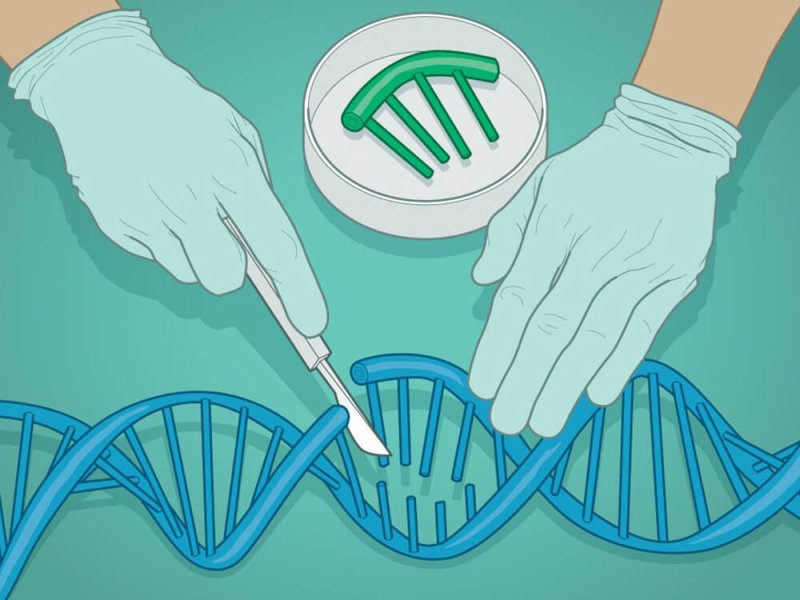
Now he’s setting his custom-built evolution engines loose on the molecular machines that cut, paste, erase, and edit DNA. His goal is to create a massive library of disease-targeting tools—so that one day when scientists want to make a genetic fix, they can just pull whichever one they need off the shelf.

…

[A] “base editor” [was] a modified Cas9 enzyme that didn’t cut DNA. Instead, it worked more like a pencil, rewriting single nucleotides to convert C:G base pairs to T:A. That kind of a fix could cure about 15 percent of the 32,000 single base errors that cause genetic disease. [Researcher Nicole] Gaudelli wanted to go after a bigger piece of the pie. If she could make an editor that flipped A:T to G:C, that would address half those diseases.

…

Seven rounds and two grueling years later she had her new base editor. Liu submitted their paper describing a way to fix half the disease-causing single base snafus to Nature.

…

“Taxpayers don’t support our research so that we can just publish more papers,” he says. “We have an obligation to return these technologies to the public for the benefit of society.”

Read full, original post: Inside a chemist’s quest to hack evolution and cure genetic disease

Related Articles

Infographic: Global regulatory and health research agencies on whether glyphosate causes cancer

Infographic: Global regulatory and health research agencies on whether glyphosate causes cancer

Does glyphosate—the world's most heavily-used herbicide—pose serious harm to humans? Is it carcinogenic? Those issues are of both legal and ...

Most Popular

Neon Syringe Portrait with BPC-157
Viewpoint: Peptides and medical freedom: The MAHA obsession that can damage your health
Glossy Plastic Bag of Tokens and Labels
Viewpoint: How CNN got played by environmental activists pushing a plastics scare and litigation agenda
Screenshot-2026-10-21-at-11.30.51-AM
Viewpoint: Yes, our food system stinks, but the attack of ultra-processed foods is often misplaced
ChatGPT-Image-Mar-10-2026-01_39_01-PM
Viewpoint—“Miracle molecule” debunked: Why acemannan supplements don’t work
Screenshot-2026-10-30-at-11.36.40-AM
An Earth-saving benefit of global warming?: How fossil fuel-burning humans stopped the looming Ice Age
Screenshot 2026-07-29 at 10.40
The COVID vaccine turbo cancer scare is back. Science still proves it’s wrong.
Robots in a Futuristic Conference Meeting
Helpful until we’re helpless? Researchers warn AI is gradually eroding human control
Screenshot-2026-10-30-at-11.20.30-AM
‘Silent killer’: Hepatitis B could surge under Trump–RFK Jr. rollback of newborn vaccine recommendations
Screenshot 2026-10-27 at 10.32
“Do your own research”: What Medicare’s annual open enrollment circus teaches us about the seductive trap of DIY health and science
Screenshot-2026-10-29-at-10.31.49-AM
Solar engineering to cool the planet might well work. Could it touch off a geoengineering arms race?
Screenshot 2026-10-20 at 1.37
Race against food rot: How AI and gene editing could slash fruit and vegetable waste
glp menu logo outlined

Get news on human & agricultural genetics and biotechnology delivered to your inbox.