‘Morally permissible’: Genetically altered babies get nod from UK ethics panel

gene
Image credit: Hannah Gal/SPL)

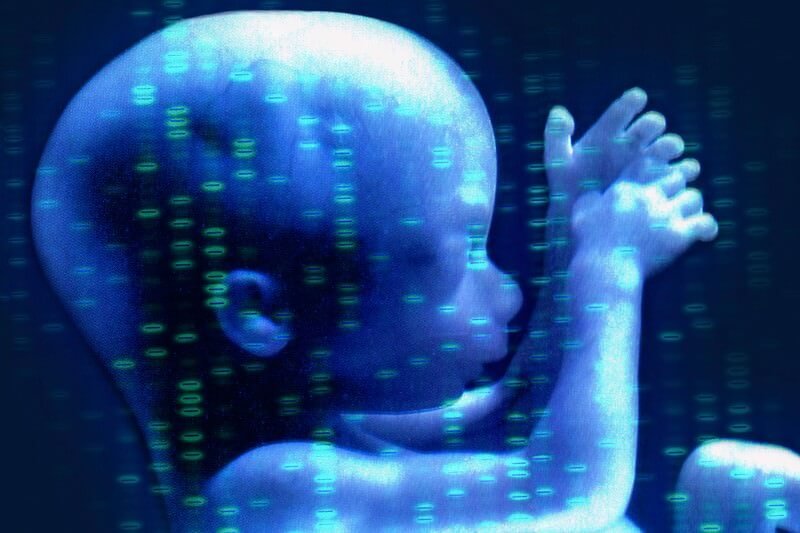
The creation of babies whose DNA has been altered to give them what parents perceive to be the best chances in life has received a cautious green light in a landmark report from a leading UK ethics body.

The Nuffield Council on Bioethics said that changing the DNA of a human embryo could be “morally permissible” if it was in the future child’s interests and did not add to the kinds of inequalities that already divide society.

But the report drew immediate criticism from some quarters, with one lobby group accusing the authors of opening the door to the unrestricted use of heritable genetic engineering, and an age of genetic haves and have-nots.

While laws in the UK and some other countries currently ban the creation of genetically altered babies, a handful of experiments around the world have shown that DNA editing could, in principle, prevent children from inheriting serious diseases caused by faulty genes.


Another consideration is that any changes made to an embryo’s DNA would affect all of its cells, including the sperm or eggs, meaning that genetic modifications would be passed down to all future generations.

In the event that the law is changed, gene editing of human embryos should be considered on a case-by-case basis by the fertility regulator, the Human Fertilisation and Embryology Authority, the report adds.

Read full, original post: Genetically modified babies given go ahead by UK ethics body

{{ reviewsTotal }}{{ options.labels.singularReviewCountLabel }}
{{ reviewsTotal }}{{ options.labels.pluralReviewCountLabel }}
{{ options.labels.newReviewButton }}
{{ userData.canReview.message }}

Related Articles

Infographic: Global regulatory and health research agencies on whether glyphosate causes cancer

Infographic: Global regulatory and health research agencies on whether glyphosate causes cancer

Does glyphosate—the world's most heavily-used herbicide—pose serious harm to humans? Is it carcinogenic? Those issues are of both legal and ...

Most Popular

Screenshot 2025-07-30 at 10.48
Can gene editing eliminate Down syndrome? Scientists have done it in lab-grown cells
ChatGPT Image May 26, 2026, 08_42_17 AM (1)
Viewpoint: Greenpeace and poison: How environmental advocacy groups rely on compliant (and often ignorant) journalists to spread disinformation and spark litigation
Screenshot-2026-05-28-at-1.36.28-PM
Viewpoint: Can mRNA research survive the Trump administration?
ChatGPT Image May 26, 2026, 08_21_36 AM
Limiting gender affirming interventions: Trump administration targets Texas even though it already bans youth access
Screenshot-2026-06-03-at-1.24.46-PM
Challenging anti-GMO disinformation: Why genetically-tweaked crops offer bushels of benefits
ChatGPT-Image-Jun-2-2026-03_04_17-PM
Viewpoint: Why the hyper-promoted doping ‘enhanced games’ pseudo Olympics flopped
ChatGPT-Image-May-26-2026-07_51_21-AM-2
Viewpoint: There are more than 1,000 chemicals in a cup of coffee—including many substances that can cause cancer. Why isn’t it banned?
ChatGPT-Image-Jun-3-2026-12_33_40-PM-2-1
Viewpoint—The end of ‘ivory tower science’: What does that even mean, and what comes next
ChatGPT-Image-Jun-2-2026-11_39_58-AM
Viewpoint: Who is RFK, Jr.’s newly-appointed CDC senior counselor, Sara Brenner — Vaccine skeptic and self-proclaimed “MAHA mom”
tick-DNA
GLP podcast: Spread meat allergy with gene-edited ticks? Bioethicists pose vile ‘thought experiment’
Picture1
Sounds we can’t hear — the hidden planetary signals behind science, fear, and misinformation
ChatGPT-Image-Mar-10-2026-01_39_01-PM
Viewpoint—“Miracle molecule” debunked: Why acemannan supplements don’t work
glp menu logo outlined

Get news on human & agricultural genetics and biotechnology delivered to your inbox.