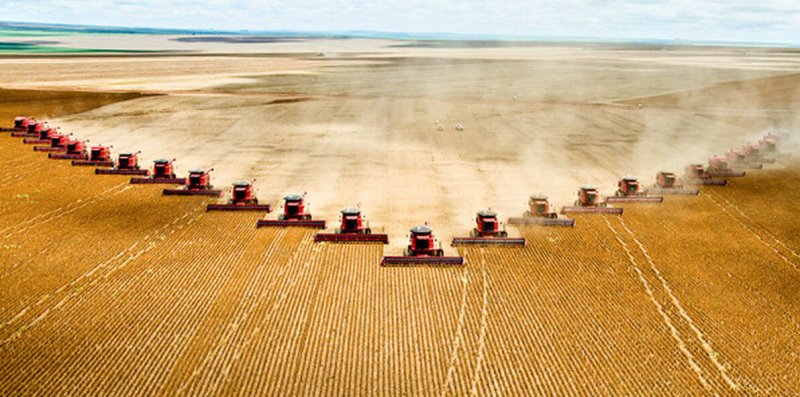
The assumption behind this opposition is that alternatives to high-yield farming are somehow better for the environment, reducing greenhouse gas emissions, soil erosion, as well as fertilizer inputs. Some activists, like Claire Kremen of the Berkeley Food Institute, even equate organic farming directly with biodiversity:
Increasing the proportion of agriculture that uses sustainable, organic methods of farming is not a choice, it’s a necessity. We simply can’t continue to produce food far into the future without taking care of our soils, water and biodiversity.
However, a new study published in Nature Sustainability turns that assumption on its ear—mostly.
The international study, headed by Andrew Balmford at Cambridge University, involved a review of existing research evaluating the relationships between yields and five side effects of higher yields: greenhouse gases, water use, nitrogen, phosphorus and soil loss. They looked at four agricultural types: Asian rice paddies, European wheat, Latin American beef and European dairies.
Instead of what was expected—the higher the yield, the more impact from these five effects—the researchers found that a number of high-yield practices were quite positive, reducing greenhouse gases, water use, soil loss and nitrogen and phosphorus levels. But—and this was a very important “but”—these benefits only worked if the higher yields resulted in land being set aside for nature.
“Agriculture already covers around 40 percent of Earth’s ice- and desert-free land,” the authors wrote. “How we cope with very marked increases in demand for farm products will have profound consequences for the future of global biodiversity.”
But, the researchers also warned, “Pursuing promising high-yield systems is clearly not the same as encouraging business-as-usual industrial agriculture.” Using higher yields to extract greater profit from the same area of land will not help preserve biodiversity and natural areas, they said.
Other biologists, notably the renowned Edward O. Wilson of Harvard, have stated that in order to truly preserve planetary biodiversity, about half of the planet’s surface must be set aside for pure nature. To help get there, researchers cite two key needs:
- Demand—cutting food loss and waste and reducing over-consumption of foods (in industrialized countries).
- Supply—Increasing production per area unit (high yield), sparing natural habitat.
Not a lot of numbers
One major finding the researchers made was that precious little data exists comparing yields with what they call “externalities” (greenhouse gases, water use, and other side effects of farming). In addition, many studies didn’t report levels of these effects completely enough to use and compare with other studies. So, sample sizes were far less than ideal.


Nonetheless, the researchers were able to apply a novel way to measure the effects of high-yield farming that they argued was more accurate than previous work. This involved measuring the impact per unit of crop (or cow or milk) produced, instead of measuring the impact per unit of land used. And this change in measurement, changed everything.
Actually measuring the yield in the four agricultural environments produced surprising results:
- Paddy rice—high-yield farming reduced water use, while applying nitrogen boosted yield without significantly affects greenhouse gas levels (per unit of crop produced).
- European wheat—adding nitrogen reduced land use but raised greenhouse gases, while adding urea also reduced land use without raising GHGs.
- Latin American beef—larger pastures meant more greenhouse gases, but land use and gas emissions could be reduced by specific pasture and grazing changes.
- European dairy—less grazing and more concentrate feed reduced land use and GHG emissions, as well as lower losses of nitrogen, phosphorus and soil.
The research, while on the surface countering anti-GMO advocates and supporters of supposedly “natural” and organic farming techniques, is backed by other scientists’ work. Alison van Eenennaam, an animal geneticist at University of California, Davis, has long criticized studies for only weighing comparisons with greenhouse gases. The Nature Sustainability study also addressed gases and noted that the dearth of data forced a gas-only comparison in certain areas, like European dairy.
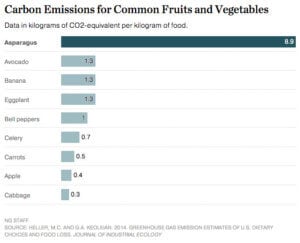
Van Eenennaam also has maintained that “sustainability” means making choices—compromises—among three pillars: animal welfare and “natural” environments, product safety, and decreased environmental impact. This study did not measure other variables, such as energy use or carbon dioxide production, which can come from transporting seemingly innocuous products like asparagus, which under current techniques creates a great deal of carbon dioxide.
A Genetic Literacy Project FAQ about sustainability, conventional and organic farming practices underscores the differences in perspectives:
Among scientists, there are fierce differences of opinion over whether conventional or organic farming has a larger environmental footprint. Organic farmers generally use less toxic chemicals and pay closer attention to soil health–organic matter, nutrients and microbial activity. Conventional agricultural intensification has a historically notorious record of wasting water, overusing fertilizers and pesticides, and polluting habitats. That’s changing as conventional farmers focus more on best practices. Multiple studies show that non-organic farming yields considerably more food with lower costs and in some cases lower inputs per acre. It often uses less water; and some GM crops, such as insect resistant Bt corn, soybean, cotton and eggplant, require less chemical pesticides than their organic counterparts.
So, what technique is the most sustainable of all? The answer is, it’ll depend. And yes, it is a lot about yield. Green and greed may not mix, but high-yield isn’t inherently evil if it results in less use of arable land and protecting existing forestry.
Andrew Porterfield is a writer and editor, and has worked with numerous academic institutions, companies and non-profits in the life sciences. BIO. Follow him on Twitter @AMPorterfield