Creating life from the ‘bottom up’: Can we make cells from scratch?

cell
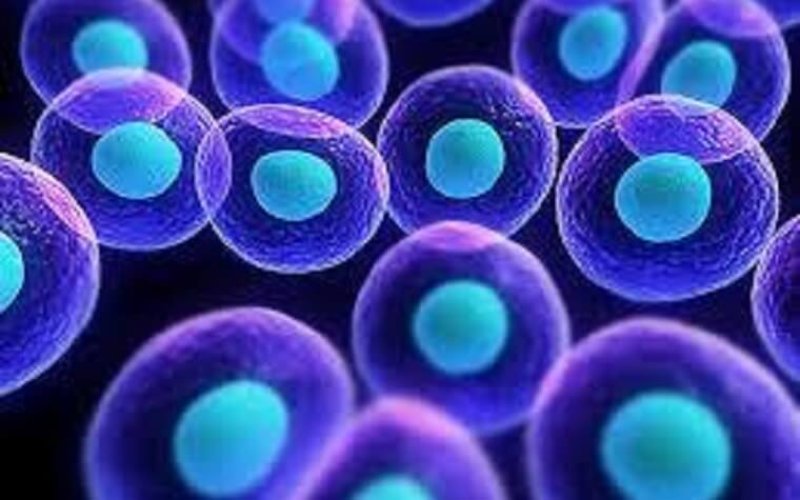
Image credit: Brown University

There were just eight ingredients: two proteins, three buffering agents, two types of fat molecule and some chemical energy. But that was enough to create a flotilla of bouncing, pulsating blobs — rudimentary cell-like structures with some of the machinery necessary to divide on their own.

To biophysicist Petra Schwille, the dancing creations in her lab represent an important step towards building a synthetic cell from the bottom up.

Synthetic cells could lead to insights about how life might look on other planets. And synthetic bioreactors under a researcher’s complete control might offer new solutions to treating cancer, tackling antibiotic resistance or cleaning up toxic sites. Releasing such an organism into the human body or the environment would be risky, but a top-down engineered organism with unknown and unpredictable behaviours might be even riskier.

[Biophysicist Marileen] Dogterom says that synthetic living cells also bring other philosophical and ethical questions: “Will this be a life? Will it be autonomous? Will we control it?”

[Meanwhile,] she and other synthetic biologists will keep pushing ahead exploring the frontiers of life. “The timing is right,” says Dogterom. “We have the genomes, the parts list. The minimal cell needs only a few hundred genes to have something that looks sort of alive. Hundreds of parts is a tremendous challenge, but it’s not thousands — that’s very exciting.”

Read full, original post: How biologists are creating life-like cells from scratch

{{ reviewsTotal }}{{ options.labels.singularReviewCountLabel }}
{{ reviewsTotal }}{{ options.labels.pluralReviewCountLabel }}
{{ options.labels.newReviewButton }}
{{ userData.canReview.message }}

Related Articles

Infographic: Global regulatory and health research agencies on whether glyphosate causes cancer

Infographic: Global regulatory and health research agencies on whether glyphosate causes cancer

Does glyphosate—the world's most heavily-used herbicide—pose serious harm to humans? Is it carcinogenic? Those issues are of both legal and ...

Most Popular

Picture1-5
Science Disinformation Gap: The transatlantic battle over social media and censorship
Screenshot-2026-04-23-at-11.00.36-AM
Regulators' dilemma: Thalidomide, Metformin, and the cost of getting drug approvals wrong
ChatGPT Image May 10, 2026, 08_16_59 PM 2
Overmedicalization? RFK Jr.’s antidepressant crackdown raises conflict questions over his fee stake in Wisner Baum, the tort firm built on suing drug makers
ChatGPT-Image-May-12-2026-08_39_41-PM
GLP podcast: Big Pharma, Big Ag, Big Food—health harming industries or life-saving innovators?
Screenshot-2026-05-12-at-9.58.31-PM
'He seems fine': Marty Makary out as FDA commissioner
Picture1-1
Cooling the planet with balloons: Could a geoengineering gamble slow global warming?
Picture1-14
When superbugs threaten vulnerable children: Can AI help solve antibiotic resistance?
Screenshot-2026-05-12-at-10.05.11-AM
Pro-vaccine “hero” vs. an anti-vax “villain”: ‘Bad Vaxx’ video stirs MAHA backlash
Screenshot-2026-05-11-104424
Hantavirus outbreak research: Trump administration shut down study last year on rodent-to-human transmission
Screenshot 2026-05-11 at 11.30
Despite politicized disinformation, Midwest AI data centers are fueling a solar energy boom
ChatGPT Image May 12, 2026, 10_19_00 AM 2
Viewpoint— 'Muscular governance': How authoritarianism is surging corporate-linked energy misinformation
S
As vaccine rejectionism spreads, measles may be taking a more dangerous turn
Screenshot-2026-05-01-at-1.29.41-PM
Viewpoint: What happens when whole grains meet modern food manufacturing? Labels don’t tell the whole story.
glp menu logo outlined

Get news on human & agricultural genetics and biotechnology delivered to your inbox.