Artificial vs natural? Ocean Spray sued for using synthetic flavor in its cranberry juice

Capture
Image Credit: ClassAction.org

Ocean Spray, the company that makes several popular cranberry juice drinks, is battling a class-action lawsuit brought by two plaintiffs who claim to be representing just about every living, breathing human in the United States.

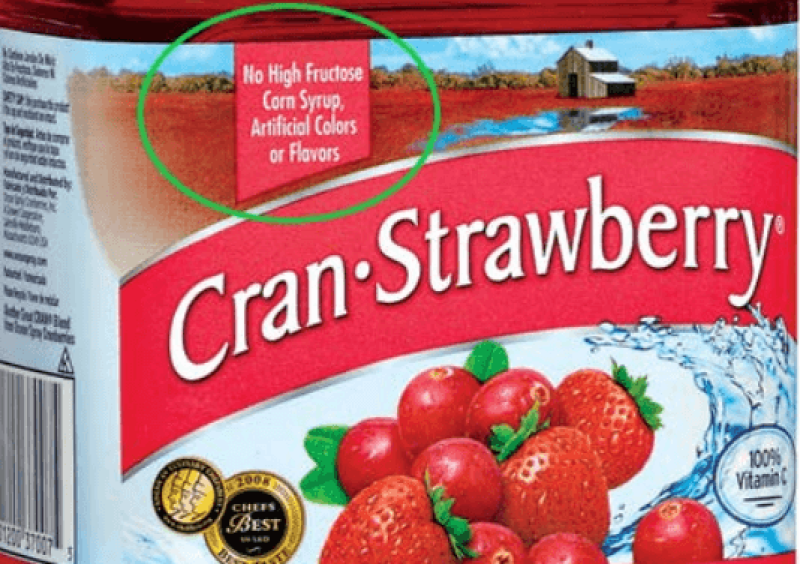
Filed in Massachusetts, theย lawsuit accuses Ocean Spray of committing fraud, negligent misrepresentation (of its product), breach of warranty, and unjust enrichment …. According to the plaintiffs, Ocean Spray uses artificial flavors, even though the front of its packaging explicitly states otherwise.

The crux of the lawsuit revolves around malic acid, one of the chemicals that makes green apples sour. In nature, malic acid only exists in one form, known as L-malic acid. Its mirror image, called D-malic acid, is not found in nature. When it’s chemically synthesized in the laboratory, malic acid is made as a 50/50 mixture of its D and L forms. Unfortunately for Ocean Spray, adding commercially produced malic acid to its drink means that it’s technically not natural; the D form is not made by plants.

Does this matter in any relevant way? No. Aboutย 99% of the vanillaย in the world is at least partially synthesized; there simply isn’t enough natural vanilla to flavor all the cookies and ice cream we consume. So, chemists have to make it. Similarly, aboutย 70,000 metric tons of malic acidย are made every year for use in all sorts of products.

Read full, original article: Ocean Spray Lawsuit: Another Insane Debate Over ‘Artificial’ Flavors


{{ reviewsTotal }}{{ options.labels.singularReviewCountLabel }}
{{ reviewsTotal }}{{ options.labels.pluralReviewCountLabel }}
{{ options.labels.newReviewButton }}
{{ userData.canReview.message }}

Related Articles

Infographic: Global regulatory and health research agencies on whether glyphosate causes cancer

Infographic: Global regulatory and health research agencies on whether glyphosate causes cancer

Does glyphosateโ€”the world's most heavily-used herbicideโ€”pose serious harm to humans? Is it carcinogenic? Those issues are of both legal and ...

Most Popular

Picture1-5
Science Disinformation Gap: The transatlantic battle over social media and censorship
Screenshot-2026-04-23-at-11.00.36-AM
Regulators' dilemma: Thalidomide, Metformin, and the cost of getting drug approvals wrong
ChatGPT-Image-May-12-2026-08_39_41-PM
GLP podcast: Big Pharma, Big Ag, Big Foodโ€”health harming industries or life-saving innovators?
Screenshot-2026-05-12-at-9.58.31-PM
'He seems fine': Marty Makary out as FDA commissioner
ChatGPT Image May 10, 2026, 08_16_59 PM 2
Overmedicalization? RFK Jr.โ€™s antidepressant crackdown raises conflict questions over his fee stake in Wisner Baum, the tort firm built on suing drug makers
Screenshot-2026-05-12-at-10.05.11-AM
Pro-vaccine โ€œheroโ€ vs. an anti-vax โ€œvillainโ€: โ€˜Bad Vaxxโ€™ video stirs MAHA backlash
Screenshot-2026-05-01-at-1.29.41-PM
Viewpoint: What happens when whole grains meet modern food manufacturing? Labels donโ€™t tell the whole story.
ChatGPT-Image-Apr-13-2026-02_20_22-PM
Viewpoint: Misinformation infodemic? Why assessing evidence is so challengingย 
Picture1-1
Cooling the planet with balloons: Could a geoengineering gamble slow global warming?
Screenshot-2026-05-11-104424
Hantavirus outbreak research: Trump administration shut down study last year on rodent-to-human transmission
images
The never-ending GMO debate: Pros and cons
S
As vaccine rejectionism spreads, measles may be taking a more dangerous turn
glp menu logo outlined

Get news on human & agricultural genetics and biotechnology delivered to your inbox.