Can Ginkgo Bioworks’ synthetic biology venture reduce mycotoxins in animal feed, cut antibiotic use?

AnimalFeed CORNFEED iStock Medium pw v

Mycotoxin mitigation, antibiotic reduction and improved feed crop production are some potential areas of interest for the biotech company as it considers work with companies in the agricultural sector.

The Boston-based Ginkgo Bioworks designs custom microbes for use in multiple areas including producing cultured ingredients, improving strain production and developing novel enzymes, the company reported.

The firm wants to use engineered biology to achieve the largest benet, said Leigh Fritz, director, business development at Ginkgo. To address this goal it has been partnering with companies to help build the technology they need to bring products to market.

…

The reduction of antibiotic use remains a challenge for animal producers as they examine ways to improve animal health and productivity, said Fritz.

“Synthetic biology also has great potential to help facilitate a reduction in antibiotic use through the production of a diverse range of feed ingredients that can support healthy gut function and immune health, such as bioactive peptides, prebiotics, and components of essential oils,” she added.

Similarly, accounting for the presence of mycotoxins in feed, or reducing their production could be an area of future focus, she said.

Read full, original post: US company Ginkgo Bioworks talks feed innovation

Is epigenetics the ‘secret superpower’ of invasive species?

https F F blogs images forbes com Fgrrlscientist Ffiles F F FSparrowMale

Due to the small numbers that are introduced, invasive species experience a genetic bottleneck that results in low levels of genetic diversity. This reduction in genetic diversity is expected to constrain a species’s ability to adapt to an alien environment — yet, somehow, they overcome it.

…

Previous studies have revealed that DNA methylation patterns undergo rapid changes in response to local environmental changes during an individual’s lifetime. For this reason, it has been proposed that these so-called “epimutations” may be one of several mechanisms whereby organisms increase their ability to adapt to novel environments or to environmental fluctuations, in the absence of genetic variations. Could this epigenetic flexibility be the “secret superpower” that transforms some species into invasives?

…

A 2013 study of house sparrows that had been introduced into Kenya around fifty years ago suggested that increased phenotypic variation might result from increased epigenetic diversity, and this might compensate for the introduced sparrows’ lack of genetic diversity.

…

Although there is no evidence that epigenetic variations may be compensating for the lack of genetic diversity in Australia’s house sparrows, it is possible that such changes may be more numerous or more easily identified shortly after introduction, when the birds are in the earliest stages of adaptation.

Read full, original post: Might Epigenetics Hold The Secret To Super-Fast Adaptation?

Viewpoint: UK’s Guardian again gives anti-GMO activist Carey Gillam platform to spread misinformation and fear about Roundup weedkiller

[Carey Gillam’s] second recent article in the Guardian says that the herbicide formulation Roundup is more toxic to human cells than glyphosate alone.  This revelation has been published many times before in actual journals, so this is not new information, just time to stoke the fear fire a bit more.

…

One of the best papers to illustrate the cytotoxic properties of the surfactants comes from Dr. Fiona Young’s group. She shows that glyphosate has no effect on cells as an endocrine disruptor, and complete formulations become cytotoxic because of the surfactants.  I wrote about it here, and did a podcast with her discussing the work and activist distortions here.

This is how Gillam continues her deception, spinning a known finding (detergents kill cells in petri dishes at certain concentrations) to imply some sort of risk to humans when none is observed.

…

Of course, Gillam and the Guardian don’t check with scientists. They have their story of deadly toxicity and they are sticking to it.  After all, it is not about science or truth. To them it is about advancing an agenda, selling a book, and promoting a bogus story that can instill fear about food and farming.

Read full, original post: Interpreting “Weed Killer Formulations Toxic to Cells”

Gene therapy research gets boost from parent-led crowdfunding

evewkellys

It’s a compelling narrative: A parent learns that his or her child has a fatal disease with no cure, and, though not a scientist, embarks on a quest to find some treatment.

…

Parent-led funding campaigns to develop gene therapies for rare diseases are especially prevalent, and for good reason. Rather than finding a drug that can fill the void left by a protein lost to a single-gene disorder, gene therapy holds the promise of replacing the defective gene itself—of a cure. Just one of the thousands of single-gene disorders has an FDA-approved gene therapy, but through hard work and determination, some parents hope to change that.

Some crowdfunding campaigns have been astoundingly successful: they’ve raised millions of dollars to fund basic research and, later, clinical trials that have likely saved children’s lives. Donations can, however, only carry a therapy so far before a pharmaceutical company must grab the baton—an outcome that’s not guaranteed, even when a gene therapy shows promise in early clinical trials. And such therapies may not be able to turn back the clock on damage that’s already done, making cinematic happy endings to these stories unlikely.

…

Yet for the families raising funds to combat rare diseases, any gain—whether in prolonging the life of one’s own child, sparing other families the same heartache, or some combination of the two—counts.

Read full, original post: Families of Children with Rare Diseases Fuel Gene Therapy Research

Future of New Breeding Techniques (NBTs) in EU depends on European Court of Justice’s looming decision

Screen Shot at AM

The future of new plant breeding techniques (NPBTs) at the EU level lies in the European Court of Justice’s interpretation of existing law, Health Commissioner Vytenis Andriukaitis told EURACTIV.com, adding that the executive will act accordingly at the political level.

“It’s an issue related to the interpretation of existing law. The European Commission has no right to interpret the law and this is the difficulty. We can present an opinion but not to say something is okay or not. It’s about law interpretation and this is in the hands of the European Court of Justice,” the EU health chief said.

He added that it’s not going to be a decision but a law interpretation, and then we can “move forward one way or another”.

The term NPBTs describes a number of scientific methods for the genetic engineering of plants to enhance traits like drought tolerance and pest resistance.

At issue is whether these techniques should be classed as GMOs and,  therefore, fall under the strict GMO approval process.

Read full, original post: New plant breeding techniques concern law interpretation, Commission says

Immunotherapy as a last resort for terminal cancer patients

CANCER superJumbo

Dr. Oliver Sartor has a provocative question for patients who are running out of time. Most are dying of prostate cancer. They have tried every standard treatment, to no avail. New immunotherapy drugs, which can work miracles against a few types of cancer, are not known to work for this kind.

Still, Dr. Sartor, assistant dean for oncology at Tulane Medical School, asks a diplomatic version of this: Do you want to try an immunotherapy drug before you die? The chance such a drug will help is vanishingly small — but not zero.

…

The promise of immunotherapy has drawn cancer specialists into a conundrum. When the drugs work, a cancer may seem to melt away overnight. But little is known about which patients might benefit, and from which drugs.

Some oncologists choose not to mention immunotherapy to dying patients, arguing that scientists first must gather rigorous evidence about the benefits and pitfalls, and that treating patients experimentally outside a clinical trial is perilous business.

…

But immunotherapy is like no cancer treatment ever seen. It can work no matter what kind of tumor a person has.

…

[Recent news] brought a yet another example of the surprising power of this approach. Lung cancer patients who normally would receive only chemotherapy lived longer when immunotherapy was added.

Read full, original post: ‘Desperation Oncology’: When Patients Are Dying, Some Cancer Doctors Turn to Immunotherapy

Viewpoint: Monsanto GMO Bt cotton patent case ‘shows socialism’s hold on Indian politics’

Screen Shot at PM

The Delhi High Court has just decreed that Monsanto cannot claim any intellectual property right (IPR) over its Bt cotton seed technology, which means it will be common law property and anyone can use it and sell it and make money out of it without paying a penny to its original inventor Monsanto, a merged unit of Bayer Crop Sciences now.

…

It will probably take another few years before the case is resolved at the highest level. However, this new ruling of the Delhi court once again shows how the socialist system is deeply entrenched in the psyche of not only the public but also in the judiciary.

…

If India persists with the Delhi High Court decision on Bt cotton, then there is no hope for any competitive improvement in agriculture, as no one will invest in innovation that cannot guarantee returns in the country for want of IPR protection.

…

For a government to interject itself in a contract dispute between two parties is a travesty of rule of law and justice. This entire episode with GM crops in India is very telling that socialism is still intact in India, and market liberalisation is just a myth. Foreign companies in life sciences, medicine, biotechnology, and agriculture will now not consider India a good investment destination.

Editor’s note: Shanthu Shantharam is a professor of biotechnology at the University of Maryland and a former biotechnology regulator with the USDA

Read full, original post: How To Be Patently Unfair

Are you responsible for bad behavior caused by a brain implant?

brain png

Mr. B loves Johnny Cash, except when he doesn’t. Mr. X has watched his doctors morph into Italian chefs right before his eyes.

The link between the two? Both Mr. B and Mr. X received deep brain stimulation (DBS), a procedure involving an implant that sends electric impulses to specific targets in the brain to alter neural activity. While brain implants aim to treat neural dysfunction, cases like these demonstrate that they may influence an individual’s perception of the world and behavior in undesired ways.

Mr. B received DBS as treatment for his severe obsessive compulsive disorder. He’d never been a music lover until, under DBS, he developed a distinct and entirely new music preference for Johnny Cash. When the device was turned off, the preference disappeared.

Mr. X, an epilepsy patient, received DBS as part of an investigation to locate the origin of his seizures. During DBS, he hallucinated that doctors became chefs with aprons before the stimulation ended and the scene faded.

In both of these real-world cases, DBS clearly triggered the changed perception. And that introduces a host of thorny questions. As neurotechnologies like this become more common, the behaviors of people with DBS and other kinds of brain implants might challenge current societal views on responsibility.

Lawyers, philosophers and ethicists have labored to define the conditions under which individuals are to be judged legally and morally responsible for their actions. The brain is generally regarded as the center of control, rational thinking and emotion – it orchestrates people’s actions and behaviors. As such, the brain is key to agency, autonomy and responsibility.

Where does responsibility lie if a person acts under the influence of their brain implant? As a neuroethicist and a legal expert, we suggest that society should start grappling with these questions now, before they must be decided in a court of law.

brain 4 6 18 1
Probes that can transmit electricity inside the skull raise questions about personal autonomy and responsibility. Image credit: Hellerhoff

Who’s to blame if something goes wrong?

Imagine that Ms. Q was driving one day and had a sudden urge to swerve into a crowded bus stop. As a result, she ended up injuring several people and damaging the bus stop. During their investigation, police found that Ms. Q had a brain implant to treat her Parkinson’s disease. This implant malfunctioned at the time the urge occurred. Furthermore, Ms. Q claims that the bus stop was not there when she acted on the impulse to swerve.

As brain stimulating technology advances, a hypothetical case like Ms. Q’s raises questions about moral and legal responsibility. Is Ms. Q solely responsible for her actions? Can we attribute any blame to the device? What about to the engineers who designed it or the manufacturer? The neurosurgeon who implanted it or the neurologist who programmed the device parameters?

Historically, moral and legal responsibility have largely focused on the autonomous individual – that is, someone with the capacity to deliberate or act on the basis of one’s own desires and plans, free of distorting external forces. However, with modern technological advances, many hands may be involved in the operation of these brain implants, including artificial intelligence programs directly influencing the brain.

This external influence raises questions about the degree to which someone with an implant can control their actions and behaviors. If brain implants influence someone’s decisions and behaviors, do they undermine the person’s autonomy? If autonomy is undermined, can we attribute responsibility to the individual?

Society needs to discuss what happens when science and technology start challenging those long-held assumptions.

Mis- and disinformation are distorting science and public policy. Subscribe to our Daily and Weekly Digests for incisive coverage of ‘disruptive’ innovations in AI, agricultural biotechnology, food, chemicals, nuclear energy, vaccines, and other disruptive innovations.

So many shades of gray

There are different legal distinctions concerning responsibility, such as causal responsibility and liability responsibility.

Using this distinction, one may say that the implant is causally responsible, but that Ms. Q still has liability for her actions. One might be tempted to split the liability in this way because Ms. Q still acted on the urge – especially if she knew the risk of brain implant side effects. Perhaps Ms. Q still bears all primary responsibility but the influence of the implant should mitigate some of her punishment.

These are important gradations to reckon with, because the way we as a society divide liability may force patients to choose between potential criminal liability and treating a debilitating brain condition.

brain 4 6 18 3
Would the surgeon bear some responsibility? Or the device manufacturer? Image credit: Allurimd (talk)

Questions also arise about product liability for companies, professional responsibility issues for researchers and technology developers, and medical malpractice for the health professionals who placed and programmed the device. Even if multiple actors share responsibility, the question regarding how to distribute responsibility among multiple actors still remains.

Adding an additional layer is the potential for malicious interference of these implants by criminals. Newer implants may have wireless connectivity. Hackers could attack such implants to use Ms. Q for their own (possibly nefarious) purposes, posing more challenges to questions of responsibility.

Insulin pumps and implantable cardiac defibrillators have already been hacked in real life. While there have not been any reports of malicious interference with brain implants, their increasing adoption brings greater opportunity for tech-savvy individuals to potentially use the technology for evil.

Considering the impact brain implants can have on moral and legal notions of responsibility, it’s time to discuss whether and when brain interventions should excuse people. New technologies often require some modification or extension of existing legal mechanisms. For example, assisted reproductive technologies have required society to redefine what it means to be a “parent.”

The ConversationIt’s possible that soon we will start hearing in courtrooms: “It’s not my fault. My brain implant made me do it.”

Laura Y. Cabrera is an assistant professor of neuroethics at Michigan State University. Jennifer Carter-Johnson is an associate professor of law at Michigan State University.

This article was originally published on The Conversation as It’s not my fault, my brain implant made me do it and has been republished here with permission.

Viewpoint: European organic industry’s obsession with ‘natural’ threatens CRISPR innovations and hurts the environment

tomato forks x
What is nature? What is natural? Philosophers have been arguing about this since antiquity. Supporters of organic farming seem to know the difference. For them, the use of “chemistry” and “genes” is unnatural. But neither nature nor organic farmers adhere to this definition, making it difficult to use the concept of “natural” when deciding which techniques should be allowed.

Organic farming, as most people believe, relies only on methods that are “natural”. Everything that does not occur in nature — mineral fertilizers, genetic engineering and chemically-synthesized plant protection products such as glyphosate or neonicotinoids — is prohibited. In contrast, those things found in nature are permitted: fertilization with excrement, plant protection with heavy metals or toxins from plants, fungi and bacteria as well as the cultivation of varieties whose genetic material has been altered by radioactive radiation.

But now, organic farming finds itself with a problem: It has no effective way to combat fungi that infest harvests during damp summers. Until a few years ago the organic farmer could use potassium phosphonate, which was approved as one of more than 200 plant fortifiers – “Pflanzenstaerkungsmittel” / plant strengthening agent is the regulatory term – allowed (not approved as there is no approval process for them) in Europe’s organic farmyards. But, in fact, it’s not a fortifier but a fungicide and it’s a purely synthetic compound that doesn’t occur in nature. (Chemists recognize phosphonate immediately as a close relative of glyphosate). In fact, is has been developed ages ago by Rhȏne-Poulenc, now Bayer. And so, it has been banned from organic farming by the EU Commission.

organic 5 9 18 2The ban was met with outcries from organic farmers and attempts to work around the ban. A number of Green Party state ministers sympathizing with organic farming granted derogations via installment of state-wide “large-scale trials”. Ironically, when Germany’s new minister of agriculture, Julia Klöckner, a few weeks ago sought to allow farmers to use synthetic pesticides in exceptional cases, she was heavily criticized by the nation’s Green Party. Moreover, to salvage the synthetic fungicide for organic agriculture, organic farming lobbying associations are trying to prove that potassium phosphonate does occur in nature. And now – Eureka! – NASA researchers have found traces of it in a meteorite originating from Mars that landed on Earth millions of years ago. Pure nature, then.

When is nature natural?

However, researchers also have discovered that in nature, the transfer of genes from one species to another is quite common: ferns use genes from mosses; snails have integrated algae genes; some grasses have stolen the complete photosynthetic pathway of other species; and insects exchange genes with bacteria and higher plants. In nature, “species borders” are by no means sacred. The very concept of boundaries in nature is based on ideas that spring from the old ideas of nations-states with fixed and secured borders that are not be crossed without control.

To find examples of  “crossed species borders,”  you don’t even have to travel to exotic places. Simply visit your local health food store. There, you will find biodynamically grown sweet potatoes, a naturally occurring genetic engineering product, whose nutritiousness is based on foreign genes. These were transmitted to the wild ancestors of sweet potato by a previously unknown organism about 8,000 years ago by the agrobacterium S. tumefaciens, the very same bacterium used by geneticist to create the first generation of genetically modified plants. So is it time to welcome genetic engineering into the organic farming fold? After all, it’s something clearly found in nature.

Incidentally, modern plant breeders are generally leaving these methods behind. Today, they are increasingly turning to genome editing to effectively speed up natural breeding. No “foreign” genes are transferred — exactly one gene is changed, in one specific place. This is a departure not from “genetic engineering” but from conventional mutation breeding efforts that are more like using a crude club to smash tens of thousands of genes at once, e.g, by radiation or mutagenic chemicals. Gene-editing techniques, including CRISPR, are precision tools that are highly elegant, minimalist correction mechanisms, and they, too are based on naturally-occurring mechanisms used by bacteria trillions of times in nature every day.

Greens for new methods of plant breeding

Some organic farmers do see the value in this nature-derived method. The first was Urs Niggli, director of the Research Institute of Organic Farming (FiBL) in Switzerland. He thinks it’s great that CRISPR could reduce the dependence of organic farming on the toxic heavy metal copper that pollutes soil and water and produces antibiotic-resistant bacteria. And there’s  Matthias Berninger, a former Green party State Secretary in the Federal Ministry for Consumer Protection, Food and Agriculture led by Renate Künast. Niggli and Berninger say they see the potential to use CRISPR to make both conventional and organic agriculture more ecologically friendly.  They see genome editing as a form of mutation breeding, which has been used since the 1930s, and do not consider it as genetic engineering. A few weeks ago, the new Federal Executive Committee of the Green Party, released a paper calling for a “fair and open debate” within the Party on the use of genetic engineering and other modern breeding technologies in agriculture.

However, the movement faces opposition from fundamentalists within the Green Party, including genetic engineering spokesman Harald Ebner, stating:  “New genetic engineering is genetic engineering, too. There are no two ways about it.”

The problem with that line of thinking is that neither gene editing nor the introduction of genes from other species are unnatural. Unlike potassium phosphonate, which has been identified in just a single meteorite they can be found in a wide range of living things. From a perspective of “natural” as opposed to “unnatural” the reasoning goes astray and there is no logic to be found at all.

Mis- and disinformation are distorting science and public policy. Subscribe to our Daily and Weekly Digests for incisive coverage of ‘disruptive’ innovations in AI, agricultural biotechnology, food, chemicals, nuclear energy, vaccines, and other disruptive innovations.

What does that say about the nature and naturalness debate? Nature is colorful and undogmatic, always embracing new opportunities and new grounds. Nature experiments constantly. But the supporters of the concept of “naturalness” seek a world with limits and prohibitions. They don’t support nature as it is. Instead, they see it through ideological glasses. Nature for them is just a label that can be scrapped, when needed.

Few organic enthusiasts know this. They are happy with the “GMO-free” label on their milk packages, even though there is no milk made with genetic engineering. And they praise organic wheat, corn and Brussels sprouts, which they believe are grown by organic farmers completely unmodified, just as “nature” created them eons ago. Like Robert Habeck, philosopher and federal leader of the Greens, they regard these crops as a product of evolution. But wheat is a human artifact made from at least three cereals, corn comes from a grass whose genetic material was changed beyond recognition and Brussels sprouts is a descendant of the inconspicuous wild cabbage, whose side shoots were “unnaturally” thickened and compressed by breeders intervening in the genome.
organic 5 9 18 3.pngOh, Europe!

In Europe, consumers of health food first harm themselves. They throw money out the window because they believe they are doing something for their health and the “environment”. But in countries dependent on Europe, this natural fetish is potentially deadly.

In Africa, the fall armyworm is currently feeding on almost all crops — the devastation has the dimension of a grasshopper plague. Bananas on the continent are threatened with extinction by an aggressive fungus. Neither crop rotation nor companion planting or homeopathic plant potions help against these diseases.

But genome editing could help. The process is simple and inexpensive, the patents are free for non-commercial breeders and there are already dozens of African universities and research institutes that use them to modify native plants and their local varieties to become resistant to pests, stress and other factors. But they are stymied by trade barriers and withdrawal of development aid because narrow-minded EU politicians and a public unsettled by fear campaigns of environmental NGOs consider the use of test tubes and petri dishes as dangerous genetic engineering.

This could all be solved. There would be a very simple measure: an end to the insane EU policy in the agricultural research sector that inhibits genome editing in Africa. Indeed, restrictions that may appear to some Europeans to be a way to fight hunger and hardship in Africa are actually accomplishing the opposite. Freedom of choice for African researchers and farmers is needed, not paternalism or eco-colonialism.

When does the “organic” madness finally stop?

Ludger Wess is a German author who has been writing about genetics and biotechnology since the 1980s. Before that, he did research as a molecular biologist at the University of Bremen. He also authored two science thrillers. Follow him on Twitter @LudgerWess.

A version of this article was originally published in German at Salonkolumnisten as “The madness with organic” and has been translated into English and republished here with permission.

 

Writer agrees to be biohacked. Now she wonders if it was worth it

Biohacking pic x

Grinders are hackers, but the hardware they aim to hack is the human body. They are transhumanist in the most literal sense. Grinders want to transcend human form. For many grinders, that means augmenting their bodies with cybernetic components—becoming cyborgs.

…

To the grinder, it seems obvious that instead of carrying wallets and keys and IDs and cellphones, we’ll one day interface with the world via microchips implanted under our skin. Such ideas are not always welcomed warmly. For many of us, our smartphones may as well be attached to our bodies, but there is something about moving technology past the barrier of the skin that just gives people the heebie-jeebies.

…

“People don’t like change,” [Jeffrey] Tibbetts told me. “This is obviously something that could change the world. And people fear that.”

…

Other grinders have implanted devices that emulate bioluminescence, that allow them to swipe on to public transit using only their hand, and that continuously measure body temperature.

…

A lack of obvious usefulness, though, is probably the movement’s greatest hurdle.

…

Unlocking my apartment door with my hand sounds cool, but setting up an NFC-compatible lock honestly seems like more of a hassle than just remembering my keys.

Read full, original post: I Spent a Weekend With Cyborgs, and Now I Have an RFID Implant I Have No Idea What to Do With

China seeks to dislodge US dominance in CRISPR gene-edited crops

l updates

China is seeking a lead in editing plant genes, potentially shifting the epicenter of the emerging agricultural technology toward the East.

Syngenta AG, the seed and chemical giant now owned by state-owned China National Chemical Corp., is building up a Beijing hub for developing new gene-editing technologies like Crispr-Cas9, which enable new ways to alter DNA.

The company also intends to piggyback off research being pursued by Chinese universities and access a broader talent pool than rivals like Monsanto Co. and DowDuPont Inc.compete for in the U.S.

“The government is very supportive of this technology in China,” said Erik Fyrwald, Syngenta’s chief executive, who said the company is investing tens of millions of dollars to develop gene editing. “It’s just natural for us to build it up there for China, and for the world.”

That is helping to stoke long-running worries among U.S. farmers, academics and companies that the forefront of agricultural science could swing from the U.S. Farm Belt to China, where the government has encouraged the development of large-scale, Western-style farming operations to boost domestic food production, and rely less on imports.

Over the long term, some say, that could increase U.S. producers’ reliance on Chinese technology, and potentially limit their access to cutting-edge methods.

Read full, original post: Scientists in China Race to Edit Crop Genes, Sowing Unease in U.S. (behind paywall)

Antidepressant matchmaker? Genetic test could help identify correct drugs faster

dt brain dna genes x

Depression is a complicated condition, and so are the people it affects. It’s often difficult — and can take months or even years — to find the right drugs to treat the heterogeneous mood disorder.

…

Since 2010, however, there has been a genetic test that can help doctors learn how a person’s genetic makeup can also affect their response to various antidepressants.

In a new study presented at the American Psychiatric Association annual meeting, researchers say that people using the test, called GeneSight, are 50% more likely to achieve remission after eight weeks, and 30% more likely to the respond to the drugs the test recommended, compared to people treated without the test. (The study has not been published in a peer-reviewed journal.)

…

GeneSight, from Myriad Genetics, looks at 12 genes involved in how people break down 56 different antidepressant drugs…

…

But the tests are not completely accurate, and some psychiatrists warn that most studies of such gene-based testing for antidepressant prescribing to date have involved only a small group of people who have been followed for a short period of time…

The test is not necessarily designed to guide doctors to the ‘right’ drugs for treating an individual person’s depression; it’s more useful in helping them navigate away from the drugs that might cause people to experience bad side effects.

Read full, original post: A Genetic Test Could Help Predict the Right Antidepressant For You

Natural News: The pro-Trump website that anti-GMO and anti-vaccine liberals love to share

Screen Shot at PM

Natural News — and [Mike] Adams’ expanding nebula of self-promoting sites — produces shareable content on buzzworthy health topics such as vaccines, pharmaceuticals and GMOs. Topics that reach across even a deepening partisan divide — stoners and new parent groups, patriots and capitalists, environmentalists and preppers.

While political identity greatly influences Americans’ view on anthropogenic climate change, Pew Research Center reports that liberals and conservatives are almost equally split on issues like GMOs and vaccines.

However, Pew finds that left-leaning Americans have become increasingly concerned about environmental issues over the past decade, while right-leaning Americans have moved in the opposite direction. Adams could be taking advantage of this widening gap in green politics, allowing him to spread his message to seemingly antithetical groups like GMO Free USA.

The online anti-GMO community of nearly 1 million followers has shared numerous Natural News links, despite the sites’ glaring political differences.

…

Leading up to the U.S. presidential election in 2016, Adams steadied his left-leaning anti-GMO, anti-vaccine readers with, “Did you know that Donald Trump opposes vaccine mandates and rapid-fire vaccine assaults against children? Did you know that Trump serves organic food at many of his resort properties? Did you know that Trump openly opposes the TPP and believes in protecting America’s jobs against the globalist corporations?”

Read full, original post: Far from Natural

‘De-extinction’ could revive vanished Tasmanian tiger—or something close to it

tasmaniantiger

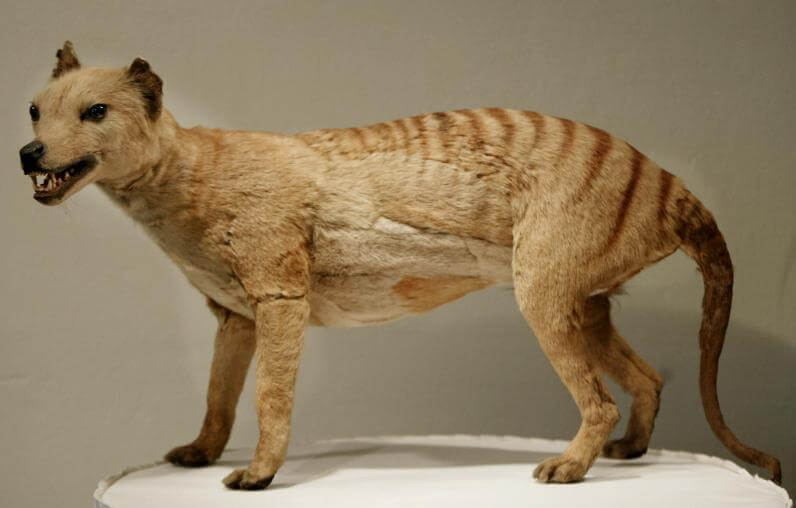
With the stripes of a tiger, the body shape of a dog and the pouch of a kangaroo, the Australian thylacine was a unique combination of animals. Unfortunately, humans drove it to extinction, and the last one perished in 1936.

However, as gene technology advances and the science of “de-extinction” becomes more popular, the thylacine, or Tasmanian tiger, may one day walk again.

Andrew Pask, an associate professor at the University of Melbourne, is planning to use advanced gene-editing technology to try to put thylacine genes on the genome of a living, related animal, according to Australian news site 7 News. If they succeed, and if they find or create a suitable surrogate mother, the resulting animal could have enough thylacine traits to look a lot like the extinct creature, and perhaps would act like it too.

This research is closely related to current attempts to resurrect a woolly mammoth. Using a fairly new and very promising gene-editing technique called CRISPR-Cas9, Harvard geneticist George Church is trying to bring back the mammoth—or at least something close to it.

…

This project is one of many around the world that aim to bring back an extinct animal. If it succeeds, it would be like bringing Jurassic Park to life—but with safer, dog-like animals.

Read full, original post: Could gene-editing technology bring back the extinct Tasmanian tiger? 

No words needed: AlterEgo prototype allows communication with computer as if by thought

AlterEgo is a new device that can read your internal thoughts

Controlling your gadgets by talking to them is so 2018. In the future, you won’t even have to move your lips.

A prototype device called AlterEgo, created by MIT Media Lab graduate student Arnav Kapur, is already making this possible. With Kapur’s device—a 3-D-printed plastic doodad that looks kind of like a skinny white banana attached to the side of his head—he can flip through TV channels, change the colors of lightbulbs, make expert chess moves, solve complicated arithmetic problems, and, as he recently showed a 60 Minutes crew, order a pizza, all without saying a word or lifting a finger. It can be used to let people communicate silently and unobtrusively with each other, too.

…

AlterEgo does not read minds, though it may sound that way. Rather, it picks up on the itty-bitty electrical signals produced by small movements of our facial and neck muscles when we silently read or talk to ourselves. AlterEgo’s electrodes capture these signals and send them via Bluetooth to a computer, where they can be decoded by algorithms and then acted on (“Turn on the light,” for example).

…

Though it’s still just an early-stage prototype, he imagines it being helpful for, say, calling an Uber, or making it easier for people with speech impediments and voice disorders to communicate.

Read full, original post: Say goodbye to Alexa and hello to gadgets listening to the voice inside your head

India’s food regulator proposes mandatory GMO labeling

Seeking to introduce GMO labelling for the first time in India, the country’s food regulator has proposed all packaged food products containing genetically modified (GM) ingredients must clearly state it on their labels.

The Food Safety and Standards Authority of India (FSSAI) also suggests mandatory declaration by packaged food manufacturers about nutritional information such as calories, total fat, trans fat, sugar and salt per serve on the front of the pack.

…

The FSSAI had [in April] released a 42-page draft notice – Food Safety and Standards (Labelling and Display) Regulations, 2018 – making it mandatory to label such food stuffs as “Contains GMO/Ingredients derived from GMO” if such items contain 5% or more GE ingredients.

The authority will notify the provision for implementation after analysing stakeholders’ opinion on the issue.

…

Sridhar Radhakrishnan, co-convenor of the Coalition for a GM-Free India, who sent the group’s objections on the draft to the FSSAI told TOI that the labelling move will, in fact, allow the GM foods to enter food supply chain when it is anyway illegal to sell GM foods in India currently. “We need preventive action at this juncture rather than regulatory action”, he said.

Read full, original post: Food regulator wants packaged food labels to display if they contain GM ingredients

Common autism syndrome linked to medical issues in ‘gut, eyes, heart and brain’

Autism Expensive

Mutations in a gene called ADNP result in a distinct syndrome that includes autism, intellectual disability and problems with the gut, eyes, heart and brain, according to a new study. The results flesh out the clinical characteristics of one of the more common autism syndromes.

The researchers characterized the effects of mutations in this gene in 78 people. These individuals also have behavioral problems, distinctive facial features and low muscle tone. “This is one of the first rare-disease studies that extensively describes a cohort of sufficient size,” says lead researcher Frank Kooy.

…

All of the participants have intellectual disability, and about half are severely affected; 93 percent have autism traits and 67 percent have an autism diagnosis.

More than 75 percent of the participants have some combination of problems with digestion, behavior and muscle tone; between 50 and 75 percent have lazy eye or other visual problems, sleep problems and frequent infections; and between 25 and 50 percent have heart conditions, ear, nose and throat problems, and urinary and genital defects.

…

The large number of medical issues is surprising, Kooy says, as is their diversity. “For any given type of effect, it’s rare that two patients have the same abnormality,” he says.

…

Follow-up studies should determine the developmental course of the syndrome and better define the problems that affect each organ system, Kooy says.

Read full, original post: Autism syndrome involves constellation of medical issues

GMO crop pioneer Robb Fraley to leave Monsanto after Bayer takeover

Monsanto x

It’s the end of an era at Monsanto Co. after executives including the seed giant’s scientific leader Robb Fraley announced plans to depart after the company’s takeover by Germany’s Bayer AG.

Fraley will depart “shortly after closing” on the Bayer deal, following a transition period, Monsanto said Monday [May 8] in a statement. He has been at Monsanto for more than three decades and helped to invent genetically modified seeds, the company’s controversial technology that has come to define modern agriculture. The $66 billion takeover by Germany’s Bayer is expected to close during the current quarter.

…

Fraley has been the public face and champion of the science of GMOs. He joined the company as a 27-year-old, a Ph.D. in microbiology and biochemistry in hand, and worked on a team that found a way to insert foreign genes into plants. The result was Roundup Ready seeds, which could tolerate glyphosate, an herbicide that Monsanto manufactures under the brand Roundup.

The technology has transformed farming around the world. At the same time, it has inspired passionate protests among activists. Skepticism about such techniques remain despite a scientific consensus that supports the safety of eating genetically modified foods. Non-GMO labels on food have become commonplace in grocery stores.

Read full, original post: Face of GMOs at Monsanto to Step Down as Bayer Takeover Closes

How gene editing has evolved into ‘worldwide CRISPR frenzy’

crispr

CRISPR sounds more like a refrigerator compartment than a gene-editing tool, but it’s giving scientists power they could only imagine before – to easily edit DNA – allowing them to reprogram the genetic code of living things. That’s opening up the possibility of curing genetic diseases. Some researchers are even using it to try to prevent disease entirely by correcting defective genes in human embryos. We wanted to see for ourselves, so we went to meet a scientist at the center of the CRISPR craze.

…

For the last seven years, [Feng] Zhang has been working on CRISPR at the Broad Institute in Cambridge, Massachusetts. It’s a research mecca brimming with some of the brightest scientific minds from Harvard and MIT.

…

Bill Whitaker: How many diseases are we talking about that this could be used to treat?

Feng Zhang: There are about 6,000 or more diseases that are caused by faulty genes. The hope is that we will be able to address most if not all of them.

Bill Whitaker: Most if not all of them?

Feng Zhang: That’s the long-term hope.

…

Cue the worldwide CRISPR frenzy. At the University of California, scientists used a form of CRISPR to edit mosquitos so they can’t transmit malaria. Their colleagues are modifying rice to better withstand floods and drought. In China, scientists tweaked a gene in beagles to make them more muscular.

Read full, original post: The gene-editing tool revolutionizing biomedical research