A 30-year-old transgender woman has become the first officially recorded to breastfeed her baby. An experimental three-and-a-half-month treatment regimen, which included hormones, a nausea drug and breast stimulation, enabled the woman to produce 227 grams of milk a day.
…
The transgender woman had been receiving feminising hormonal treatments for several years before she started the lactation treatment. These included spironolactone, which is thought to block the effects of testosterone, and progesterone and a type of oestrogen.
Once the baby was born, she was able to exclusively breastfeed the infant for six weeks – during which time a paediatrician confirmed the baby was growing and developing normally and healthily.
…
“When I treat transgender women, we see good breast development” [Boston Medical Center’s Joshua Safer] says. There’s no reason why the cells in these breasts wouldn’t make milk the same way that those of non-transgender women do, he says.
…
If the treatment is proven safe and effective, it could benefit the babies of other transgender women, as well as women who adopt or those who have difficulty breastfeeding, says Safer.
Huntington’s is a genetic disorder that causes nerve cells in the brain to gradually break down, leading to irreversible brain damage. There is no cure—only drugs to help manage the side effects, like depression and involuntary movements. Eventually, people lose their ability to think, walk, and speak.
The drug [Huntington’s patient Michelle] Dardengo is trying, made by Ionis Pharmaceuticals, is one of a handful of new therapies in development that aim to alter the genetic root of the disease and thus slow or reverse the damage. Scientists have known the cause of Huntington’s for 25 years—an error in a particular gene.
…
Ionis’s experimental drug uses a technique known as “gene silencing,” or antisense, which involves using strands of chemically modified DNA to essentially gum up the genetic copying mechanism before it can produce harmful huntingtin proteins from the HTT gene. In a small clinical trial, whose initial results were reported in December, the drug reduced levels of huntingtin in 46 people with early Huntington’s disease—making it the first ever to do so.
…
Frank Bennett, head of research at Ionis, says if the drug works, the goal will be to treat patients as early as possible, maybe even before they start showing any symptoms.
In recent years, one bright spot in an otherwise lackluster market for packaged foods, beverages and consumer products has been merchandise promoted as “natural.”
Consumers, increasingly wary of products that are overly processed or full of manufactured chemicals, are paying premium prices for natural goods, from fruit juices and cereals to shampoos and baby wipes.
But as a spate of lawsuits and consumer advocacy efforts show, one person’s “natural” is another person’s methylisothiazolinone.
The problem, consumer groups and even some manufacturers say, is that there is no legal or regulatory definition of what “natural” is.
The debate in many ways echoes the tussling in the 1990s over the word “organic,” when foodmakers played fast and loose with the term and frustrated consumers tried to make sense of it all.
…
A number of more recent cases involve allegations that products labeled natural were misleading because they contained small amounts of materials linked to genetically modified organisms. In December, a New York federal court judge dismissed a lawsuit claiming that Dannon yogurt was falsely labeled natural because the cows might have been given genetically modified feed.
A multimillion dollar plan for the islandwide rollout of Cayman’s genetically modified mosquito program has been significantly scaled back amid budget cuts and concerns that the technology has yet to fully prove itself.
A series of emails between Mosquito Research and Control Unit officials and British biotech firm Oxitec, released under the Freedom of Information Law, show the two parties were close to agreement on a two-year, US$8 million deal in August last year.
But government backed away from the arrangement, budgeting only CI$940,000 in 2018 for a much smaller-scale deployment of the technique in West Bay – essentially a rerun of the pilot deployment in that area from 2016 and 2017.
The decision appears to have been driven by a mix of budget issues and concerns that more data is needed to assess the effectiveness of the method of suppressing local populations of the disease-spreading Aedes aegypti mosquito.
…
[F]ormer MRCU Director Bill Petrie [said,] “For the first time, we now have an idea of the cost of a full deployment programme of GMMs in the Cayman Islands and, at this juncture, it is difficult to reconcile any notion that this project would represent value for money, if it were to proceed.”
Quebec is introducing new restrictions on pesticides considered harmful to honeybees.
Under the changes, farmers will have to get permission from a certified agronomist before using certain pesticides on crops.
The restricted pesticides include three types of neonicotinoides, as well as chlorpyrifos and atrazine, which has been banned in Europe for more than a decade.
Neonicotinoids, also known as neonics, are nicotine-based pesticides commonly used by farmers to help keep everything from field crops to fruit orchards free of pests like aphids, spider mites and stink bugs.
…
In a statement, [Isabelle Melançon, the sustainable development minister] said the new measures strike a balance between the needs of farmers and environmental concerns.
Representatives from the David Suzuki Foundation and Equiterre, two environment groups that have long pressed for stricter controls, were on hand for the announcement in Quebec City.
Some Quebec farmers have expressed concern about what a crackdown on pesticides will mean for crop yields.
Last fall a new book hit the shelves, timed to coincide with public hearings on the European Union’s re-authorization of glyphosate, the active ingredient in the herbicide Roundup. The book was Whitewash, by Carey Gillam, and came with quite a bit of fanfare from a chorus of organizations who are actively campaigning to ban the herbicide. Glowing reviews were posted by colleagues and friends of the author, while critical reviews penned by those who read the book and were familiar with the arguments being made were being deleted or accused of being fake.
The book promised to educate us on how glyphosate causes cancer, but that the industry knew this and used “strategic deception” to sow doubt about science and mislead the public about its relative safety. Does the book measure up against the hype, and does it carefully address inconvenient data that runs contrary to its thesis? I waited in the queue at my local library so I could read the book for myself. I read the book from cover to cover, and I took notes. Here is my review.
Although Jefferson was wealthy in land and slaves, farming proved to be an unreliable and inadequate source of income.
Similarly, Carey’s crafty rhetorical skill is not matched by the realities of science or farming. This unfortunate parallel is probably the largest theme in this book. Nor is she doing the planting of anything — except doubt. Doubt is her product. You should be very afraid. And you might be, based on this book. She presented the things that she wanted you to see, not the full body of evidence that we have about the target of her ire. Some people would call that cherry-picking. But she wants you to be afraid of cherries, too.
Or, maybe you’d care to hear from a scientist: “But she does not understand that the reason it is used in these contexts is because it is not taken up. If it was, the plants would die. Ugh.” (Kevin Folta, PhD). She could explain many features of farming better–she admits in the book that nearly half of the crops that encounter glyphosate are not genetically engineered for herbicide tolerance. But she can’t be bothered to help you really to grasp that fact. It’s much more important for her that you think glyphosate = GMOs.
The book is mostly a quick read, as Carey is not bogged down by statistics, farming context nor scientific details. Her emphasis is certainly spending time on what she claims are nefarious connections and hidden evidence. It is an extended conspiracy theory designed to create fog, with cherry-picked anecdotes, unsupported and unchallenged science claims, and dubious sources. In short, it’s crafty and dishonest on many fronts. I’d like to offer up the author’s own words: “This is strategic deception. It’s not accidental or ambiguous. It’s intentional”. Academics would call it Agnogenesis. I’d call it Hogwash.
To be fair, there are some actual facts in the book. Glyphosate is a chemical. And Monsanto was founded in 1901 by JF Queeny. There are other items that are technically true – papers have been published that claim some of the things that she suggests. But one of two things happened on the way to the book: her science training was inadequate, or she chose not to provide the context you need to understand the issues. Well, ok, maybe she’s two-for-two there. Hopefully, a book called Fearmonger will be written someday, maybe by another Reuters reporter (Kate Kelland, I’m looking at you), and we’ll get an independent examination of the agnogenesis she employs.
Until such time, here’s my summary of the main problems with this book.
Claims glyphosate causes Non-Hodgkins Lymphoma, except the data shows it doesn’t.
Claims Non-Hodgkins Lymphoma rates went up over the last 20 years when they have actually remained the same.
Reports that Glyphosate is found in breast milk when the peer-reviewed literature shows it is not.
Sets up a cartoonishly false dichotomy between heroes and villains that reveals a systematic, underlying bias.
Blames the retraction of Séralini’s study on Richard Goodman, when he was not involved in its review.
Throws a defense of a retired consultant to the IARC glyphosate review panel claiming his independence of financial influence (which we now know to be false), while chastising a retired consultant whose views differ from hers.
Falsely smears independent groups like Science Moms and March Against Myths as being run by industry (they’re not).
Systematically omits industry funding and affiliations for her own organization and those who she quotes favorably.
Entirely ignores the extensive, important, detailed, 2-year long key review of the GMO arena done by the National Academy of Sciences, #GECropStudy http://nap.edu/gecrops.
Fails to engage in a reality-based discussion of farming issues faced by growers in the real world.
For those who feel the need to bash their heads against the wall, I’ll take you through these issues step by step, of course, doused and drenched with snark. Who’s ready for some hogwash?
Non-Hodgkins Lymphoma is the foundation of fear
The book begins Carey laying out her premise: in the mid-1990s everything changed as GMOs were introduced. “But shadowing the controversy over genetically modified organisms (GMOs) is what I believe to be the true health and environmental calamity of modern-day agriculture–the flood across our landscape of the pesticide known by chemists as glyphosate and by the rest of us simply as Roundup.” [emphasis hers] She tells you the sad tale of a farmer who died of Non-Hodgkins Lymphoma (NHL) at age 69. Also, Monsanto killed their dog. Certainly it is sad to lose loved ones to cancer–it’s happened to all of us. And it would help to have someone to blame.
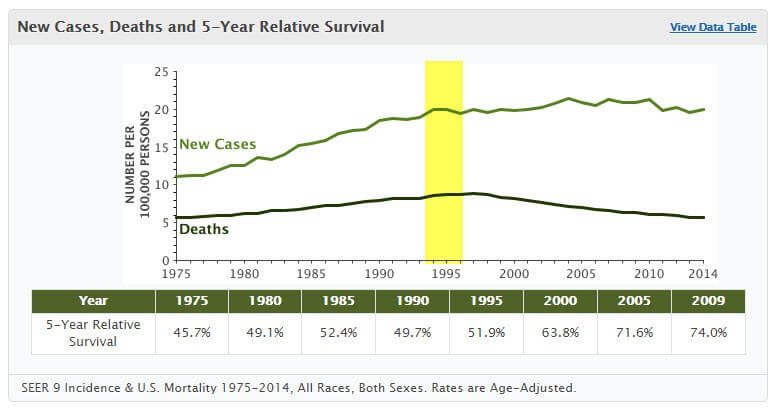
After the anecdote of a farmer’s illness, I expected her to make the case about the true calamity with some very obvious statistics. If the last two decades of the “flood” was causing massive spikes in NHL, of course we’d be presented with the chart of that data, from a reputable source like SEER, the cancer epidemiology database of the National Cancer Institute. What does that look like? Carey doesn’t want to bother your pretty little head about that. But I’ll show you. I’ve highlighted when the flood began. Hmm.
SEER data for NHL, mid-90s highlighted. The rate of Non-Hodgkins Lymphoma remains constant after the introduction of glyphosate-tolerant GMO crops.
You should think about her claims of how much a flood of glyphosate would be represented by the data in the last couple of decades. That is, if they were true.
Glyphosate Testing (well, not all of it)
Carey Gillam goes into the issue of testing for glyphosate with a number of stories. She sources information from the Alliance for Natural Health’s exposé of breakfast cereals. Alliance for Natural Health is an anti-vaccine lobbying group for the alternative medicine and supplement industry, and they keep an “FDA Death Meter” on their site to make you afraid of conventional medicines and vaccines. They report that glyphosate was found in a variety of breakfast foods that they tested. Using a test called ELISA (enzyme-linked immunosorbent assay) for detection, they provide a non-peer-reviewed report on their site with their findings.
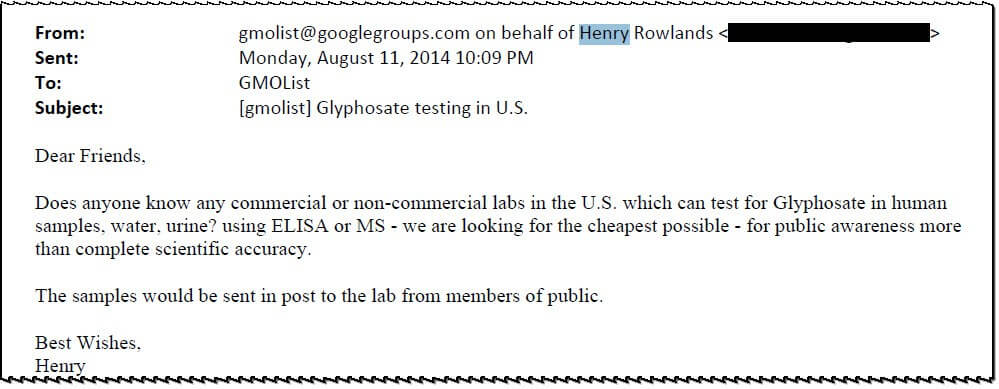
For another example, she describes the heroic Henry Rowlands’ Detox Project effort to get testing of glyphosate done that others weren’t doing. Although she references that his “family heritage is rooted in farming”, she neglects to mention it was “a family run organic sheep farm” – so they have had financial interests in the organic industry. A curious omission. She describes how so many labs turned him down (but she never talks to the labs about why this might have been). Those of us who understand testing protocols are aware of how carefully designed testing protocols need to be – and they vary by substance being tested. This would be expensive and time-consuming to establish, with proper controls. FOIA (Freedom of Information Act) documents of organic researchers and activists, though, reveal Henry’s real goal with testing. These documents were obtained by Stephan Neidenbach via MuckRock.com.
But his Detox Project can now sell you a test kit if you are worried. Don’t sweat the scientific accuracy. I’m sure the level of fear that the activists are aiming at will be sufficient.
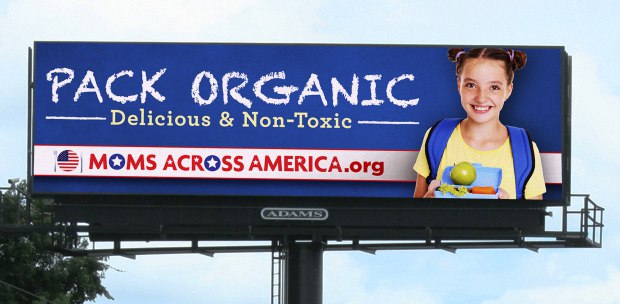
She also talks about Moms Across America who valiantly exposed the hidden glyphosate in breast milk with the Inotech ELISA tests. But FOIA discovery reveals that even Michael Hansen of the Consumers Union said that “they are very dangerous because significant portions of the grassroots activists buy into their nonsense” and dissed the testing they had done. Carey Gillam further neglects to mention the PhD-carrying mom and breast milk expert who led a study (with proper protocols and appropriate controls) who found that was untrue, there is no glyphosate in breast milk. A German group found the same thing with proper testing. This should be welcomed by moms to help them allay their fears, and someone looking for the truth should tell you this. But that’s not the point of Carey’s book and you are not even told that these studies exist. Remember: be afraid.
Glyphosate “heroes” and “villains”
To help craft her tales of fear, Carey offers up a variety of heroes and villains. Charles Benbrook, an apparent hero, is quoted selectively. Richard Goodman, apparent villain, not quoted, is falsely blamed for the retraction of the Séralini paper (by Séralini, quoted at length). (Séralini even specified Goodman’s non-involvement as a condition of him sharing his data with the journal editors.) Some of the nefarious connections Carey details include media training provided by industry revealed by FOIA requests. Scientists typically don’t get media training in their careers, and they really are no match for slick activists, detox peddlers, and allied (sometimes unwitting) reporters who are always seeking media attention. In fact, in one case we find that FOIA documents reveal that Richard Goodman, a scientist at the University of Nebraska, was offered media training by agribusiness to speak to issues of GMO labeling.
Organic Valley helped with great coverage and training. (Click image to enlarge)
We do need more scientists speaking out on issues in the public sphere, it’s not something I think is that nefarious. But let’s look at FOIA documents about media training here on the right.
Oh, I’m sorry – wait, that’s Carey’s source Charles Benbrook’s media training provided by the organic industry. I’m sure she just forgot to mention that. We are not told whether Goodman actually got media training or how much money it involved, or if had anything near the success rate of Benbrook’s media strategy.
Speaking of media manipulation, Carey covers the publication of Gilles-Eric Séralini’s rat study publication event at length, and how “news outlets around the world published stories about the study findings, and regulators in many countries were understandably rattled.” Carey neglects to mention that Séralini’s team manipulated the media coverage, raising outrage among qualified journalists: From Darwinius to GMOs: Journalists Should Not Let Themselves Be Played. (BTW, Séralini’s team also coordinated with the folks on the California GMO labeling campaign, Michael Pollan noted in a lecture he had been invited to the launch call that was described to him as a “game changer”.) This well-timed but ultimately bad science and media drama had real consequences on trade and regulations, and that is a very unfortunate outcome that we see over and over in this arena.
IARC and Portier
The International Agency for Research on Cancer (IARC) is an organization that reviews various substances and situations for potential cancer-causing hazards. Items on their lists include wine, hot beverages, bacon, hairdressing, shift work, the sun, and other such scary topics. People have been critical of the often misleading ways the IARC conclusions are hyped. In 2015 they reviewed some farming chemicals, including glyphosate, and returned with a determination that it was a class 2A probable carcinogen. This was in contrast to every other agency around the world, but was a cause of much rejoicing among people peddling fear and lawsuits against Monsanto.
This case of dubious science is covered in the book. But not how you might expect from someone who claims to be a warrior for truth – with fairness and accuracy. Instead, Carey describes the IARC’s famous assessment at some length while omitting certain details.
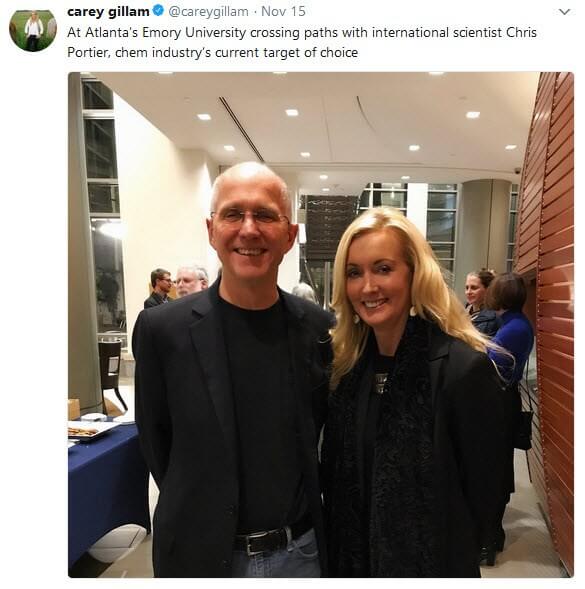
One of the players in the IARC story is Christopher Portier, a toxicologist (left, with Carey). Reportedly he had no background in glyphosate when he became an “invited specialist” to the IARC group reviewing glyphosate. Portier is portrayed as a credentialed former scientist who had retired to a remote Swiss village (can’t you just smell the fresh mountain air?). Carey is dismayed that people used his consulting work with an environmental activist group to suggest that he was biased in his IARC role. Eight pages later, Carey impugns a retired credentialed former government scientist, Jess Rowland, and his influence on an EPA report and invokes nefarious and unknown retirement consulting work.
We don’t know if Carey could have known the extent of Portier’s influence on the IARC report at the time, it’s not described in the book. Since that time, though, it has come to light that someone in this group altered the original documents in a consistent manner to make the conclusions lean towards one direction: In glyphosate review, WHO cancer agency edited out “non-carcinogenic” findings. We have also since learned that Portier has, in fact, been working for law firms who are suing Monsanto right now, on the basis that Roundup caused that farmer’s NHL cancer. He signed a contract the same week IARC released their glyphosate monograph. Since Carey’s organization – USRTK – also works closely with these law firms, it seems surprising that an intrepid investigator and researcher seeking truth wouldn’t have been aware of this, and neglected to mention it.
As one weed science researcher noted about the IARC document editing revelations: “I’m not one for conspiracy theories, but that is a pretty odd set of choices to make, if the goal is really to figure out the truth.”
Lies on Ties
It clearly is a matter of consternation to Carey Gillam and her colleagues that public scientists and some moms disagree with her truth about GMOs and glyphosate. She spends time on many stories everyone has already heard, attacking public researchers who have exchanged emails with corporations. She never provides you with the context that many public scientists are required by their jobs and grants to work with a variety of stakeholders including farming groups and industry. But the emails are used as evidence of collusion, which should make you discount all of them. (Except her experts and the warrior moms she courts.)
Carey implies that the Science Moms are tied to Monsanto. They are not. This is a flat-out lie. These are women who are frustrated that nonsense peddlers using bad science and fear campaigns are causing parents to make bad choices on food and vaccines. And this is why your can’t let your conspiracy-fogged brain trample over the facts – Carey cannot distinguish between the science and her conspiracy theories. (Full disclosure: I gave money to the SciMoms crowdsourced film project, and I got a t-shirt and a copy of the film in return. Apparently they shill for me?) In another case of omission, Carey pretends that her own industry team is not having mommy bloggers and her scientist sources influencing people with social media. Be sure to see the photo and caption: “Harvard Researcher Chensheng (Alex) Lu, PhD Speaking to Bloggers at Stonyfield Organic Breakfast”. Carey cites Lu’s work in her book.
And, of course, Carey writes very differently about Vani Hari, the Food Babe, who calls Carey “my dear friend”. The Food Babe profits off products she sells from her fear-mongering website.
Similarly, Carey Gillam suggests that the grassroots March Against Myths about Modification (MAMyths) group is an industry front group, claiming it was founded, funded, or backed by industry. Like the SciMoms, they are not, and she again presents no evidence of this dark association. (Editor’s note: MAMyths is a project of Biology Fortified, Inc., which is supported by individual donors and not by the industry, as is clearly noted on bothsites.)
She includes the story of a retired scientist, now wellness farmer, Thierry Vrain, who was slated to present a talk at a Houston science museum about “The Poison in our Food Supply”. Carey had earlier described Vrain’s conversion based on “obscure studies”. (Mm hmm. I’m sure they high-quality studies.) She reports that “Kevin Folta and other industry supporters” were responsible for shining a spotlight on Vrain’s unsuitable talk for a science museum. The talk was booted. The group that actually sounded the alarm to alert the science museum about Vrain’s talk was MAMyths – a decent investigative researcher might have figured this out, especially since his relocated talk was debunked live by them on Twitter (#JustAThierry). Kevin Folta was very involved as well. But in her complaint she also neglected to tell you the story of a science panel that Folta was part of, booted out of a food coop by a member of Carey’s activist circle, Jonathan Latham.
The irony of Carey’s claims is beyond astonishing, over and over. She cites Michele Simon on industry groups this way: “The idea is to fool the media, policymakers, and the general public into trusting these sources, despite their corporate-funded PR agenda.” Michele Simon is the executive director for an industry PR and lobbying group, and previously worked on the GMO labeling policy issue in California, which was run by Carey’s current bosses: Gary Ruskin and Stacy Malkan. She neglects to inform the reader that her current job at USRTK is funded largely by money funneled via the Organic Consumer’s Association from industries that stand to benefit by raising fear and doubt about their competitors’ products. I’m sure these are just accidental omissions.
</sarcasm>
It would be one thing if Carey Gillam reported about actual cases of the biotech industry having financial ties to organizations that speak favorably about their products (to be fair there are some) and forgot to do the same on the other side. But to just make up lies about independent groups while falsely portraying members of competing industries as independent means that she’s not even trying to look intellectually consistent or honest.
Facts about GMOs and Glyphosate
There are so many errors of omission, and repetition of common activist tropes (SEED SAVING!1!!), uncited and unsourced insinuations, conflations of pesticides, serial abuse of cell culture models without context, and flat out falsehoods that dissecting them would take pages and have no value at all to her fans, and would be unnecessary for those of us who have been following the science. I’ll just wrap up with a few more observations on her strategies.
Carey spends chapters 7-8 conflating all pesticide use with GMOs and glyphosate – without any tinge of awareness that her glypho-hate fixation may actually be harming the discourse by causing people to fixate on the wrong thing. And absolutely no comment about what happens if they did manage to ban glyphosate. Even one of her favorite sources – Charles Benbrook – advises against a ban because it would cause increases in more harmful compounds. (From FOIA documents):
“I do want to share one thing. In many countries, especially abroad, rapid action to ban GLY will lead to increased use of paraquat. While I am glad to see pressure building for more judicious use of GLY, I personally do not support a total ban, not even close. The chemical alternatives are almost certainly orders of magnitude worse, both in terms of environmental and human health risks.”
But there’s no evidence that Carey wants you to understand that context.
In Chapter 9, Carey works very hard to convince you that the fact of German and European-wide food and chemical agency assessments finding that glyphosate studies were flawed, and expressing their disagreement, it’s all because Monsanto told them to do so. Look away from the scientific agencies, she wants, and look to the activist groups and organic farmers for your answers. Because conspiracy. ¯_(ツ)_/¯
In chapter 10 she talks to some actual weed scientists about the issues of resistance, and tells us about how much weed impacts on yield can really hurt farmers (this is another actual fact in this book). She talks about how awful and expensive hand weeding is. But she provided no evaluation of alternatives. She talks to someone who says, “When you spray glyphosate on a plant it’s like giving it AIDS.” And she prints that uncritically and unchallenged. Soon after she attempts to blame glyphosate for citrus greening disease. This is utter nonsense. In fact, it’s worse than nonsense–it’s like blaming vaccines for autism. Blaming the wrong thing is really harmful if you want to find solutions. It’s really pure idiocy.
In addition to the long list of evil things that glyphosate supposedly does, several times she hinted at endocrine disruption. This has been repeatedly flogged by glypho-haters every time their other theories fail. And this came too late for her book, but I’m sure she’ll be relieved to know that glyphosate “does not have endocrine disrupting properties”. Damn those government scientists and their demands for the weight of evidence!
In her focus on the conspiracies and cranks, Carey apparently didn’t have room for what the actual scientific bodies have to say about GMOs and herbicides. During the writing of this book, an important study came out from the US National Academy of Sciences about “Genetically Engineered Crops: Experiences and Prospects“. There is not a word about the findings of this highly respected body in this book. It’s probably wise for her to avoid this, because they observed that the “pounds” metric for pesticides was not a helpful descriptor and a more sophisticated assessment was recommended.
RECOMMENDATION: Researchers should be discouraged from publishing data that simply compares total kilograms of herbicide used per hectare per year because such data can mislead readers.
Oh, the respected scientists at the National Academy of Sciences say that weight of herbicide may “mislead readers”? Yet Carey constantly drops pounds of fear on readers.
Additionally, the National Academy report looked at health issues related to genetically engineered crops and the long list of concerns that people claim are related to them, such as “cancer, obesity, gastrointestinal tract illnesses, kidney disease, and disorders such as autism spectrum and allergies”. They compared countries with widespread use of GMO crops and those without. In brief, their conclusion on the health issues:
No pattern of differences was found among countries in specific health problems after the introduction of GE foods in the 1990s.
It is utterly–UTTERLY–irresponsible to ignore the multi-year National Academy of Sciences’ investigation into these issues. In the book preface Carey says, “As you’ll see in this book, the only bias I hold is for the truth.” No, you won’t see that in the book because she omits this key major document. It’s like talking about climate without mentioning an IPCC report. It is peak bias and ultimate dishonesty. She does note that a German federal “Renewal Assessment Report” in 2013 concluded that “glyphosate was unlikely to pose a cancer risk”, but claims that this report was based on an industry dossier. Carey’s source for this? A non-peer-reviewed screed that Nancy Swanson has posted to Academia.edu. Nancy Swanson has no visible training or experience in this field.
She does refer to a government study that she did appear to favor. The Agricultural Health Study (AHS) is a long-term study of many thousands of pesticide applicators and their spouses. She admits that the study “thus far found little or no connection between glyphosate and disease, including NHL”. She does attempt to sow some doubt on this, though, saying they haven’t followed the farmers long enough. Well, just recently a new publication came out on this study. The conclusion?
In this large, prospective cohort study, no association was apparent between glyphosate and any solid tumors or lymphoid malignancies overall, including NHL and its subtypes.
Farming is a hard job, as it had been before Jefferson’s time and it will continue to be in the future. A real look at the challenges and trade offs that are made, with serious discussion about the alternatives, and their features and bugs, is warranted. But that’s not what we get in this Whitewash.
Carey closes the book with a chapter called “Seeking Solutions”. It begins with a quote from Rachel Carson–but not the one where Carson implores us to use biology instead of chemistry–as we do with Bt crops and GMO mosquitoes. And not the fact that we tweak a gene enabling us to use safer chemistry to battle weeds. She talks about biological seed treatments that are being worked on–which may be great, we’ll have to see. She has no apparent concern about introducing new microbes into a system. Of course, she wants it all to become organic, despite the higher costs and lower yields that she admits. She flogs the Rodale report. She does not tell you that her sources Francis Moore Lappé and Chuck Benbrook found the Rodale study “disappointing and shallow”, while adding that no one takes Rodale seriously anymore.
She describes agroecology as a way forward. She does not acknowledge that agroecology means “proper use of technology is an indispensable part of achieving sustainability”. This may include GMOs and herbicides. She does cite Hilal Elver, UN Special Rapporteur, a lawyer. Elver’s UN report on agroecology actually cited the fake Monsanto Tribunal as evidence. This may not be someone with a good grasp of quality sources.
This book, overall, is a large exercise in doubt–attempting to mislead you with selected information, while fogging the field with suggestions that so much is being hidden from you by people with black helicopters. In fact, much is being hidden from you in this book. It’s a perfect example of what was recently described as “’agnogenesis’ — the intentional manufacture of ignorance”. Carey has attempted to manufacture readers’ ignorance by leaving out very important scientific facts and using unsupported claims and insinuations as her shoddy foundation.
I understand that people with cancer and their loved ones want to have someone to blame. It would be satisfying to be able to point to a villain and say: YOU–you are responsible for my cousin’s death from leukemia! Because cancer being something random that kills a 15-year-old is hard to take. But you can’t just blame the wrong thing. If you do that, you cannot get to the real sources and solutions to the actual issues.
Conspiracy theories and mavericky lone scientists are appealing to some. Yet they are typically ultimately unproductive and often harmful. This case is very much like that of the vaccine dramas, where blaming the corrupt feds and Big Pharma, and championing the underdog doctor, may be the story you’d rather believe. But we need to look to the body of evidence on a topic, we need to look to qualified scientists and sources, and we need to resist the lure of filling in the gaps between the realities of the data with the outcomes you prefer. This book is about whitewashing. But you need to look at what Carey painted over. And you need to ask why.
We all want our government agencies and careful journalists to be our protectors and arbiters of facts. We need them to stand in the middle between greedy corporations and people who prefer to run the system based on their personal beliefs that are not grounded in science. Mostly, government scientists do a decent job–we have safe and abundant food, we have new medications from methods including gene editing, and we have technological innovations that changed our lives, like the internet, because they helped us to get there. Painting them as corrupt people who want to inflict you with cancer is really unhelpful in many ways. And letting activists with loose tethers to facts establish policy is a very risky strategy. Skip this hogwash, and instead look at what reputable scientific agencies have to say. Walking away from fearmongers may add years to your life, and is good exercise.
Editor’s Note: A request for clarifications of claims in this book was issued to the author, editors, and publisher, and the publisher declined to comment on fabrications or omissions in the book. The editors and author did not respond to repeated requests to comment.
Mary Mangan, Ph.D., received her education in microbiology, immunology, plant cell biology, and mammalian cell, developmental, and molecular biology. She co-founded OpenHelix, a company providing training on open source software associated with the burgeoning genomics arena, over a decade ago. All comments here are her own, and do not represent OpenHelix. Follow her on Twitter @mem_somerville
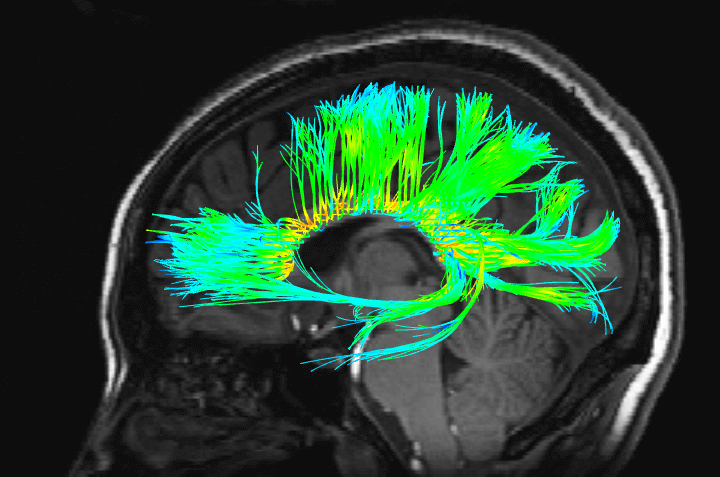
The evolution of brain research reflects the evolution of the brain itself in the sense that both have moved from the crude to the sophisticated, and in doing so have accelerated. Study of the human brain moved at a snail’s pace, at first, because it depended largely on cadaver brains, non-human brains, and rare lesions and freak accidents. Things worked this way for most of the modern era, right up through the latter part of the last century. But developments in applied physics opened up magnetic resonance technology, leading to magnetic resonance imaging (MRI) and this is changing how scientists study the brain, and human behavior.
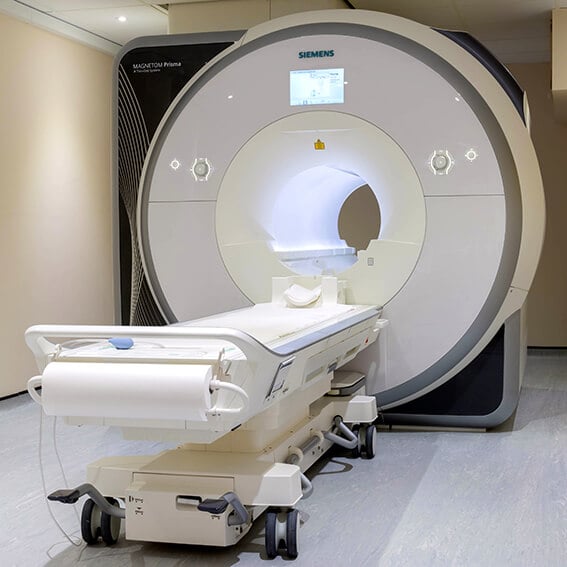
Most people know MRI for its diagnostic application. It can produce sharp, 3D images of your tennis elbow, your injured shoulder, or of a meniscus tear in your knee. But recent years have witnessed a revolution in the use of MRI as a research tool.
Detailed information of brain anatomy compared between normal subjects and those with genetic brain conditions, such as autism, or acquired conditions like post-traumatic stress disorder (PTSD), can offer enormous shortcuts for scientists who would otherwise study damaged brains. Furthermore, whereas standard MRI supplies still pictures, a variant of the technology known as functional MRI (fMRI) can tell scientists what different parts of the brain are doing as a subject’s situation changes. These can include thought processes triggered by questions, math problems to conquer, compliments or threats. The technology also can be used to study the brain’s role in the performance of skills — such as a movement in sports or dance, or playing the violin. It’s quite a difference from the limits of cadaver work, and opens up subtle aspects of human behavior for potential research topics.
Learning brain function stroke by stroke
As we learned from late neurologist and popular author Oliver Sacks, damage to the brain from strokes and accidents gave neuroscience — at least functional neuroanatomy — a wonderful head start. In the late 19th century, for instance, researchers were able to locate an important speech center and an important language comprehension center, called Broca’s area and Wernicke’s area, respectively for their discoverers. Also, as time went on, study of damaged areas in the cerebral cortex led to the elucidation of what we now call the brain’s primary motor cortex (along the back of the frontal lobe, in front of the brain’s central sulcus) and the primary somatosensory cortex (in the parietal lobe, just behind the central sulcus).
Based on the accumulated data from lesion studies, by the middle of the last century, it was routine for neurologists to pinpoint the location of many strokes, based simply on which movement control, which sensation, and which language comprehension and speech functions were deficient. They could do this long before imaging systems became available that could reveal the stroke. Thus, a saying emerged that the only way to learn neurology is “stroke by stroke”.
Into the imaging age
In the early days, brain imaging meant simple X-ray films taken of the brain at the most useful angles. Today, however, it usually means a computed tomography (CT, “cat scan”) of the brain, though it also could be a brain MRI. Both modalities — CT and MRI — are types of “cross-sectional” imaging, and you actually need it in order to document a stroke, no matter what you could surmise from the neurological exam prior to the imaging.
The requirement for cross-sectional imaging emerged, because the capability of the imaging is spectacular. Based on deficiency of motor function and/or speech, or based on which parts of the body are numb to pinpricks or vibration, or based on the cranial nerve exam, you can get a good idea of the location of a lesion. But imaging technology is more precise — so precise that no neurosurgeon would consider operating on the site of the lesion without it.
The surgery is simply not possible without the detailed 3D map that cross sectional imaging of a patient’s brain provides, but diagnosis is not the only application of the technology. Particularly, when it comes to MRI, which imparts no ionization radiation and is non-invasive (but for the injection of a contrast agent into a vein), you can use it over and over in many volunteers.
We’ve discussed fMRI research published last year that revealed neurological correlates for resistance to evidence against ideologically-based beliefs. But you can put people in an fMRI scanner and have them recite Shakespeare, play the violin, or be told that their beliefs about GMOs and vaccines run contrary to science, and see what happens.
One also could take people with genetic brain conditions, and normal subjects, and do regular MRI tests to compare anatomical features. Such a study was performed and published recently in the Journal of Radiology. It revealed specific anatomic features in cases of autism associated with a specific sequence abnormality of 16p11.2, a region of chromosome 16.
Neuroscience is really just at the beginning of the MRI era, so it’s hard to predict where, or how far, things will go. Suffice it to say, though, it’s reasonable to predict that it will go quite far in comparison with the lesion studies.
David Warmflash is an astrobiologist, physician and science writer. BIO. Follow him on Twitter @CosmicEvolution.
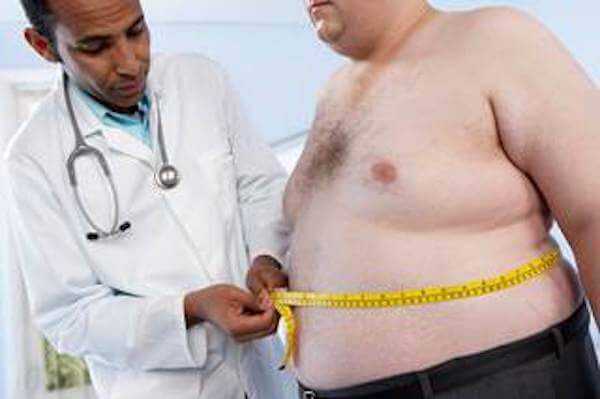
Obese men with metastatic melanoma who are treated using targeted or immuno-therapies survive for more than twice as long as patients receiving the same treatment, but who have a normal body mass index (BMI), according to a retrospective study by researchers at the University of Texas MD Anderson Cancer Center.
…
[Researcher Jennifer] McQuade stresses, “The public health message is not that obesity is good. Obesity is a proven risk factor for many diseases. Even within our metastatic melanoma population, we would not suggest that patients intentionally gain weight. We need to figure out what is driving this paradox and learn how to use this information to benefit all of our patients.”
…
The differential effects of BMI on survival according to sex points toward the possibility that a hormonal mechanism is at work. In men, aromatase enzyme in adipose tissue converts androgens to estrogen compounds, resulting in higher circulating levels of estradiols. Dr. McQuade’s team is now working with investigators at the University of Pennsylvania, who have found that turning on a particular estrogen receptor on melanoma cells makes them vulnerable to immunotherapy. The MD Anderson team is also looking at gene expression, mutations and immune profiling to identify possible differences in melanoma between obese and non-obese patients, and developing preclinical models.
[G]lyphosate [is] in the spotlight again as anti-GMO activist group Moms Across America released test results suggesting trace levels of the herbicide (commonly used with GE crops) in brands from Lipton to Skippy’s….
To place the data in context, Moms Across America released data from Health Research Institute Laboratories revealing a wide range of detectible glyphosate in samples of almond milk, breads, veggie burgers, and other products.
While the group describes the levels as “disturbing,” they ranged from just 0.87 parts per billion for almond milk (0.00087ppm) and 14.13 ppb for bread (0.01413 ppm) to 208.29 ppb for Lipton green tea, which a Unilever spokesperson noted was still significantly below the Environmental Protection Agency’s legally permitted thresholds.
“Detection of glyphosate on or in products, even if below the allowable limit, will result in more challenges. The key will be having the documentation and testing lined up to prove that the products are compliant [ie. below the safe harbor threshold, which has provisionally been set at 1100 micrograms per day],” [argued attorney Ryan Kaiser.]
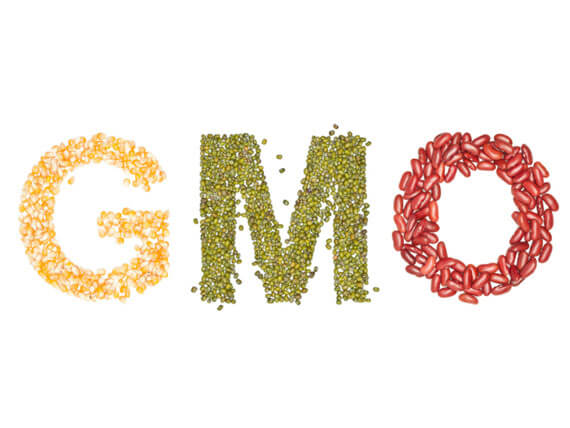
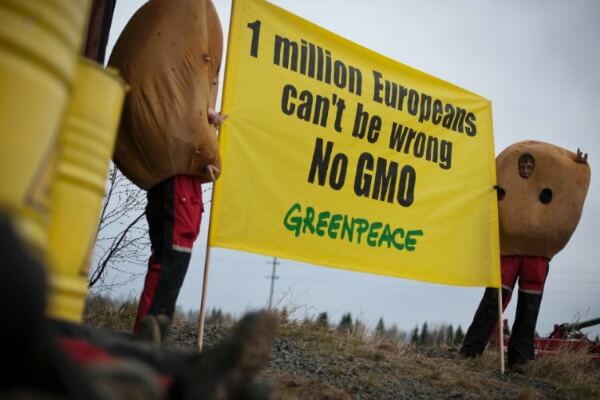
It’s such a simple question. Naturally, the answer is far more complex than it ought to be. We’ve always messed with the genetics of our food, even if we didn’t know that’s what we were doing. Yet today, the public takes issue with scientists mucking about with the genetics of our food. Where is the line, and why is it there? Is GMO natural or not?
4-year-old Benjamin is repeatedly smashing his head against the wall. He spins wildly in circles, screeching at full volume.
…
All that changed a year ago, when Benjamin started taking marijuana. In the little apartment he shares with his mother, mornings are now relaxed and orderly. His transformation may signal the arrival of a long-awaited and desperately needed healing for the many others just like him: children living with severe autism.
…
When THC binds to cannabinoid receptors in the brain, several sensations flood the body, what marijuana users call “the high.” CBD works differently, and often with opposite effects. It doesn’t bind directly to cannabinoid receptors, it’s not psychoactive, and it doesn’t alter how the brain functions.
…
Most parents said their children improved from the treatment. Nearly half saw a marked reduction in the core symptoms of autism, and nearly a third said their children either started speaking for the first time or were communicating nonverbally. One child said, “I love you, Mom”—for the first time in his life.
…
[Pediatric neurologist Ari] Aran stresses the need to change the anti-marijuana stigma that still pervades American medicine and drug regulation. “Giving marijuana to children is unthinkable, but CBD is not marijuana,” he says. “It’s not a drug. It’s a medication.”
[T]he New York Times [recently] ran a story on a scientific paper about how anesthetics stopped motion in plants with a provocative headline for readers and scientists: “Sedate a Plant, and It Seems to Lose Consciousness. Is It Conscious?”
The article considers the idea at length, talking about “signs of plant intelligence” and comparisons with animals.
But the answer, unreservedly, is “no.”
…
Stefano Manusco and František Baluška, the lead scientists behind the 2017 paper, are famous in botany circles for espousing the idea of “plant intelligence.” In a 2006 article in the journal Trends in Plant Sciences, they and other colleagues announced a new field of inquiry called “plant neurobiology.” That article was controversial, prompting a sharply written rebuttal by 36 renowned plant biologists, who suggested the field was “founded on superficial analogies and questionable extrapolations” – strong words for an academic debate.
…
[P]lants lack a nervous system, which has long seemed requisite for discussion of animal-like behavior. [W]hile the way in which many anesthetics function in humans is still a mystery, there is no reason why they or other chemicals shouldn’t induce a response in any organism, let alone plants.
Editor’s note: Devang Mehta is a PhD candidate in plant biotechnology at ETH Zurich
Researchers have found a structure on the small viruses that deliver gene therapy that makes them better at crossing from the bloodstream into the brain.
This is a key factor for administering gene therapies at lower doses to treat brain and spinal disorders, which could reduce the number of adverse side effects, researchers say.
…
The study, which appears in Molecular Therapy, examined adeno-associated viruses (AAVs), the most commonly used virus vectors for delivering gene therapies. The natural forms of these small viruses normally infect people without causing disease. For gene therapies, scientists remove most of the AAV genome, replace it with therapeutic genetic cargo, and inject trillions of copies into the patient.
…
[T]hey isolated a closely spaced set of just eight amino acids on the viral coating that confers the ability to cross the blood-brain barrier efficiently. “Grafting that structural footprint onto another AAV strain enables it to cross into the brain much more easily,” [researcher Blake] Albright says.
The finding suggests that other AAVs used for a gene therapy targeting the brain or spinal cord might be improved by having the same or a similar set of amino acids. It would cross the blood-brain barrier more efficiently, and thus in principle would require a smaller dose to achieve therapeutic effects in the brain.
Some of the world’s leading CRISPR labs have, independently, tweaked CRISPR — adding bursts of light here and rings of DNA there — in ways that could make it even more of a research powerhouse and, possibly, a valuable medical sleuth, able to detect Zika, Ebola, and cancer-causing viruses, or a cell’s history of, say, exposure to toxins.
The inventions, which, like CRISPR itself, have been given clever acronyms — DETECTR, CAMERA, and SHERLOCK — show that scientists have yet to exhaust CRISPR’s talents. The technology is beginning to look like a Swiss army knife (we told you that was the best metaphor) rather than a mere Word editor.
In fact, its potential utility — and profitability — as a molecular diagnostic tool and biosensor are enticing enough that the inventors of the three new uses of CRISPR have all filed for patents on them.
…
[E]ven as companies and universities gear up to test CRISPR to cure diseases in people, its unplumbed depths still hold unwelcome surprises: one CRISPR system being eyed as a therapeutic might have previously unsuspected and possibly dangerous effects.
“We’re finding more and more creative ways to make use of these tools, catching up with the diverse applications” that nature has found for CRISPR, said biologist David Liu of Harvard University and the Howard Hughes Medical Institute, who led the CAMERA study.
The need to feed growing populations in developing countries, especially countries in Africa, must be met by increasing the yields of crops. Also, climate-change related problem such as drought continue to worsen hunger problem and humanitarian crisis in the continent. Genetically modified organisms (GMOs) could greatly help with these issues, yet resistance persists in Europe and Africa both.
Ademola Adenle
…
Europe is overly cautious about the use of GMOs. But Europeans are well fed, and are not experiencing the type of hunger and malnutrition that affects people in other parts of the world. Europeans must stop playing fear-based politics on technologies that can benefit millions of people dying from micronutrient deficiency and hunger in Africa.
…
We need to stop media bias towards the use of GMOs, and educate the individuals and organizations that are influencing policies against GMOs. There is overwhelming evidence that GMOs are safe for human consumption. If the world is to achieve the United Nations sustainable-development goals, GMOs will need to play a part.
Editor’s note: Ademola Adenle is a fellow at the School of Global Environmental Sustainability at Colorado State University
Read full, original post: The Developing World Needs GMOs
Coffee is only the latest example of a trend that has become all too common. Activists who profess concern for human health and the environment latch on to an isolated finding – in this case the presence of trace amounts of a contaminant in coffee – and proceed to mount a well-orchestrated campaign to protect the public from the theoretical threat. In the process they use the issue to raise their profile and solicit funds. Similar campaigns have involved the herbicide glyphosate and genetically-engineered crops, BPA, and other substances.
The distinguishing feature of these campaigns is that they isolate a factoid from its scientific context and use it to instill fear in the public and to give bureaucratic regulators a new threat to regulate.
In the case of coffee, what is most egregious and problematic is that, while focusing on trace amounts of acrylamide in coffee and on the results of animal studies, the campaign ignores an abundance of solid evidence that has accumulated over decades concerning the health effects of coffee-drinking in humans. Even many commentators on this wrong-headed campaign fail to appreciate the weight of the epidemiologic evidence exculpating coffee.
Editor’s note: Geoffrey Kabat is a cancer epidemiologist at the Albert Einstein College of Medicine
Upgrading our biology may sound like science fiction, but attempts to improve humanity actually date back thousands of years. Every day, we enhance ourselves through seemingly mundane activities such as exercising, meditating, or consuming performance-enhancing drugs, such as caffeine or adderall. However, the tools with which we upgrade our biology are improving at an accelerating rate and becoming increasingly invasive.
…
Not long ago, Elon Musk announced a new company, Neuralink, with the goal of merging the human mind with AI. The past few years have seen remarkable developments in both the hardware and software of brain-machine interfaces. Experts are designing more intricate electrodes while programming better algorithms to interpret neural signals. Scientists have already succeeded in enabling paralyzed patients to type with their minds, and are even allowing brains to communicate with one another purely through brainwaves.
…
[A] major ethical concern is equality. As with any other emerging technology, there are valid concerns that cognitive enhancement tech will benefit only the wealthy, thus exacerbating current inequalities.
…
It’s important to discuss these risks, not so that we begin to fear and avoid such technologies, but so that we continue to advance in a way that minimizes harm and allows us to optimize the benefits.
Our muscles may actually possess a molecular memory in the form of epigenetic marks on our DNA. According to a study published in Scientific Reports, these chemical tags tell a tale of when skeletal muscles grew after exercise and could possibly help them grow bigger later on.
Although you might think that month-long resistance training class that you’ve been meaning to sign up for again was all for naught, your muscles might actually remember it.
…
The study conducted by researchers at Keele University – which looked at over 850,000 sites on human DNA – contributes to the epigenetics of exercise.
…
Their results show for the first time that epigenetic marks are not only adjusted as a result of resistance exercise, but can be remembered later on for muscle growth, even after the muscles may have returned back to their initial size.
…
The results could have far-reaching influence on athletes who have been banned for using drugs to build muscles and enhance performance. It is possible these drugs could actually create long-term changes to the muscles, continuing to affect performance long after the athlete has served his or her short-term ban.
…
[A]thletes may be able to improve their recovery from an injury and accompanying muscle loss if we can pinpoint the genes responsible for muscle memory, according to Dr. [Adam] Sharples.
New Zealand’s food standards watchdog is reviewing how rules might apply to a new generation of products that can be altered genetically, but without any introduced DNA.
Food Standards Australia New Zealand (FSANZ) … released a consultation paper around how laws should apply to food derived from new breeding techniques, or NBTs.
NBTs are a wide set of new technologies being developed and applied in plant and animal breeding, with similar approaches being explored in medicine.
But there were questions over whether such foods were “food produced using gene technology” and thus could not be sold or used as an ingredient under FSANZ’s current code, unless listed in a special schedule.
That uncertainty was because some of these new techniques could be used to make certain changes to the genome, or genetic make-up, of an organism without permanently introducing any new DNA.
The organism from which the food for sale was obtained could therefore contain genome changes, yet not any new DNA, meaning NBT foods could appear similar to those made using conventional methods.
…
[Otago University geneticist Professor Peter] Dearden said the new technologies had “enormous potential” but getting their regulation wrong could, on one hand stifle innovation, and on the other cause disquiet about risk.