Ancient Eurasian DNA helps untangle humanity’s twisted family tree

tools wikimedia x

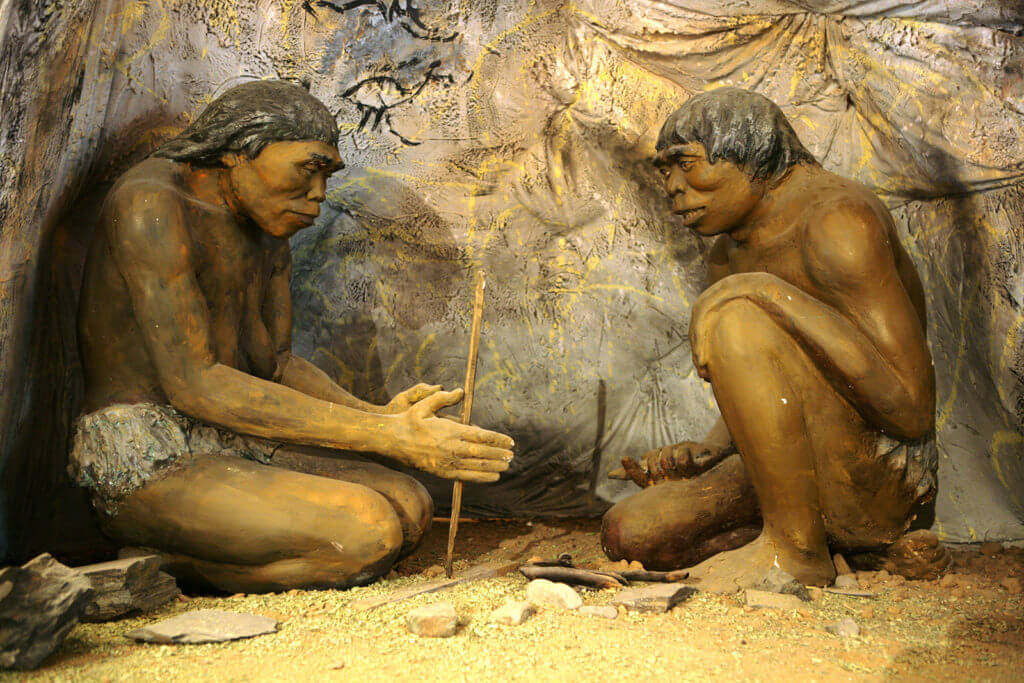
Advances in ancient DNA sequencing are shedding light on the genetic links between our Stone Age ancestors and modern humans, say Chinese researchers, allowing researchers to untangle the twisting branches of the human family tree.

In a paper published in Trends in Genetics, scientists at the Chinese Academy of Sciences in Beijing summarise this flood of new research, reviewing analyses of the genomes of 24 individuals who lived in pre-agricultural Eurasia between 45,000 and 7,500 years ago. They outline new insights covering how ancient modern humans are related to present-day humans, how the populations migrated and interacted with each other, and how they interbred with archaic hominins such as Neanderthals and Denisovans.

The review found at least four distinct populations: Europeans, Asians, and two that did not contribute substantially to present-day populations. By between 14,000 and 7,500 years ago, unexpected genetic connections were found between individuals from opposite sides of Eurasia, providing evidence for greater interactions between these geographically distant groups — likely due to climate and cultural change.

According to biological anthropologist Michael Knapp at the University of Otago, New Zealand, the ability to analyse early modern human genomes has resulted in “new and exciting insights into our ancestry, with new findings sometimes coming out on a monthly basis”.

Read full, original post: Paleolithic human DNA reveals migrations and exchange

Indian farmers no closer to gaining access to GMO mustard 8 months after recommended approval

a c e

On May 11, last year, the GEAC, [India’s] apex authority for assessing the safety of genetically modified (GM) crops, declared that GM mustard had passed the prescribed tests and recommended to the environment minister that he should approve it.  Five months later, on October 10, 2017, the environment secretary noted that minister Harsh Vardhan wanted the case referred back to the GEAC in light of petitions and representations he had received. Science & technology minister Harsh Vardhan was given the additional charge of the environment portfolio on May 23, following the death of minister of state Anil Madhav Dave five days before. In September, he was made the cabinet minister for environment as well. The GEAC had met eight times on GM mustard since an application for environmental or commercial release was made in September 2015 by a team of scientists of the Delhi University, led by its former vice-chancellor, Deepak Pental. A sub-committee of the GEAC had studied the 3,285-page bio-safety dossier they had furnished.

But the minister listened to the naysayers.

The chances of GM mustard getting into farmers’ fields seem bleak. The GEAC has not met since last May.

Read full, original post: Why GM mustard may not see the light of day

Viewpoint: We aren’t even close to being able to engineer superhumans

aHR cDovL d dy saXZlc NpZW jZS jb vaW hZ VzL kvMDAwLzA NS wMTAvb JpZ luYWwvYmlvbmljLW hbi qcGc
First, let me tell you how smart I am. So smart. My fifth-grade teacher said I was gifted in mathematics and, looking back, I have to admit that she was right. I’ve properly grasped the character of metaphysics as trope nominalism, and I can tell you that time exists, but that it can’t be integrated into a fundamental equation. I’m also street-smart. Most of the things that other people say are only partially true. And I can tell.

A paper published in Nature Genetics in 2017 reported that, after analysing tens of thousands of genomes, scientists had tied 52 genes to human intelligence, though no single variant contributed more than a tiny fraction of a single percentage point to intelligence. As the senior author of the study Danielle Posthuma, a statistical geneticist at the Vrije Universiteit (VU) Amsterdam and VU University Medical Center Amsterdam, told The New York Times, ‘there’s a long way to go’ before scientists can actually predict intelligence using genetics. Even so, it is easy to imagine social impacts that are unsettling: students stapling their genome sequencing results to their college applications; potential employers mining genetic data for candidates; in-vitro fertilisation clinics promising IQ boosts using powerful new tools such as the genome-editing system CRISPR-Cas9.

Some people are already signing on for this new world. Philosophers such as John Harris of the University of Manchester and Julian Savulescu of the University of Oxford have argued that we will have a duty to manipulate the genetic code of our future children, a concept Savulescu termed ‘procreative beneficence’. The field has extended the term ‘parental neglect’ to ‘genetic neglect’, suggesting that if we don’t use genetic engineering or cognitive enhancement to improve our children when we can, it’s a form of abuse. Others, like David Correia, who teaches American Studies at the University of New Mexico, envisions dystopian outcomes, where the wealthy use genetic engineering to translate power from the social sphere into the enduring code of the genome itself.

Such concerns are longstanding; the public has been on guard about altering the genetics of intelligence at least since scientists invented recombinant DNA. As long ago as the 1970s, David Baltimore, who won a Nobel Prize, questioned whether his pioneering work might show that ‘the differences between people are genetic differences, not environmental differences’.

aeon logoI say, dream on. As it turns out, genes contribute to intelligence, but only broadly, and with subtle effect. Genes interact in complex relationships to create neural systems that might be impossible to reverse-engineer. In fact, computational scientists who want to understand how genes interact to create optimal networks have come up against the kind of hard limits suggested by the so-called travelling salesperson problem. In the words of the theoretical biologist Stuart Kauffman in The Origins of Order (1993): ‘The task is to begin at one of N cities, travel in turn to each city, and return to the initial city by the shortest total route. This problem, so remarkably simple to state, is extremely difficult.’ Evolution locks in, early on, some models of what works, and hammers out refining solutions over millennia, but the best computer junkies can do to draw up an optimal biological network, given some input, is to use heuristics, which are shorthand solutions. The complexity rises to a new level, especially since proteins and cells interact at higher dimensions. Importantly, genetics research is not about to diagnose, treat or eradicate mental disorders, or be used to explain the complex interactions that give rise to intelligence. We won’t engineer superhumans any time soon.

In fact, all of this complexity can work against the ability of a species to evolve. In The Origins of Order, Kauffman introduced the concept of ‘complexity catastrophe’, a situation in complex organisms where evolution has already been optimised, with genes interlinked in so many ways that the role of natural selection becomes diminished in stepping up fitness for a given individual. In short, a species has tinkered its way to a shape that it cannot easily evolve, or improve upon.

intelligence 12 19 17 2If complexity is a trap, so too is the idea that some genes are elite. In the 1960s, Richard Lewontin and John Hubby made use of a new technology called gel electrophoresis to separate unique variants of proteins. They showed that different versions of gene products, or alleles, were distributed with much higher variation than anyone had expected. In 1966, Lewontin and Hubby came up with a principle called ‘balancing selection’ to explain that suboptimal varieties of genes can remain in a population since they contribute to diversity. The human genome works in parallel. We have at least two copies of any gene on all autosomal chromosomes, and having varying copies of a gene can help, especially in immune-system diversity, or any cellular function in which evolution wants to try out some riskier thing while also maintaining a version of a gene that is tried-and-true. Other times, genetic variants that might introduce some risk or novelty can piggyback or hitchhike along with a beneficial genetic variant. If there is an implication for human intelligence, it is that genes have a parasitic quality of scheming off one another; none is superior so much as its utility is developed by exploiting its fellow genes.

Importantly, we have known for a long time that 30,000 genes cannot determine the organisation of the brain’s 100 trillion synaptic connections, pointing to the irrefutable reality that intelligence is, to an extent, forged through adversity and the stress of developing a brain. We know that evolution bargains in trade-offs of risk for advantage, which is why, I believe, we will always carry genetic variations that risk autism, obsessive-compulsive disorder, depression and schizophrenia; and it is why I believe that the neoliberal view that science will eventually solve most mental-health problems is almost certainly incorrect. In evolution, there are no superior genes, only those that bargain some risk, and a few that are optimal for particular environments and tasks.

I wish I could believe that writing is in my genes, but the novel is only hundreds of years old, not long enough for evolution to be selecting novelists, per se. The truth is that writing takes hard work, and writers can exhibit psychological traits that are otherwise a disadvantage – such as neuroticism, or relentless self-examination. We all understand and share these traits to an extent. Evolution has taught us the brutal fact that nature is most competitive when the comparative fitness between competitors is the slimmest. In light of that, the wealth inequality that has emerged in recent decades is not a validation of yawning biological gaps – it is driven by our need to justify an illusion of superiority and control.

Trust me. I should know.

Jim Kozubek is a science writer and computational biologist based in Cambridge, Massachusetts. His writing has appeared in The Atlantic, Time and Scientific American, among others. His latest book is Modern Prometheus: Editing the Human Genome with Crispr-Cas9 (2016). 

Aeon counter – do not removeThis article was originally published at Aeon as Even if genes affect intelligence, we can’t engineer cleverness and has been republished here with permission.

Viewpoint: California’s looming coffee cancer warning shows how judges and lawyers can subvert science

dfe b d c s x
A judge in California is going to determine whether or not coffee causes cancer.

Think about that. We live in a society where judges and lawyers — not medical doctors, scientists, or even a group of really clever AP biology high school students — get to determine the credibility of biomedical research. The stakes are high: If coffee is deemed carcinogenic, then the State of California will be required to give up all pretense at common sense and sanity.

To give just a small flavor of the level of insanity California has reached, attorney Raphael Metzger and the non-profit Council for Education and Research on Toxics sued several coffee companies, alleging that their product causes cancer. For restitution, they want to slap a Proposition 65 label on coffee cups and, as you probably guessed, a giant bag full of money.

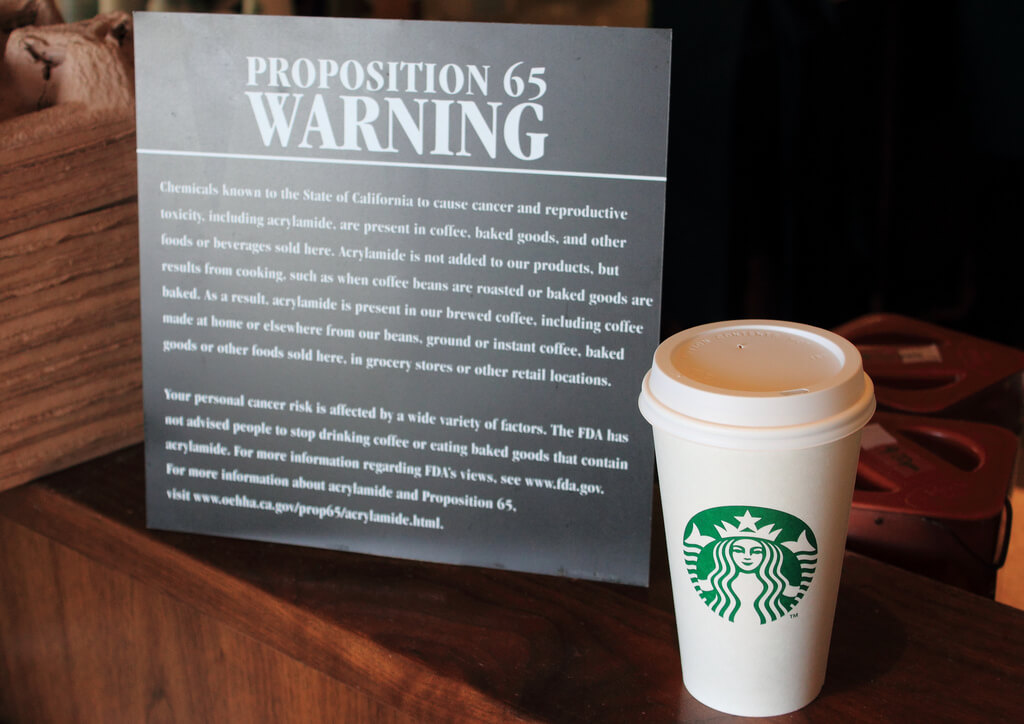
a ac d bIf you’ve been to California, you’ve almost certainly seen the Proposition 65 warning. The signs ominously warn, “This area contains chemicals known to the State of California to cause cancer and birth defects or other reproductive harm,” and they can be found just about everywhere, including airports and Disneyland.

According to Bloomberg, “the Council for Education and Research on Toxics needed only to allege that coffee contains trace amounts of one of almost 1,000 Proposition 65 chemicals to pursue its lawsuit.” Then, as is so often the case, unscrupulous lawyers use well-intentioned but overly broad laws to shake down innocent companies. Last year alone, Wall Street Journal reports that $25.6 million in cash and prizes were handed out in 681 settlements. Lawyers took home 75% of it.

7-Eleven has already surrendered and forked over $900,000. Starbucks has placed Proposition 65 signs in its store, but they might be required to place the warning directly on cups. If they don’t comply, “[f]ines can run up to $2,500 for each cup sold without a proper warning,” says Bloomberg.

What Happens in Cali Doesn’t Stay in Cali

One may be tempted to conclude that Californians deserve the government that they get. That might be true, but the rest of the country doesn’t deserve it.

Because California is such a large state, what happens in California doesn’t stay in California. Manufacturers don’t want to print different food labels for different states. So, in order to comply with California law, a company like Starbucks might just decide to slap cancer warnings on every single cup of coffee sold in America. (This is one of the reasons why the GMO label debate in California drew national attention.) The notion that a handful of activists in California can dictate science and health policy for 320 million Americans is, quite frankly, obscene.

Yet, that’s where we find ourselves. Lawyers who are hellbent on destroying science to make a quick buck can find plenty of fertile ground and ample opportunity in California.

Alex Berezow is a microbiologist and senior fellow of biomedical science at the American Council on Science and Health. He holds a Ph.D. in microbiology. Follow him on Twitter @AlexBerezow

This article was originally published at the American Council on Science and Health’s website as “In California, Coffee Causes Cancer And Lawyers Collect The Fee” and has been republished here with permission.

Viewpoint: How the EU’s protectionist anti-GMO trade policy hurts US farmers

maxresdefault

Editor’s note: Bernard Goldstein, MD is a professor emeritus and dean emeritus at the University of Pittsburgh Graduate School of Public Health.

President Trump’s trip to Davos has continued a long tradition of American presidents complaining about unfair barriers to American trade. He certainly is correct about the European Union’s (EU) misuse of an otherwise good public health principle, known as the Precautionary Principle, to ban American agricultural produce.

The precautionary principle, in essence, says look before you leap and consider uncertainty. It is “enshrined” in EU founding documents. But much to the distress of the rest of the world, the lack of a rigorous definition allows it to be flexibly applied to protect European agriculture.

GMO grain, in which the U.S. has long had a leadership role, was … banned by the EU based on the precautionary principle. After … being unable to demonstrate any health risk, the EU retreated from another World Trade Organization defeat by developing a complex and convoluted process preventing the U.S. and other non-EU farmers from significant EU market penetration while allowing EU farmers time to catch up.

An expert review by the World Health Organization and the UN Food and Agricultural Organization found that the EU’s more stringent standard was without significant health benefits.

Read full, original post: The EU’s distortion of public health unfairly hurts US agricultural produce

In vitro fertilization planning: How many eggs do you need to freeze?

freeze
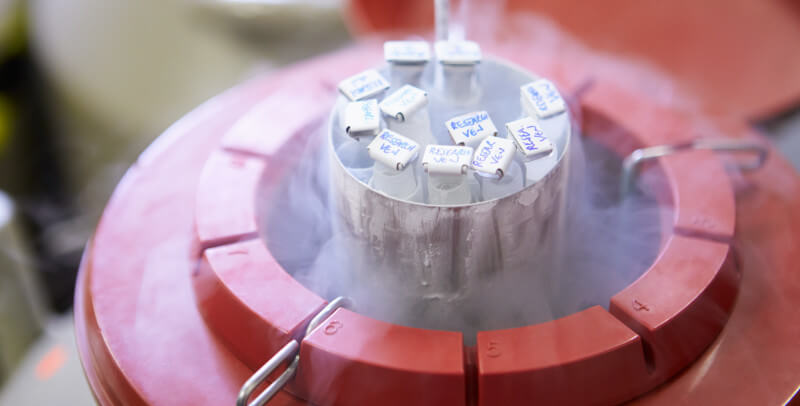
[W]hen you freeze a batch of eggs, that’s no guarantee any or all of them will make it through the next steps. One egg frozen does not necessarily equal one child. That simple truth leads to a complicated question: Just how many eggs should you freeze to have a decent chance of having a baby in the future?

At many clinics, women used to be advised to aim to freeze 10 to 20 eggs, no matter their age or situation. But that never made much sense given that eggs decline in quality and quantity as a woman ages.

Screen Shot at AM
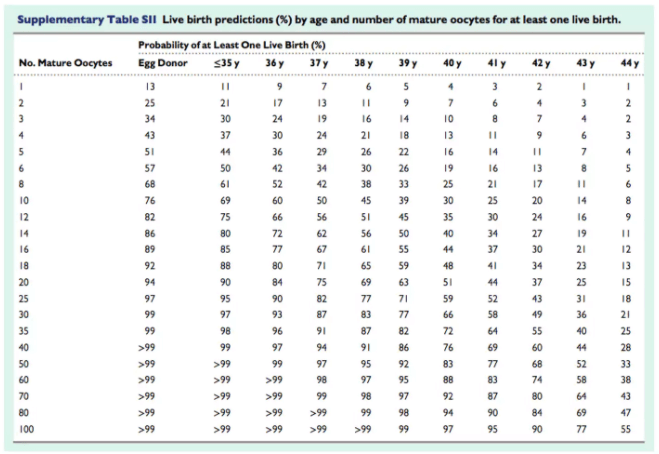
Click chart to enlarge

[A] study, published in April 2017 in Human Reproduction, uses a mathematical model based on data from women who underwent in vitro fertilization (because of their male partners’ fertility issues) without freezing their eggs to extrapolate to women who elect to do IVF with frozen eggs.

According to their analysis, a woman who is 35 with 10 eggs has a 69 percent chance of a baby. At age 37, she has a 50-50 chance. And at age 39, she has a mere 39 percent chance.

Some fertility specialists refer to this as the inverted pyramid of IVF, and they say women are often surprised when they finally understand how it works.

Read full, original post: Social egg freezing is a numbers game that many women don’t understand

Viewpoint: Racism rather than ‘race’ better explains racial disparities in addiction and other diseases

race
[T]he assumption that health disparities are caused by race rather than racism permeates more subtly in the practices of many organizations, including the National Institutes of Health (NIH).

On the subjects of disease and disparity, the NIH focuses on the genetic code inside individual bodies and ignores the wider contexts within which these bodies live, work, play and get sick. The NIH overlooks societal inequalities and gives genes too much credit.

As a black child, [six-year-old] Khiara’s risk of death from asthma hangs 10 times higher than a white girl her age. A child like her living in the South Bronx is 14.2 times as likely to be hospitalized for asthma-related complications as a child in a wealthier neighborhood less than two miles away.

An overwhelming majority of the 2013 NIH Biennial Report’s section on asthma discusses biomarkers, immunotherapies and the development of the “African power chip,” a genome-sequencing endeavor meant to “discover genes associated with asthma in African ancestry populations.” The report ignores the fact that, as a result of unjust housing policies and highway projects, black Americans have a significantly higher exposure rate to 13 out of 14 major pollutants.

Khiara is not uniquely susceptible to asthma because of her genetics. She is at risk because of a different kind of inheritance, one bestowed by the legacy of unrelenting racism embedded in American history.

Read full, original post: Racial Differences in Addiction and Other Disorders Aren’t Mostly Genetic

Super bananas and red-fleshed apples: Under-the-radar GMO wonder foods

pri

Thanks to GM crops, farmers have been able to upscale production of vital crops to feed our growing world. It is estimated that GM crops have increased the income of farmers by more than US$167 million since 1996.

GM crops are found pretty much everywhere, with more than 185 million hectares cultivated worldwide.

But in some countries, GM produce also has a long history of controversy, with health and environmental advocates arguing against their use, despite the science backing up their safety.

As a consequence, in countries like Australia, GM produce still has a long way to go before reaching our tables.

Recently, scientists from Queensland University of Technology tweaked the DNA of the humble banana to create a super banana. Unlike the regular banana, this GM banana is rich in provitamin A (a precursor of vitamin A in our bodies) and iron.

Red-fleshed apples, loaded with anthocyanins, nature’s famous antioxidants, are another good example of a super GM fruit.

Sounds good? Unfortunately, you won’t see these super fruits in Australian supermarkets.

[U]ltimately, if you want to see super bananas or red-fleshed apples on your table, a change of heart is needed in the Australian marketplace.

Read full, original post: Genetically modified produce: Misunderstood wonders

Are atheists smarter than religious people?

atheistnoprob

Of course, there are examples of extremely intelligent individuals with strong religious convictions. But various studies have found that, on average, belief in God is associated with lower scores on IQ tests. “It is well established that religiosity correlates inversely with intelligence,” note Richard Daws and Adam Hampshire at Imperial College London, in a new paper published in Frontiers in Psychology, which seeks to explore why.

One suggestion is that perhaps religious people tend to rely more on intuition. So, rather than having impaired general intelligence, they might be comparatively poor only on tasks in which intuition and logic come into conflict – and this might explain the lower overall IQ test results.

To investigate, Daws and Hampshire surveyed more than 63,000 people online, and had them complete a 30-minute set of 12 cognitive tasks that measured planning, reasoning, attention and working memory. The participants also indicated whether they were religious, agnostic or atheist.

As predicted, the atheists performed better overall than the religious participants, even after controlling for demographic factors like age and education. Agnostics tended to place between atheists and believers on all tasks. In fact, strength of religious conviction correlated with poorer cognitive performance.

[I]n theory, perhaps cognitive training could allow religious people to maintain their beliefs without over-relying on intuition when it conflicts with logic in day to day decision-making.

Read full, original post: Are religious people really less smart, on average, than atheists?

Replacement ears for children grown from their own cells in Chinese lab

ears

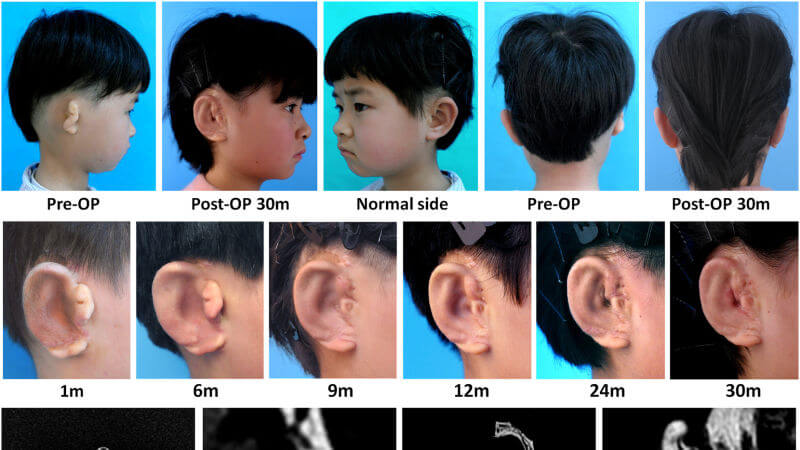
Chinese scientists say they’ve accomplished something that’s long been a goal in the world of regenerative medicine—giving someone a new, perfectly compatible ear, freshly grown in the lab. What makes the feat a world-first is that the ear was made using that person’s very own cells.

The experimental procedure was performed on five children, ages six to ten years, with an underdeveloped ear, a condition known as microtia.

The researchers created a 3D-printed replica of each child’s normal ear (obtained via a CT scan), but with the dimensions reversed. This replica was then used to create a mold littered with tiny holes and made out of biodegradable material. The mold was filled in with cartilage cells taken from the children’s deformed ear that were further grown in the lab. Over 12 weeks, the cells started to grow into the shape of the mold, replacing bits of it that had already disintegrated. This part-ear/part-mold was then grafted onto the children.

So far, the ears have stayed put, with no signs of the body inadvertently absorbing or rejecting the material. Cartilage has also continued to gradually replace the mold, resulting in a more natural-looking ear over time. The team’s results were published in the journal EBioMedicine.

Read full, original post: Five Chinese Children Get Lab-Made Ears Grown From Their Own Cells

Sperm donor children can sometimes track down their once-anonymous dads using consumer DNA tests

qzegsvzd ck itlf ij

There was a time when a man could anonymously donate sperm to a couple or woman trying to conceive and everyone could be reasonably sure it would remain a secret. But thanks to home DNA test kits and the internet, those days are over.

Men and women who didn’t know they were conceived with a sperm donor are unexpectedly turning up the family secret when they take DNA tests for fun, for genealogy research or other reasons.

And donors who were promised anonymity decades ago are now being contacted by offspring who have tracked them down with the help of consumer DNA tests from companies such as 23andme and Ancestry and Facebook groups such as DNA Detectives.

It’s the type of scenario sperm donors and recipients now need to be aware of, say those who work in the fertility industry.

“I think it’s folly to be promising anonymity to any kind of donor,” said Sherry Levitan, a Toronto lawyer specializing in assisted reproductive technology.

Dr. Alfonso Del Valle, [sperm bank] Repromed’s medical director, says about 75 per cent of Canadian donors now have agreed to let their donor offspring to learn their identity when they turn 18.

But for the others, he said, “We do respect their wishes.”

Read full, original post: Donor-conceived people are tracking down their biological fathers, even if they want to hide

Trace amounts of neonicotinoid insecticides found in 70 percent of Great Lakes stream samples

passive sampler deployment l

Pesticides thought to harm some kinds of bees are turning up in Great Lakes tributaries at unexpected times of the year. Neonicotinoids — or neonics for short — are used on crops, in gardens, and in pet flea medicine.

recent study by the U.S. Geological Survey found at least one such chemical in more than 70 percent of samples from Great Lakes streams.

Co-author Michelle Hladik of the USGS says … the chemicals sprayed on farms aren’t breaking down as they should.

Laura Campbell with the Michigan Farm Bureau’s agricultural ecology department [says] there aren’t many good alternatives to neonics. “They are promoted as some of the safer pesticides for use on the market that still have the effectiveness to maintain the safety and quality of our food supply,” she said.

Read full, original post: Pesticides Widespread In Great Lakes Streams

How Asian consumers and farmers are tiptoeing into using GMO crops

ci

High costs, back-breaking work and unpredictable yields compelled Rosalie Ellasus to give up on corn farming….

But Rosalie changed her mind after the Philippine government allowed companies to release biotechnology corn seed. Scientifically, such a material is known as a genetically modified organism (GMO) or transgenic organism.

Transgenic corn has been genetically engineered to be resistant to pests, herbicides and even drought. With the biotechnology, farming becomes enjoyable and lucrative for farmers like Rosalie because it requires less tillage, pest control and fertilizers.

And most of all, the variety is high yielding.

“If we don’t monitor our land well, we can only get around 3.5 metric tons of corn per hectare with conventional farming but I can get 7.8 metric tons per ha with BT corn,” she said.

Since 2002, the Philippines has embraced the BT products, especially BT corn. Filipino farmers have been growing transgenic corn on more than 800,000 ha of farmland.

Unlike the Philippines, the Indonesian government is also reluctant to consider GMO in its plans to boost agricultural products but, ironically, the country has been a GM product importer for two decades.

The good news is that some GM crops, including more disease-resistant potatoes that the ministry experimentally cultivates, have a good chance of passing the tests.

Read full, original post: GMO in times of shrinking land (behind paywall)

5 ways CRISPR will revolutionize the future

TASCABILE DNA x

1. CRISPR Could Correct The Genetic Errors That Cause Disease. […] In summer 2017, scientists at the Oregon Health and Science University used CRISPR to delete [a defective gene causing hypertrophic caridiomyopathy] in a number of viable human embryos.

2. CRISPR Can Eliminate the Microbes That Cause Disease. […] In 2017, a team of Chinese researchers successfully increased resistance to HIV in mice by replicating a mutation of a gene that effectively prevents the virus from entering cells.

3. CRISPR Could Resurrect Species. In February 2017, Harvard geneticist George Church […] claimed his team was just two years away from developing an embryo for an elephant-mammoth hybrid.

4. CRISPR Could Create New, Healthier Foods. CRISPR gene editing has proven to be promising in the field of agricultural research. Scientists from Cold Spring Harbor Laboratory in New York used the tool to increase the yield of tomato plants.

5. CRISPR Could Eradicate The Planet’s Most Dangerous Pest. Gene-editing techniques like CRISPR could directly combat infectious diseases, but some researchers have decided to slow the spread of disease by eliminating its means of transmission.

Technological and ethical hurdles still stand between us and a future in which we feed the planet with engineered food, eliminate genetic disorders, or bring extinct animal species back to life. But we are well on our way.

Read full, original post: A CRISPR Future: Five Ways Gene Editing Will Transform Our World

USDA and FDA to coordinate and streamline regulations of GMO and gene-edited crops and animals

USDAFDA

U.S. Agriculture Secretary Sonny Perdue and FDA Commissioner Scott Gottlieb, M.D. announced at the White House [Jan. 30] a formal agreement aimed at making the oversight of food more efficient and effective by bolstering coordination between the two agencies.

“Today, Commissioner Gottlieb and I signed a formal agreement to promote coordination and the streamlining of capacities and obligations on shared concerns and jurisdiction,” said Secretary Perdue.

The FDA and the USDA have worked closely over the years to oversee the nation’s food supply. The USDA oversees the safety of most meat, poultry, catfish and certain egg products while the FDA has authority over all other foods such as dairy, seafood, produce and packaged foods.

The agreement … commits the USDA and the FDA to identify ways the agencies can better align and enhance their efforts to develop regulatory approaches to biotechnology, as each agency works to fulfill commitments outlined in the September 2016 National Strategy for Modernizing the Regulatory System for Biotechnology Products and the more recent Task Force on Agriculture and Rural Prosperity Report. These initiatives established a vision for increasing transparency, predictability and efficiency of the regulatory processes for biotechnology products.

Read full, original post: FDA, USDA announce formal agreement to bolster coordination and collaboration

State of mind: Will computers learn to act and think like we do?

artificial
Forget about today’s modest incremental advances in artificial intelligence, such as the increasing abilities of cars to drive themselves. Waiting in the wings might be a groundbreaking development: a machine that is aware of itself and its surroundings, and that could take in and process massive amounts of data in real time. It could be sent on dangerous missions, into space or combat. In addition to driving people around, it might be able to cook, clean, do laundry – and even keep humans company when other people aren’t nearby.

A particularly advanced set of machines could replace humans at literally all jobs. That would save humanity from workaday drudgery, but it would also shake many societal foundations. A life of no work and only play may turn out to be a dystopia.

Conscious machines would also raise troubling legal and ethical problems. Would a conscious machine be a “person” under law and be liable if its actions hurt someone, or if something goes wrong? To think of a more frightening scenario, might these machines rebel against humans and wish to eliminate us altogether? If yes, they represent the culmination of evolution.

artificial 12 18 17 3As a professor of electrical engineering and computer science who works in machine learning and quantum theory, I can say that researchers are divided on whether these sorts of hyperaware machines will ever exist. There’s also debate about whether machines could or should be called “conscious” in the way we think of humans, and even some animals, as conscious. Some of the questions have to do with technology; others have to do with what consciousness actually is.

Is awareness enough?

Most computer scientists think that consciousness is a characteristic that will emerge as technology develops. Some believe that consciousness involves accepting new information, storing and retrieving old information and cognitive processing of it all into perceptions and actions. If that’s right, then one day machines will indeed be the ultimate consciousness. They’ll be able to gather more information than a human, store more than many libraries, access vast databases in milliseconds and compute all of it into decisions more complex, and yet more logical, than any person ever could.

On the other hand, there are physicists and philosophers who say there’s something more about human behavior that cannot be computed by a machine. Creativity, for example, and the sense of freedom people possess don’t appear to come from logic or calculations.

Yet these are not the only views of what consciousness is, or whether machines could ever achieve it.

Quantum views

Another viewpoint on consciousness comes from quantum theory, which is the deepest theory of physics. According to the orthodox Copenhagen Interpretation, consciousness and the physical world are complementary aspects of the same reality. When a person observes, or experiments on, some aspect of the physical world, that person’s conscious interaction causes discernible change. Since it takes consciousness as a given and no attempt is made to derive it from physics, the Copenhagen Interpretation may be called the “big-C” view of consciousness, where it is a thing that exists by itself – although it requires brains to become real. This view was popular with the pioneers of quantum theory such as Niels Bohr, Werner Heisenberg and Erwin Schrödinger.

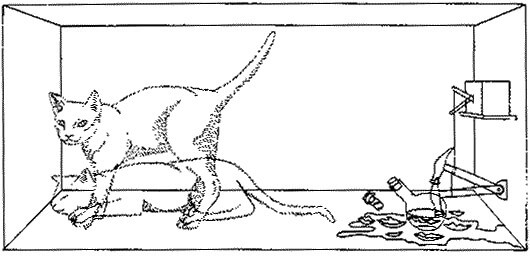
The interaction between consciousness and matter leads to paradoxes that remain unresolved after 80 years of debate. A well-known example of this is the paradox of Schrödinger’s cat, in which a cat is placed in a situation that results in it being equally likely to survive or die – and the act of observation itself is what makes the outcome certain.

artificial 12 18 17 2The opposing view is that consciousness emerges from biology, just as biology itself emerges from chemistry which, in turn, emerges from physics. We call this less expansive concept of consciousness “little-C.” It agrees with the neuroscientists’ view that the processes of the mind are identical to states and processes of the brain. It also agrees with a more recent interpretation of quantum theory motivated by an attempt to rid it of paradoxes, the Many Worlds Interpretation, in which observers are a part of the mathematics of physics.

Philosophers of science believe that these modern quantum physics views of consciousness have parallels in ancient philosophy. Big-C is like the theory of mind in Vedanta – in which consciousness is the fundamental basis of reality, on par with the physical universe.

Little-C, in contrast, is quite similar to Buddhism. Although the Buddha chose not to address the question of the nature of consciousness, his followers declared that mind and consciousness arise out of emptiness or nothingness.

Big-C and scientific discovery

Scientists are also exploring whether consciousness is always a computational process. Some scholars have argued that the creative moment is not at the end of a deliberate computation. For instance, dreams or visions are supposed to have inspired Elias Howe‘s 1845 design of the modern sewing machine, and August Kekulé’s discovery of the structure of benzene in 1862.

A dramatic piece of evidence in favor of big-C consciousness existing all on its own is the life of self-taught Indian mathematician Srinivasa Ramanujan, who died in 1920 at the age of 32. His notebook, which was lost and forgotten for about 50 years and published only in 1988, contains several thousand formulas, without proof in different areas of mathematics, that were well ahead of their time. Furthermore, the methods by which he found the formulas remain elusive. He himself claimed that they were revealed to him by a goddess while he was asleep.

The conversation x xThe concept of big-C consciousness raises the questions of how it is related to matter, and how matter and mind mutually influence each other. Consciousness alone cannot make physical changes to the world, but perhaps it can change the probabilities in the evolution of quantum processes. The act of observation can freeze and even influence atoms’ movements, as Cornell physicists proved in 2015. This may very well be an explanation of how matter and mind interact.

Mind and self-organizing systems

It is possible that the phenomenon of consciousness requires a self-organizing system, like the brain’s physical structure. If so, then current machines will come up short.

Scholars don’t know if adaptive self-organizing machines can be designed to be as sophisticated as the human brain; we lack a mathematical theory of computation for systems like that. Perhaps it’s true that only biological machines can be sufficiently creative and flexible. But then that suggests people should – or soon will – start working on engineering new biological structures that are, or could become, conscious.

Subhash Kek is a Professor of Electrical and Computer Engineering at Oklahoma State University. He works in AI, neural networks, cybersecurity, archaeoastronomy, and history of science. Follow him on Twitter @subhashkak1

A version of this article was originally published on the Conversation’s website as “Will artificial intelligence become conscious?” and has been republished here with permission.

Why approved Chinese-developed GMO rice that boosts yields, reduces pesticide use not available to country’s farmers, consumers

b f b

In 2009, two insect-resistant genetically modified rice lines (Huahui-1 and Bt-Shanyou -63) were granted biosafety certificates by the Ministry of Agriculture (MOA) in China after nearly 10 years of rigorous and strict biosafety assessments. Most farmers welcomed the planting of the transgenic rice due to their potential to reduce pesticide spraying by 50-60%, increase yield by 60-65% and improve the health of farmers. [However,] these two lines have yet [to be] commercialized … largely because of low public acceptance. … This has created a dilemma. On the one hand, the government has invested substantial amounts of funding in GM crop development, but on the other hand, the end users or consumers are not prepared to accept GM products due to safety reasons.

Public worries still exist simply because the protocols of the technology remains too technical to be understood. Consumers often do not have access to appropriate channels providing science-based and easy-to-understand information. Consequently, they are misled by activists from non-governmental organizations (NGOs) which utilizes the social media reports to publicize the misconception of GM crops. The outreach of scientists in educating the public with essential knowledge of transgenic biotechnology, its benefits derived and biosafety issues is crucially needed in order to bring notable impact to the public’s acceptance of GM crops.

Read full, original post: Producing Transgenic Rice with Improved Traits and Yield — How Far Have We Come?

This may explain why women are more likely to develop lupus

Lupus

Every year, 16,000 cases of lupus are reported in the United States — 9 out of 10 of them in women. Scientists have long believed sex differences help explain women’s predisposition for the autoimmune disease. But researchers said last week that they may now have one explanation for why exactly the presence of two X chromosomes increases the chances that a person will develop lupus.

Dozens of genes have been associated with lupus, but in a new study, researchers focused on the overexpression of the gene Tlr7, which sits on the X chromosome.

For their study, researchers studied the immune cells of healthy women, measuring the expression of Tlr7. They found that in some cells, both copies of the gene were making the protein TLR7.

The researchers also discovered that the overexpression of Tlr7 — what is called biallelism, because both alleles are being expressed — led to changes in the cells and the proteins they produce that could induce autoimmune issues.

[Researcher Jean-Charles] Guéry said his research did not show how or why exactly Tlr7 avoids X chromosome inactivation, but that it suggested limiting TLR7 levels might offer a new therapeutic avenue to treating lupus — a step that would be easier than trying to inactivate the second copy of the Tlr7 gene.

Read full, original post: New study points to why so many more women develop lupus than men