[F]or the third week in a row, flu activity remains widespread in 49 states, according to the latest CDC data. Some 6.6 percent of patients visiting the doctor now have flu-like symptoms, the highest rate since 2009.
…
One, this is turning into a really aggressive flu season. Two, CDC data is far from a perfect predictor of how bad a flu season will be, let alone how bad it already is. The CDC bases its “Flu View” reports and predictions on physician records that report “influenza-like illnesses” among patients. That means there’s about a six-day gap between the ground truth and the CDC’s best understanding of it.
…
Since 2013, the influenza division at the CDC has been working to improve its forecasting methodologies.
…
On a beta website, the agency posts flu forecasts based on their work. This year, for the first time ever, the CDC is sponsoring a “State FluSight challenge,” asking states to submit public records of influenza-like illness. In the past, the CDC has only ever charted national and regional flu trends.
…
The CDC might also be capable of making better recommendations for controlling pandemics, or mass outbreaks in localized areas. “If you close a school after the peak, you haven’t really done much to stop the spread of flu,” [epidemiologist Matt] Biggerstaff says. “But if you close on the uptick, you can have a much bigger impact.”
[W]hile water is an indispensable solvent for all known life forms that exist today, water also inhibits the formation of string-like chains of nucleic acid polymers such as RNA that were likely precursors of life. This raises the question: how could the nucleic acids have formed in the first place? One solution to this “water paradox” is that life may have originated in something other than water, and only later adapted to the presence of water.
…
[Zachary] Adam and others have been investigating a leading candidate for a water alternative called formamide, a clear liquid that consists of hydrogen, oxygen, carbon, and nitrogen. Not only does formamide favor polymer bond formation more than water does, it also reacts with other molecules to form nucleobases, amino acids, and some of the other basic compounds needed to make nucleic acids.
…
Now in a new paper published in Scientific Reports, a team of researchers, led by Adam and coauthor Masashi Aono at Keio University and Tokyo Institute of Technology, have demonstrated the possibility that formamide may have been produced in abundance by radiation in some pockets of the early Earth.
…
[R]adioactive mineral deposits can produce enough formamide to accumulate to high concentrations, which could have formed large formamide reservoirs in which nucleic acids could have formed as precursors to the first living organisms.
A combination of a tiny segment of DNA and a specific antibody injected into a solid tumour has been shown to remove not only the target tumour, but also others in the body, at least in mice.
…
Like several other treatments, the combination therapy, reported in the journal Science Translational Medicine, prompts the body’s own immune system to tackle tumours. However, unlike others, it functions as a one-size-fits-all strategy. To a significant extent, it seems, it is not necessary to first identify the type of cancer involved.
…
The Stanford team’s strategy works by exploiting the curiously ambivalent relationship between cancer tumours and immune cells called T cells. The latter function to attack bodily invaders through detecting abnormal proteins. Initially the T cells will recognise such proteins on the surface of cancer cells and enter the developing tumour. However, as the tumour continues to grow, T cell activity drops off. In a sense, the immune system gives up. [Researcher Ronald] Levy and his colleagues found a way to reactivate the moribund T cells.
…
The first trial involved 90 animals with lymphoma tumours on both sides of their bodies. In each, only one tumour was treated. The paper details that 87 out of the 90 were cured.
…
An initial human trial will get underway soon, with the researchers looking to recruit about 15 patients with low-grade lymphoma.
After a week of talks, German coalition negotiators agreed on the cornerstones of their new programme. But when a new government could actively participate in meaningful EU reform is still uncertain.
…
In the programme, there is not much left of the optimism and visions for a leading role in Europe that was once touted. The upcoming [Social Democratic Party] congress vote is hanging like the sword of Damocles above the final decision over the forming of a new government.
…
After the controversial renewal of weed killer glyphosate’s EU approval, its usage will be limited in Germany and “as soon as possible essentially terminated”, the former German agriculture minister Christian Schmidt (CSU) said. Schmidt upset the apple cart when he went rogue and significantly contributed to the re-licensing of glyphosate.
Nearly 20 years ago, a new strain of mice debuted in a California laboratory. The mice were missing a gene called SCN2A that helps neurons transmit electrical currents. And the study announcing their genesis was the last word on the matter for many years.
About a decade later, the mouse’s creator, Maurice Montal, sacrificed the few animals left from the colony. He had sent some of his mice to other researchers, and some ended up with a team in Houston, Texas. But they, too, eventually stopped working with the strain.
…
In June 2016, Kevin Bender, an autism researcher, sent [researcher Edward] Glasscock an urgent request asking for the mice. Requests from two other autism researchers quickly followed. Soon the mice were populating labs in San Francisco, Baltimore, and France.
…
The first study on the mice came out in 2000, when researchers knew practically nothing about genes linked to autism. By 2014, a series of massive sequencing studies had generated a list of more than 60 genes with strong ties to the condition. SCN2A topped this list.
…
It took Bender a year from when he first found the paper to track the mice down in Glasscock’s lab and receive them. When the mice finally arrived, Bender and his team doted on the colony’s new founders—which led to a whole new line of research.
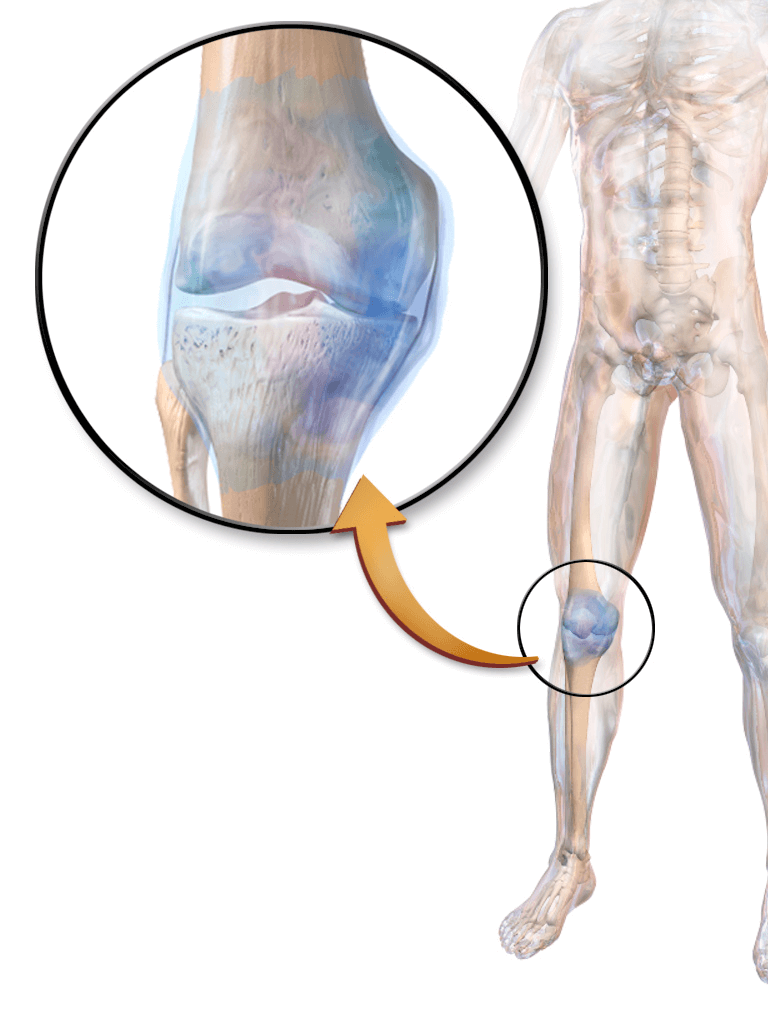
Imagine a single injection into the knee vanquishing painful arthritis — forever. Gene therapies aimed at two molecular targets could make that possible, with one, Invossa, already approved in South Korea.
“Arthritis” is a catch-all term for more than 100 varieties of joint inflammation. In the US, more than 30 million people have osteoarthritis (OA). The knee is particularly vulnerable, with arthritis there plaguing 10 percent of men and 13 percent of women aged 60 years or older.
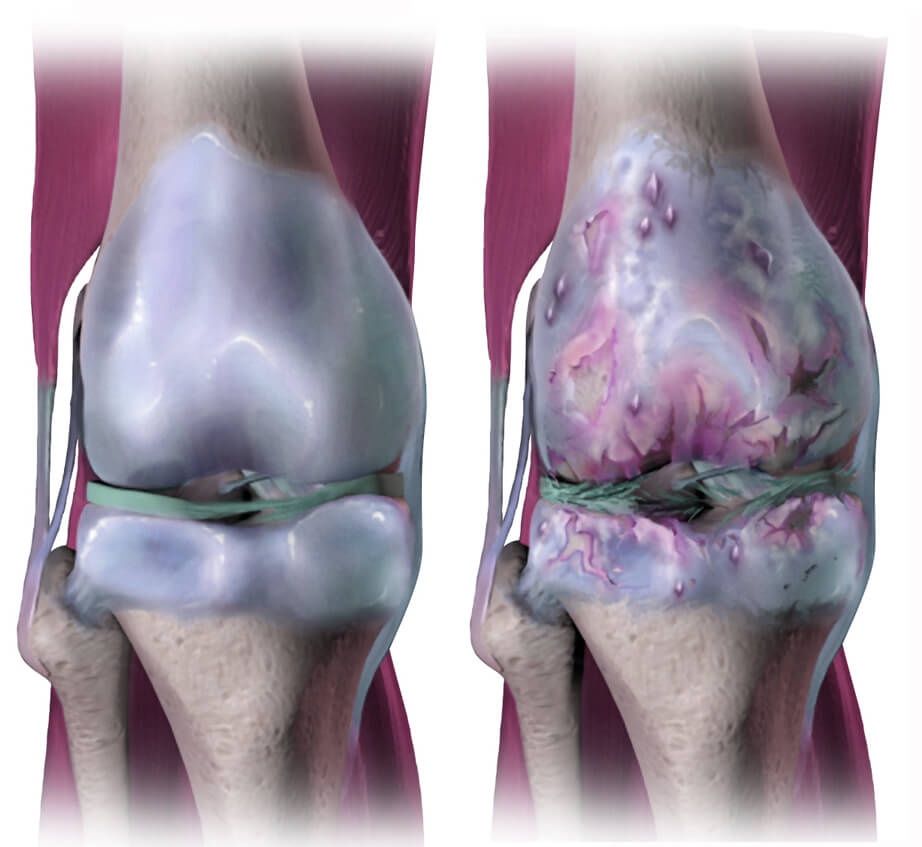
Four events contribute to arthritis: inflammation, an increase in the volume of synovial fluid that fills joints, breakdown of the joint, and underlying bone damage.
Treatment may begin with the obvious long-term advice to lose weight and exercise more. That’s followed by pain relievers and anti-inflammatories, shots of corticosteroids or hyaluronic acid, surgery, acupuncture, and physical and/or occupational therapy. Sufferers may seek the usual crop of supplements, including capsaicin, eucalyptus oil, rosehips, ginger, borage seed oil, indian frankincense, turmeric, and fish oil. Reader’s Digest helpfully adds drinking milk and applying bags of frozen peas to painful joints to the list.
But these approaches are ephemeral — they must be taken consistently, fueling advertisements, if not lasting relief. In contrast, gene therapy gets to the root of the problem.
A complex disease
A challenge in treating OA is that it isn’t one disease.
“Not so long ago, many people thought it was simply the result of wear and tear — end of story. Now we appreciate more the biological changes that underlie OA,” said Christopher Evans, PhD, who heads the musculoskeletal gene therapy research lab at the Mayo Clinic. He’s lead author of a recent review article on knee gene therapy.
Evans and his colleagues are about to begin clinical trials of one gene therapy approach to treating OA. Said Evans:
Most gene therapy targets diseases, like hemophilia, cystic fibrosis, and Duchenne muscular dystrophy, that are Mendelian disorders where the therapeutic gene is obvious. In OA, there is no single obvious therapeutic target. Several pathologies are going on at once: the cartilage is breaking down, the synovium is inflamed, bone metabolism is altered and the patient feels pain.
The landscape of a knee
A synovial joint is more than just a space between bones. The region between the cartilage caps on adjoining bones contains synovial fluid, which a surrounding membrane secretes. Nutrients seep into the fluid from the circulation, although the cartilage part of the joint has no direct blood supply, nerves, or lymphatic vessels. That’s why joints are notoriously slow to heal.
Many of the cells in a joint are cartilage cells, or chondrocytes, but the synovial membrane also houses a few macrophages (immune system gobblers), fibroblasts (which pump out collagens), and a smattering of mesenchymal progenitor cells, which may help surrounding injured ligaments to regenerate.
A challenge in developing drugs to treat synovial joints like that of the knee is that small molecules leave the area quickly, and large molecules must leave blood vessels and make their way through the surrounding extracellular matrix. In fact, gene therapies given systemically to treat single-gene diseases that affect joints as well as other body parts, such as hemophilia, require separate injections into the joints.
Even delivering cell-based treatments, like mesenchymal stem cells, isn’t very effective because the cells don’t stick around long enough to help. “Cells disappear from joints quite quickly, in days or at most 2 weeks after injection into joints. This may limit the duration of any beneficial effects,” Evans said.
Gene therapy ups and downs
The idea to use gene therapy to treat OA isn’t new — the first publication is from 1992. Targeting arthritic joints always had to meet a higher bar than untreatable fatal illnesses because OA affects only a few body parts and is obviously survivable.
Early gene therapy attempts were sidelined, along with many others, when retroviral vectors were found to pierce oncogenes and cause leukemia in 2003. Retroviruses have since been retooled to cut themselves out of chromosomes after they’ve delivered their cargo, while safer viruses have emerged — particularly adeno-associated viruses (AAV).
The two gene therapy approaches for OA use different vectors to target different genes.
Researchers at Kolon Life Science in Seoul, including TissueGene in Rockville, Maryland, are using retroviruses to deliver the transforming growth factor beta 1 (TGF-beta 1) gene. The Mayo Clinic group is using AAV to deliver the interleukin 1 receptor antagonist (IL-1Ra) gene.
Of the eight gene therapy trials for OA listed at ClinicalTrials.gov, all but the one about to begin from the Mayo Clinic group were developed in South Korea.
Gene therapy approach no. 1: TGF-beta 1:
TGF-beta 1 controls production of collagen and glycosaminoglycan, both key components of the noncellular material in the joint space. So boosting TGF-beta 1 should be a “disease-modifying” therapeutic.
The TGF-beta 1 genes aboard retroviruses are delivered in chondrocytes taken from a cell line cultured from finger bones of an infant born with polydactyly (extra fingers). Thirty million doctored cells were injected into one knee, one time, for 159 patients who were followed for a year, in the initial clinical trials. The phase 3 clinical trial about to begin in Baltimore will add 680 treated patients and 340 given placebo injections, and will follow them for two years.
Gene therapy approach no. 2: IL-1Ra:
Maryland’s TissueGene selected TGF-beta 1 because it stimulates repair of the joint cartilage, which many investigators consider central to OA, Evans said. His group chose IL-1Ra because in tackling the cytokine interleukin-1, it hits on many fronts — it’s anti-inflammatory, halts cartilage and bone damage, and may also reduce pain. “IL-1Ra is a small, naturally-occurring glycoprotein with an uncomplicated dose-response curve. It acts as a pure receptor antagonist with no agonist activity. This provides assurances against overdosing and greatly reduces the risk of adverse effects,” he said.
Evans’ group is using AAV which, unlike other vectors, can deliver its cargo straight to the affected chondrocytes in an inflamed joint – “in situ.” It’s therefore less of an intervention than cell-based gene therapy.
Their gene of choice, IL-1Ra, encodes a protein that’s already available as the drug anakinra (brand name Kineret). It’s an injectable biologic drug produced from recombinant DNA technology used since 2001 to treat rheumatoid arthritis. A study from 2009 indicates that it’s safe when injected into arthritic knees but over the 12-week course of the study, not effective. A protein-based drug isn’t the forever fix that a gene therapy might be.
So far the AAV-mediated OA gene therapy delivering IL-1Ra has had excellent results in horses. The phase 1 clinical trial at the Mayo clinic will begin in the summer on nine participants, testing three doses — 100 billion, a trillion, or 10 trillion “viral genomes.”
As more people hobble around exercise classes following knee and hip surgery, and with the 46 million people in the US aged 65 and older predicted to more than double by 2060, a single-shot treatment to help inflamed joints heal themselves can’t come too soon.
Ricki Lewis has a PhD in genetics and is a genetics counselor, science writer and author of The Forever Fix: Gene Therapy and the Boy Who Saved It, the only popular book about gene therapy . Follow her at her website or Twitter @rickilewis.
Editor’s note: This article is part two of a three-part series by Marc Brazeau on his 2018 predictions on food, farming and GMOs. Read part one and part three.
No, I’m not talking about CRISPR and other gene editing techniques. I suspect those will make other people’s lists of what to watch for in 2018, not mine. CRISPR will continue to march forward throughout 2018, but I don’t see any big change in trajectory from 2017, or 2016 or 2015 for that matter. Gene editing will continue to be important, but I don’t foresee much change in the story.
No, what I’m talking about is a new generation of GE foods that have finally been commercialized. These are crops that cut against common anti-biotech tropes and a biotech salmon that breaks new ground and could change the narrative in fundamental ways.
The first wave of GE crops were the herbicide tolerant and insect resistant commodity crops. Bt corn and cotton, RoundUp Ready corn and soy. Those traits are now in alfalfa, sugar beets, and canola. While the benefits of those traits were immediately obvious to farmers, they are more opaque to consumers. They have left the space open to a critique that holds that biotech in ag has had no benefit for consumers and merely helps farmers, while helping Monsanto and the rest of Big Scary Ag sell more chemicals. Nevermind that Bt crops have led to the shuttering of insecticide factories or that increased sales of RoundUp have meant decreased sales of paraquat, dicamba, 2-4D and other herbicides which used to be more popular, the GMOs allow farmers to “drench their crops in toxic chemicals” narrative was too sexy to sideline.
GMOs 2.0 all cut against that false, but persistent narrative.
Bt brinjal: Big Ag need not apply
In Bangladesh, Bt brinjal (eggplant) is helping smallholder farmers in a developing country drastically decrease insecticide use on a staple vegetable crop. This is everything RoundUp Ready corn is not. There is nothing “industrial ag” about this crop, other than taking business away from the industrial ag companies that sell insecticides to poor farmers.
The Arctic Apple: A soccer mom’s new best friend
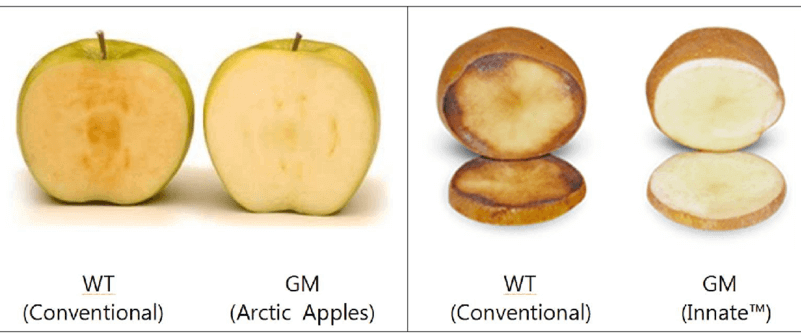
In the US, Okanagan Specialty Fruits’ non-browning apple hit grocery shelves in the Midwest last month. Unlike previous genetically engineered crops this one is neither a tropical fruit that not many people in the continental US like, nor is it a commodity crop fed mostly to livestock or turned into soda and ethanol. It’s an apple, as all American as … well … apple pie. And it’s been engineered to be more useful to consumers rather than farmers, though I’ve never fully understood why making crops more useful for farmers was supposed to be a knock against genetic engineering. This is a product that feels modern and useful without a lot of the psychological or ideological baggage that has dogged consumer acceptance of previous GE crops.
While most of us know that there is nothing wrong with a little brown on an apple, it’s oxidation, not rot, try convincing picky kids of that. And even those of us who know that in the rational parts of our brains, we’re wired to be leery of food that looks like it’s going off, so browned apple slices still result in unnecessary waste with grown-ups too. Rather than lecture kids, or fool around with squeezing a lemon (and throwing away half of that next week) the Arctic Apple sidesteps the whole issue by using gene editing to “silence” the gene that produces the browning enzyme. Ta-dah!
Click image to enlarge
A related breakthrough, the non-browning Innate potato has the added bonus of producing less of the carcinogen acrylamide during frying. Simplot has brought these potatoes to market, for the huge french fry and tater tot market as well as a White Russet™ for the supermarket produce section . Monsanto had a Bt trait for potatoes which could cut the heavy insecticide use in potato production drastically, but Food and Water Watch and other groups have petitioned McDonald’s, the biggest market maker, not use either trait.
So you can thank Food and Water Watch for the acrylamide in your french fries and the insecticides on Idaho fields. This is why breakthroughs in mainstream consumer acceptance are so important.
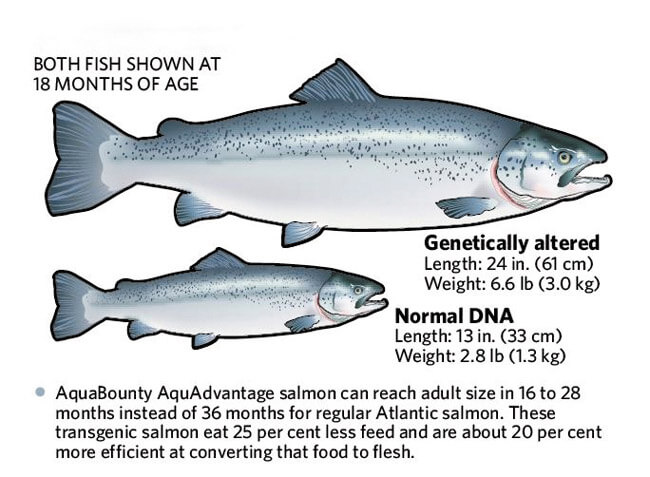
Faster growing salmon needs less food to get to your plate
Click image to enlarge
Meanwhile in Canada, genetically engineered salmon has hit supermarket seafood sections. After 25 years in regulatory limbo, an innovation from the early 1990’s will finally see the light of day. The AquaAdvantage salmon has been bred to reach market weight in half the time while consuming 10-25% less food, substantially cutting back on the resources required to produce the same amount of farmed salmon.
While finally bringing a genetically engineered animal to market is a huge breakthrough in terms of regulatory challenges, consumer acceptance is another hurdle to be cleared.
The FDA approved the salmon in November 2015, and Health Canada and the Canadian Food Inspection Agency followed in May 2016. Sales began in Canada in 2017, Conley said. Because Health Canada concluded that these salmon are “as safe and nutritious for humans and livestock as conventional salmon,” labeling was optional and left up to the discretion of the grocers who distributed the filets.
In the United States, the regulatory landscape is less straightforward. When it comes to GMO foods, “[regulators] found existing laws and stretched out the scope of those laws to cover biotechnology products,” Hallerman said, “and it’s awkward.”
In some other countries, such as Australia, whole new acts were drawn up specifically to cover biotech products. In the United States, square pegs were shoved into round holes. For example, because many genetically modified plants are generated using a modified version of a bacterium that can be an agricultural pest, these plants are regulated as plant pests. Genetically modified animals are regulated as drugs, which is why the Food and Drug Administration is responsible.
A dicey gamble on transparency
For better or for worse, the salmon are not being labeled for consumers yet. While the meat is indistinguishable from non-GE salmon, the industry clearly thinks consumers aren’t quite ready to accept that. Rather than market the salmon as environmentally friendly, they are currently being opaque about where it’s being sold.
AquaBounty Technologies … announced on August 4 that it has sold some 4.5 tons of its hotly debated product to customers in Canada. … at market price: US$5.30 per pound ($11.70 per kilogram), says Ron Stotish, the company’s chief executive. He would not disclose who bought it.
It should be said that this is at least as much about making sure that anti-biotech groups can’t organize boycotts through fear-mongering and disinformation as it is about any anxiety in the median shopper. This strategy will either turn out to be prudent baby steps or a time bomb that blows up in their face. A sadly dicey proposition, because there are a lot of really useful livestock traits sitting on the shelves of university research labs waiting for consumer acceptance of GE fish and livestock.
Whether it’s hornless cattle that don’t gore each other or farm workers, or goats that produce milk with less bacteria in regions without pasteurization, or the potatoes that could drastically reduce insecticide use and carcinogens from frying, there’s a ton of useful innovation waiting in the wings. 2018 will be a pivotal year as to whether we get there sooner rather than later.
Marc Brazeau is the editor of Food and Farm Discussion Lab. Follow him on Twitter @eatcookwrite
This article was originally published at Food and Farm Discussion Lab as “2018 Predictions: GMOs 2.0, a turning point” and has been republished here with permission.
Alison Van Eenennaam is arguably the most effective voice in communication about biotechnology, especially in animals. In today’s podcast she makes her third visit to Talking Biotech. In 2017, she and co-author Amy Young published a review of the literature that examined the presence of transgenic DNA or proteins in milk, meat and eggs. The data show that DNA and proteins from plants are digested to their component parts and pose no unusual risk. Milk meat and eggs from animals consuming GE products are no different from the same products from animals on alternative diets.
Plant domestication, the theory runs, comprises a long history during which humans select traits advantageous to farming practice. Qualities such as seed size, nutritional content, climatic resilience and reproductive reliability ideally become concentrated, resulting in a comparatively small number of widely cultivated plants.
Research by a team of archaeologists and archaeo-botanists, however, has found that these cultivated qualities have not always been viewed as priorities. Indeed, in uncovering the practices of early societies that occupied “the middle ground between farming and foraging”, the scientists discovered that the plant species most encouraged to grow exhibited “traits that overlap a considerable degree with traits that are characteristic of plants now considered as weeds”.
…
For these pre-agricultural societies, the name of the game in securing cereals was cultivation without domestication. Preferred plants were encouraged to grow in areas near settlement points. To achieve this, invasive behaviour was a boon. In today’s language, plants that spread like weeds were very good things indeed.
…
The research, published in the journal Nature Plants, provides the first evidence of sophisticated plant management in the Saharan region during this period.
Editor’s Note: Novartis CEO Joseph Jimenez retired in January after eight years in the top job at one of the world’s top pharmaceutical companies. During his tenure, the company helped lead a movement that put gene therapies on the map. Scientific American recently interviewed Jimenez.
Scientific American spoke with Jimenez about CAR-T therapy, his hopes for new game-changing treatments that could target disease-causing proteins and problems with the U.S. health care system.
What made you pursue CAR-T, even as other large pharmaceutical companies decided not to bet on the technology?
Novartis was known for breakthrough innovations in oncology back in the early 2000s. We developed Gleevec [which treats certain types of blood and intestinal cancers with less collateral damage to healthy cells than a typical chemotherapy]. When we saw the data on CTL019 CAR-T coming out of Penn—the really early data about five years ago—we decided that this was a place where we were going to place a big bet. The data reminded us of the early days of Gleevec, and so we went out on a limb.
Is there another gamble like that in the works now?
There’s a new technology that Jay Bradner, the head of our research organization, is championing: protein degradation [essentially tricking the body into disposing of harmful proteins], which is a new approach to addressing intractable [disease] targets. We’re also investing heavily in gene editing because we do believe there will be therapeutic value coming out of gene editing.
How confident are you that CRISPR will be usable to edit genes in sick people?
So far it’s promising, but I think everybody is in a wait-and-see mode. There will be twists and turns along the path, as there is with any new technology.
Recent studies of honeybees and bumblebees have examined combinatory effects of different stressors, as insect pollinators are naturally exposed to multiple stressors. At the same time, the potential influences of simultaneously occurring agricultural agents on insect pollinator health remain largely unknown.
Due to different farming methods, and the drift of applied agents and manure, pollinators are most probably exposed to insecticides but also bacteria from organic fertilizers at the same time.
We orally exposed honeybee workers to sub-lethal doses of the insecticide thiacloprid and two strains of the bacterium Enterococcus faecalis, which can occur in manure from farming animals.
Our results show that under laboratory conditions the bees simultaneously exposed to the bacterium and the pesticide thiacloprid had significantly higher survival rates 11 days post-exposure than the controls, which surprisingly showed the lowest survival.
…
[C]aloric restriction through behavioural and physiological adaptations may have mediated an improved survival and stress resistance in our tests. However, the decreased food consumption could in long-term also result in possible negative effects at colony level.
Scientists have used a device that fits in the palm of the hand to sequence the human genome. They say the feat, detailed in the journal Nature Biotechnology, opens up exciting possibilities for using genetics in routine medicine. It is a far cry from the effort to sequence the first human genome which started in 1990.
…
Prof Nicholas Loman, one of the researchers and from the University of Birmingham, UK, told the BBC: “We’ve gone from a situation where you can only do genome sequencing for a huge amount of money in well equipped labs to one where we can have genome sequencing literally in your pocket just like a mobile phone.
…
Prof Loman used the handheld device to track the spread of Ebola during the outbreak in West Africa.
…
The technology works by passing long strands of DNA through a tiny hole (the eponymous nanopore). The building blocks of DNA are four bases known by their letters A, C, G and T. As each passes through the pore it creates a unique electrical signal that allows researchers to determine the DNA sequence. The research group say the approach was around 99.5% accurate, but also allowed them to look at parts of human DNA that had been poorly studied.
Scientists have successfully tweaked the DNA in human heart cells to correct mutations that cause a deadly disease. If the gene-editing technique is proven safe, it could permanently cure children with a genetic disorder that leaves them wheelchair-bound by their early teens.
The genetic disease targeted in this study is called Duchenne muscular dystrophy (DMD), a disorder that affects about one in 5,000 males and causes the progressive wasting away of skeletal and heart muscles. Researchers took cells from patients with the disease, and used the gene-editing tool CRISPR-Cas9 to correct up to 60 percent of the mutations that cause the disease. That was enough to allow heart tissue engineered from those edited cells in a petri dish to beat again as a healthy heart would, according to a study published today in Science Advances.
…
“I’m surprised by how simple and effective this method turned out to be so far,” [author Eric] Olson says. CRISPR seems to have cut only the DNA spots it was supposed to, without making any so-called off-target edits, he says.
…
If studies continue to go smoothly, with promising results, clinical trials could start within a couple of years, according to Olson.
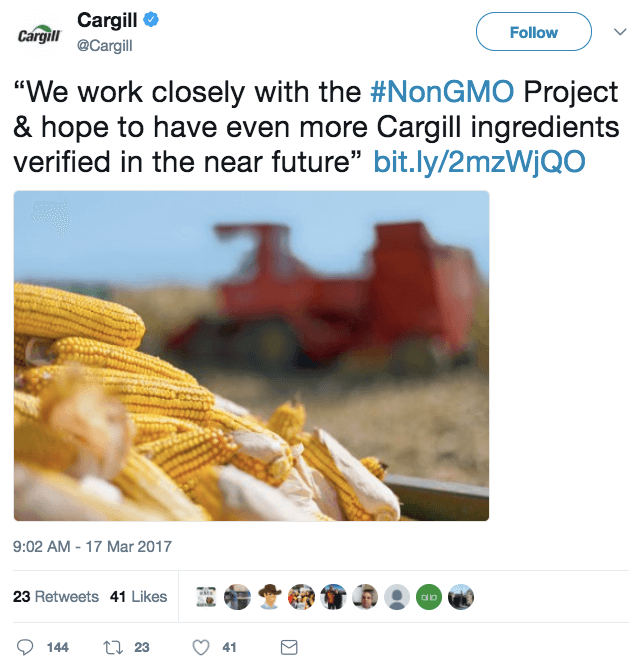
About 9 months ago Cargill sent out a tweet that unintentionally offended, and profoundly offended, thousands of North American farmers.
…
The tweet, released March 2017, quickly became a public relations debacle. Hundreds of farmers hammered the private company for working “closely” with the Non-GMO Project.
…
The Non-GMO Project is a non-profit that verifies foods as not genetically modified and issues a non-GMO label.
But it isn’t neutral about GM foods.
“A growing body of evidence connects GMOs with health problems (and) environmental damage,” its website claims.
As well, the organization says there is “no scientific consensus on the safety of GMOs.”
There’s one problem with those statements: they’re false:
Cargill clarified its position, saying it agrees with the science showing that GMOs are safe.
In the same sentence Cargill said it also believes that consumers deserve choices.
“Cargill has adopted a ‘yes and yes’ approach – we believe in the science and its benefits, and we understand that both science and consumer values drive decision making.”
The nuanced position didn’t appease the online crowd.
“Sort of like selling ammo to both sides in a civil war,” tweeted Lawrence McLachlan, a farmer from Ontario.
Read full, original post: ‘Yes and yes’: Cargill successfully embraces both science and non-science
[H]ealth risks were generally perceived to be lower for bioenergy than food whenever full commercialization was pursued. Furthermore, full commercialization of genetically modified food prompted higher concerns about personal health, whereas use of crops for bio-energy production was broadly related to higher levels of socioeconomic risk. Finally, although the majority of consumers identified health risks as being most relevant, the consequences for the environment evoked the greatest degree of risk perception.
In general, our findings lend support for the notion that the policy regime is the most important determinant for risk perception, followed by the type of risk dimension and level of trust in industry.
…
The guiding question of this study was whether or not consumers are likely to reject green GE under all circumstances. For our purposes, this would be reflected by the level of risk perception remaining the same across each product end-use, type of policy regime and risk dimension. However, this supposition was immediately contested by the fact that risk perception of green biotechnology depends on product end-use. This finding has important implications, since it suggests that biotechnological applications are evaluated at both the technological and the product levels, specifically in relation to the intended end-use. In general, food applications are perceived to be riskier than those for bioenergy, suggesting that nonfood products might find greater public acceptance.
[C]linicians and scientists have proposed a variety of theories to explain why kids with ASD tend to be less socially communicative than their [typical development] peers. One popular theory, the social motivation hypothesis, suggests that kids with ASD aren’t intrinsically motivated to interact with other people because they aren’t neurologically “rewarded” by social interactions.
…
A second theory, sensory over-responsivity — also known as the overly intense world hypothesis — posits that because kids with ASD interpret sensory cues more intensely than their TD peers, those with ASD tend to shy away from interactions they perceive as overwhelming.
…
[Researcher Katharine] Stavropoulos and UC San Diego’s Leslie Carver, her research colleague and former graduate advisor, used electrophysiology to study the neural activity of 43 children between the ages of 7 and 10 — 23 of whom were TD and 20 of whom had ASD — during a guessing game-style simulation that provided participants with both social and nonsocial rewards. Their results, published this week in the journal Molecular Autism, provide a glimpse at the brain mechanisms behind autism.
…
[K]ids with more severe ASD also showed heightened responsiveness to positive social feedback, which Stavropoulos said may indicate hyperactivity, or the state of being overwhelmed by “correct” social feedback that is commonly associated with sensory over-responsivity.
Stavropoulos said the duo’s results provide support for both the social motivation hypothesis and the overly intense world hypothesis.
If humanity is lucky, the next flu virus with pandemic potential will unfold somewhere quick to catch and contain the threat—a country with a strong public health service and well-stocked hospitals.
If we’re unlucky, a novel, lethal and highly infectious flu virus will break out in a crowded, unprepared megacity that lacks public health infrastructure. A fast-moving virus could burst from a city and catch a ride with international travelers before public health officials realize what is happening.
…
Specifically, avian influenza viruses like H7N9 top pandemic threat lists, including the CDC’s Influenza Risk Assessment Tool. While strains are mostly low-pathogenic in chickens, they could potentially evolve into much deadlier strains.
…influenza viruses excel at the element of surprise. Few would have guessed Mexico as the origin of that 2009 H1N1 pandemic, for example, notes [doctor Keiji] Fukuda. That outbreak was recognized in San Diego—never considered a hotspot—when a little girl happened to seek treatment at a clinic participating in a study focused on diagnosis, [influenza expert Amesh] Adalja explains. That’s why he believes it is important to build up the diagnostic capacity for frontline clinicians, and not be satisfied with non-specific diagnoses—failing to pin down the specific microbial cause. With respiratory viruses, there will be mild cases—like the first index H1N1 case—and more rigorous attention to diagnostics improves the chances of identifying a dangerous strain early.
Editor’s note: This article is part one of a three-part series by Marc Brazeau on his 2018 predictions on food, farming and GMOs. Read part two and part three.
For people in the middle of the debates around biotech in agriculture (which tellingly don’t extend into debates around biotech in medicine), the discussion tends to have a Groundhog’s Day character to it, as the same zombie talking points continue to require a bullet to the head on nearly any given day. Zoom out a bit however and you can see that the shape of the battlefield has shifted dramatically. It’s worth reviewing what has changed over the last few years.
Past is prologue
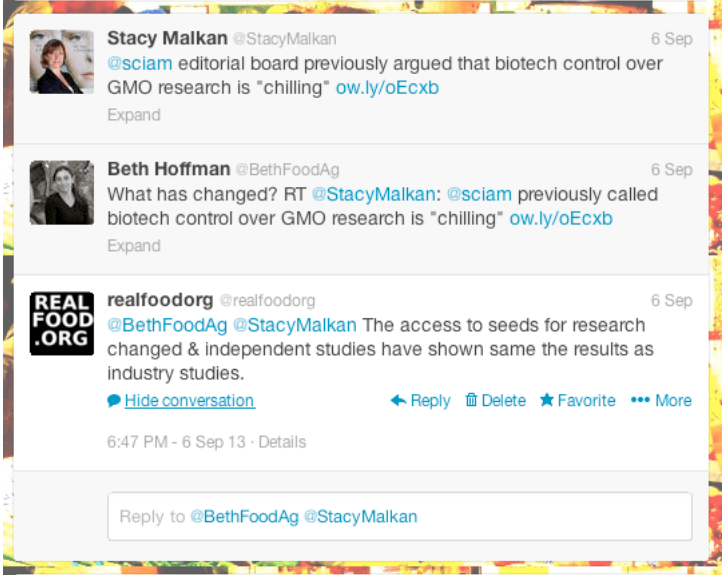
“What has changed?” food policy writer Beth Hoffman asked Stacey Malkin, who had run the campaign in California for a mandatory GMO label.
I used to think that nothing rivaled the misinformation spewed by climate change skeptics and spinmeisters.
Then I started paying attention to how anti-GMO campaigners have distorted the science on genetically modified foods. You might be surprised at how successful they’ve been and who has helped them pull it off.
I’ve found that fears are stoked by prominent environmental groups, supposed food-safety watchdogs, and influential food columnists; that dodgy science is laundered by well-respected scholars and propaganda is treated credulously by legendary journalists; and that progressive media outlets, which often decry the scurrilous rhetoric that warps the climate debate, serve up a comparable agitprop when it comes to GMOs.
In short, I’ve learned that the emotionally charged, politicized discourse on GMOs is mired in the kind of fever swamps that have polluted climate science beyond recognition.
Environmentalist and former anti-GMO activist Mark Lynas gave his famous speech at the Oxford Farming Conference stating explicitly: His anti-GMO views had been a form of denialism. And the state initiative campaigns led to major scientific organizations [PDF] issuing consensus statements on GMOs. All this started to impact how the mainstream press covered the issue.
My take from that 2013 piece:
But the number of journalists who understand GMO’s reasonably well and are aware of the scientific consensus is greater as well. While many people get their news from specialized websites and blogs, most people still get their information from professional journalists and I believe the tide has already started to turn in that community. The number of writers turning to people like Pamela Ronald of UC Davis or Kevin Folta of the University of Florida for quotes and background is surely larger.
I think the era of a quote from Andrew Kimbrell or Jeremy Rifkin balanced with a quote from a Monsanto spokesperson is behind us. And it’s not good news in the long run for opponents of GMO’s.
The most notable change since the labeling campaigns has been the way anti-biotech groups have more or less given up on the safety issue in mainstream venues. I really think those campaigns backfired insofar as they made journalists finally pay attention to the issue long enough to figure out that the safety issue was an empty vessel. All of which is to say that the landscape does change, even if it doesn’t feel that way in the trenches.
Taking labeling off the table
Since 2013, the shifts have been a bit subtler, but steadier as well. One of the biggest but least recognized was the passage of the Safe and Accurate Food Labeling Act of 2015 (SAFE Act) or as opponents called it, The Deny Americans the Right to Know Act (DARK Act). The bill was passed with bipartisan support of Republicans and centrist Democrats and signed into law by President Obama. It preempted states from passing their own messy patchwork of mandatory labeling laws and laid out standards for voluntary labels, while requiring a GMO ingredient label for any GE ingredients that are materially different than their conventional counterparts.
While this bill was to almost no one’s liking – for those that want their policy based on science, it went too far; for those that want a mandatory label, it didn’t go far enough – what it did in the overall debate was end labeling as a political vehicle for anti-GMO activism and misinformation campaigns. It took away a point of entry where the average consumer, who wasn’t an anti-industrial agriculture ideologue, could be drawn into the debate.
This is little appreciated as a turning point, if one understands that controversies over science hinge on disagreements over values first and evidence second. That is, science becomes polarized when it comes into conflict with the values of a group. There are many, many non-polarized issues in science where nearly no one is questioning whether scientists understand their field well enough or whether they are telling the truth. It’s only when an issue becomes polarized, that people start to cherry-pick facts and apply motivated reasoning in the face of strong evidence. Persuasion becomes an uphill battle.
Unlike climate change, which is a truly polarized issue, GMOs are not a polarizing issue outside of narrow circles. The average consumer has very little knowledge or investment in the issue. One survey that was made during the labeling campaigns in 2013 asked consumers about GMO labeling in a variety of ways in order to gauge knowledge, interest, and intensity on the issue. When asked if GMO ingredients should be labeled, 73% said ‘Yes’. More tellingly, when asked the open-ended question, “What information would you like to see on food labels that is not already on there?” only 7% called for GMO labels unprompted. That would seem to put 66% of consumers in the “Sure, why not” camp. Yale researcher Dan Kahan who heads the Cultural Cognition Project has found in their polling that GMOs are NOT a polarized issue with the general public in the way that climate change is.
This is not what it feels like if you are active and inside the debate. But for most people, the GMO issue is not what Kahan would call a “polluted” science communication environment in the way that vaccination and climate change have become. It’s barely on most people’s radar. That’s why the “Vote NO” campaigns in California, Oregon, Washington, and Colorado were successful with a simple message of clean-cut farmers talking about the importance for their farms and narrators talking about added food costs. That message sidestepped the science entirely and overcame the completely intuitive message of “I have a right to know what’s in my food”. When most of the public’s opinion on GMO labeling is “Sure, why not?” all you need to do is answer “why not” halfway credibly.
After the state labeling campaigns were over, we saw a steep decline in people joining and engaging in the GMO Skepti-Forum, a large and active evidence-based Facebook forum I’ve been involved in since early 2013. Even bigger has been the drop off in critics of GMOs joining to “do battle” with advocates. But there has also been a big drop in fence sitters just wanting answers. The GMO issue is just not on very many people’s radar, and even less so since the state labeling battles ended.
Likewise, there was a huge drop off in interest in the annual March Against Monsanto demonstrations around the country after the labeling issue was taken off the table. To the point, where the march in my hometown of Portland, OR was canceled last year due to lack of interest. I’ve gotten reports of similar drop off and cancellations from friends in other cities.
This is a boon to advocates which I don’t think many appreciate for the opening that it is. The lack of political salience creates opportunities for new products geared towards consumers like the Arctic Apple and Innate Potatoes to gain a foothold without the background static of politicized, polluted communication environment. Sadly, there is a move afoot by the ag lobbies to turn the labeling issue back into a political football with a lobbying effort to ban voluntary non-GMO labels on products where no GE analog exists. I think that’s a tactical mistake.
Moving the goalposts
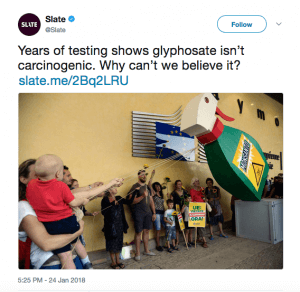
With the safety and labeling issues off the table, the anti-GMO movement has had to move the goalposts. The safety discussion over the last two years has moved almost completely to the safety of glyphosate, the active ingredient in Monsanto’s herbicide RoundUp, and a concerted campaign to change the conversation from what the research evidence on GE crops and related herbicides shows to a conversation about who paid for the research and whether it’s credible.
It should be noted that the safety of glyphosate is an adjacent issue to genetic engineering issues. While glyphosate resistance is a major biotech trait, used on hundreds of millions of acres, glyphosate is widely used in the production of many non-biotech crops including millions of acres of wheat – a staple crop which has not been genetically engineered for commercial use.
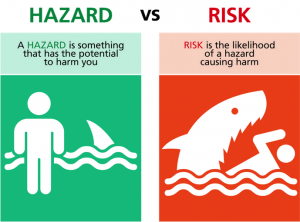
The anti-GMO movement had been somewhat adrift after their defeats in the quest for a mandatory GMO label that would allow them to organize boycotts. Then in the spring of 2015, the International Agency for Research in Cancer delivered a new political football in the form of their hazard assessment of glyphosate, designating it a probable carcinogen. This report was tailor-made for agitprop fear-mongering, because the general public doesn’t understand the difference between a hazard assessment and a risk assessment. They didn’t understand how little evidence was propping up the word “probable”. But they did understand the word “carcinogen”. And nobody hears nuance that they don’t want to hear.
The IARC essentially said that there was a bit of evidence that at a high enough level of exposure, RoundUp could potentially lead to non-Hodgkins lymphoma based on a bit of data that showed increased rates in people who work applying RoundUp in the field. That data was pretty scant and other, better data showed otherwise, but that’s the point of a hazard assessment.
The IARC assessment has since become the basis for a California lawsuit representing residents with non-Hodgkin’s lymphoma who have been exposed to RoundUp. The outcome of that case will have a big impact on the narrative if a judge rules in the plaintiff’s favor, but their lawyers have a steep hill to climb. (A dismissal, on the other hand, won’t change the discussion a lick.)
However, the findings of IARC haven’t weathered 2017 all that well. While a fair amount of commentary had pointed out that the IARC finding was an outlier, two blockbuster Reuters reports unveiled the reasons why: the process had been manipulated to downplay research that hadn’t found evidence of carcinogenicity and gave too much weight to a few thin reeds that did. In June they reported that:
“The scientist leading that review knew of fresh data showing no cancer link – but he never mentioned it and the agency did not take it into account.” Then in October, “When the International Agency for Research on Cancer assessed the best-selling weedkiller glyphosate, significant changes were made between a draft of its report and the published version. The agency won’t say who made the changes or why.”
“The IARC says that glyphosate is a probable carcinogen” as an anti-GMO talking point has really taken a serious hit here. While it will circulate in anti-GMO circles forever, it shouldn’t be inserted for context into mainstream reporting on various issues that crop with the herbicide. Meanwhile, the Monsanto Papers scandal, has produced a lot of smoke and little but smoldering embers in terms of fire.
GMOs 2.0
The final development putting the anti-GMO movement back on their heels this year in terms of mainstream credibility and traction is where the tech is going. CRISPR and other gene editing techniques have been enthusiastically hailed by the mainstream press as exciting innovations with minimal nods to “balance” in the form of finding increasingly fringe organizations to offer some cautionary counterpoint.
Meanwhile, genetic engineering is being used in aspects of the Plant Meat 2.0 movement, putting environmental groups in a political bind if they want to oppose a technology that can help reduce excessive beef consumption among carnivores and make vegetarian’s lives easier. And then products for US and Canadian consumers like the Arctic Apple and Innate Potato cut against the narrative that GE crops only benefit farmers (as if that was a bad thing) or are only for selling more herbicide. In Bangladesh, Bt brinjal brings an example of a GE crop beyond reproach, helping smallholder farmers in a developing nation raise a key staple crop – and a vegetable no less – with far less insecticides.
A Communications infrastructure for advocates
Perhaps the most significant change, since 2013 is the development of an infrastructure and ecosystem of well-informed advocates who have a trove of resources to educate journalists, friends, and neighbors. I remember what the comments sections on any article related to GE looked like in 2012. There were only five or six regulars trying to answer questions and address misinformation. They were limited in what links and resources they could point people to. Nowadays, you see hundreds of different people (some of them I don’t even recognize!) who are well informed and able to direct people to articles or well-written blog posts on just about any topic that comes up.
It’s also no small thing that there is finally a major documentary on the subject that is not an anti-GMO gish gallop.
Consider this web ad that Stonyfield Yogurt just put up on Facebook. Rather than organic and anti-GMO cheerleading, the comment section is an avalanche of commenters calling them out for science illiteracy, abusing the child actors, and promises of new individual boycotts. The volume was so overwhelming that it’s hard to find the handful of comments supportive of Stonyfield’s stance. That would have been unimaginable five years ago.
A lot of the conversation still has that Groundhog’s Day aspect of different day, same old wrong talking points, but the battle is being fought on a whole new scale.
The end is nigh
To be clear, I’m not predicting the end of anti-GMO activism, but rather its ability to be taken seriously in mainstream venues. It’s been building for the last four years or so, but I really think the anti-GMO is headed back to the fringe.
POSTSCRIPT: In soliciting feedback on a draft of this piece, one of my more annoying friends asked “So by the end of 2018? – and is there a way to quantify this? Like how do we hold you accountable – or say you nailed it?”
That’s a good question and it tends to have an “I’ll know it when I see it” aspect to it. Let me lay down a few markers that might give a more concrete way of judging this prediction – with the caveat that we may not have the necessary perspective until a few years from now to judge if it was really accurate.
1. Is the anti-GMO movement able to push a NEW angle or topic into the public debate?
2. Are they able to drive reporting by major media organizations the way US Right to Know has been able to with The New York Times over the last few years?
3. Are they able to muster significant grassroots mobilization as they did with March Against Monsanto in 2013 and 2104?
4. Are they able to put significant public policy changes on the ballot in states or in counties with significant agricultural economies?
[Editor’s note: Marc wrote a follow-up to this article at his blog. Read it here.]
Marc Brazeau is the editor of Food and Farm Discussion Lab. Follow him on Twitter @eatcookwrite
This article was originally published at Food and Farm Discussion Lab as “2018 Predictions: The Death Throes of the Anti-GMO Movement” and has been republished here with permission.
Editor’s note: This letter was signed by University of Minnesota College of Food, Agriculture and Natural Resources graduate students Matthew Ott, Leanna Leverich, Zenith Tandukar, Nikki Mihelich, Marie Sorensen, Jared Spakman and Jason Thomas
To our U.S. Representatives:
We, the undersigned University of Minnesota College of Food, Agriculture, and Natural Resource Sciences graduate students, are requesting that you, our U.S. representatives, co-author a bipartisan bill to deregulate the process for developing genetically modified crops that have the potential to produce sustainable sources of fiber and fuel (not food).
If the costs associated with the regulatory approval process for transgenic and cisgenic crop improvement approaches were between $5,000 and $10,000, rather than between $20 million and $30 million as they currently are … researchers would not face an impossible cost barrier for developing important fuel/fiber crops.
Each of us has numerous ideas about genetic modification that could be developed into start-up crop companies and bring more competition into the marketplace dominated by a few mega-companies that can afford the regulatory process.
…
Thank you for representing the interests of rural Midwesterners, which are inextricably tied to the interests of our entire human family.






 Bt brinjal: Big Ag need not apply