Most people would tell you that bad breath is brought on by a combination of bad luck and garlic. According to a new study in Nature Genetics, genes may play a direct role as well. Researchers at U.C. Davis have found that a the gene for a protein known as a SELENBP1 may be implicated in bad (specifically cabbage-scented) breath, Gizmodo reports. The protein may also play a rule in a few kinds of cancers, so the stakes may be a little higher down the line.
The researchers looked at five human patients from three different families who had “cabbage-like breath odor.” Turns out, they all had mutations in the gene that codes for SELENBP1.
After eliminating other possible causes of bad breath, the researchers had each participant breathe through a machine that was able to separate out the source of the smell: the culprits were methanethiol and dimethylsulfide, two compounds that contain sulfur.
…
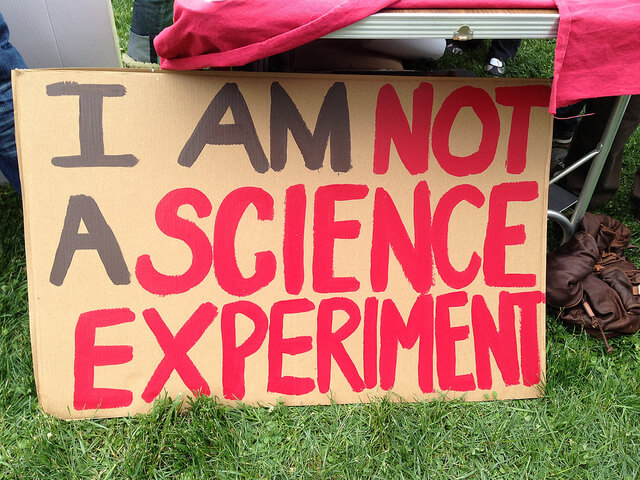
With that evidence, the researchers make the case that lack of SELENBP1 can cause bad breath. But other than providing fodder for a fun science experiment, why would the human body have a gene whose absence makes people’s breath smell?
“The function of SELENBP1 might possibly be keeping the breath methanethiol concentration low, thus enabling the human nose to detect foul smells from environmental volatile sulfur compounds,” the researchers write.
Of the several claims of “anti-science” that clutter our national debates these days, none can be more flagrantly clear than the campaign against modern agricultural technology, most specifically the use of molecular techniques to create genetically modified organisms (GMOs). …
a concerted, deep-pockets campaign, as relentless as it is baseless, has persuaded a high percentage of Americans and Europeans to avoid GMO products, and to pay premium prices for “non-GMO” or “organic” foods that may in some cases be less safe and less nutritious.
…
This is the kind of foolishness that rich societies can afford to indulge. But when they attempt to inflict their superstitions on the poor and hungry peoples of the planet, the cost shifts from affordable to dangerous and the debate from scientific to moral.
…
For the rich and well-fed to deny Africans, Asians or South Americans the benefits of modern technology is not merely anti-scientific. It’s cruel, it’s heartless, it’s inhumane — and it ought to be confronted on moral grounds that ordinary citizens, including those who have been conned into preferring non-GMO Cheerios, can understand.
James Burke has a vision for the future. He believes that by the middle of this century, perhaps as early as 2042, our world will be defined by a new device: the nanofabricator.
…
You’ll pour in some raw materials—perhaps water, air, dirt, and a few powders of rare elements if required—and the nanofabricator will go to work. Powered by flexible photovoltaic panels that coat your house, it will tear apart the molecules of the raw materials, manipulating them on the atomic level to create…anything you like.
…
[There are] potential consequences it could have for society. Suddenly, all you need is light and raw materials. Starvation ceases to be a problem. After all, what is food? Carbon, hydrogen, nitrogen, phosphorous, sulphur. Nothing that you won’t find with some dirt, some air, and maybe a little biomass thrown in for efficiency’s sake.
Equally, there’s no need to worry about not having medicine as long as you have the recipe and a nanofabricator. After all, the same elements I listed above could just as easily make insulin, paracetamol, and presumably the superior drugs of the future, too.
…
[I]f nanofabricators are ever built, the systems and structure of the world as we know them were built to solve a problem that will no longer exist.
Müllerian mimicry is a well-studied phenomenon, particularly in butterflies, in which completely unrelated species come to display the same patterns and coloration. Each species is unpalatable to eat for different reasons, but all have come to share the same visual cues to make this point known to their common predators. As a group, sending the most consistent signal to predators achieves the best result – not being eaten – for all members.
…
Improbably, a new study has shown that gut bacteria have learned to speak the complex language of our immune system, mimicking and modifying a pro-inflammatory signal into a signal for immune suppression, directly protecting us from the damage caused by autoimmune disorders in which the body attacks itself.
…
The dense network of interactions that exists unseen between us and our microbiome is rapidly being charted. An advantage to hosting trillions of bacteria is that they rapidly explore genetic and structural space: at the end of the day, the functions that benefit us and our microbiome, by limiting disease and restoring balance to our immune system, are the ones most likely to last. The bacteria in our microbiome have spent centuries identifying and learning to pull the levers of our immune system. For those interested in designing effective therapies for autoimmune disorders, there is plenty to learn from them.
One more gene therapy squeaked in before year’s end, not for cancer treatment, but an inherited form of vision loss that can lead to blindness called biallelic RPE65 mutation-associated retinal dystrophy. The treatment is called Luxturna.
…
The RPE65 gene, named for it’s location of expression in the eye, the retinal pigment epithelium or RPE, is responsible for making the enzyme isomerohydrolase which is responsible for making rhodopsin, a molecule necessary for normal vision. Mutations in RPE65 block this process and result in impaired vision.
Luxterna delivers a normal, non-mutated, copy of the RPE65 gene directly to the cells of the retina. This allows the enzyme to be made and restores vision. In the Phase 3 study, 31 participants were asked to navigate an obstacle course at various light levels. Navigating in the low light settings was significantly improved in the patients who received Luxterna.
…
With two cancer therapies approved last year, and now a third therapy for vision, 2017 has paved the way for many more that will most certainly be coming down the pike in 2018.
How society regards the use of genetic modification and genome editing can have a significant influence on how these technologies are regulated by authorities and on the pace of technological advancement. In a review published in the Journal of Dairy Science authors from the Swedish University of Agricultural Sciences discuss potential applications of genetic modification and genome editing of cattle for food production, considering both the breeding program and its ethical aspects.
…
In their study, three geneticists and one ethicist focused on two potential applications within cattle; namely, genome editing to create dairy cows without horns (“polled” dairy cows) and genetic modification to improve udder health. Both approaches could be seen as beneficial for animal welfare, but in the former case, a genetic variant already present within the species is introduced, whereas in the latter case, a gene not found in cattle is inserted into the bovine genome.
…
Potential drawbacks include unexpected abnormalities in embryos or calves that arise from the use of advanced reproduction techniques in the gene editing and genetic modification procedures. Ethical questions also exist regarding the “naturalness” of either method, maintenance of the bovine genome, and respect for the cow’s life and well-being. Addressing these issues will help shape public perceptions and advance the science of genetic modification and genome editing.
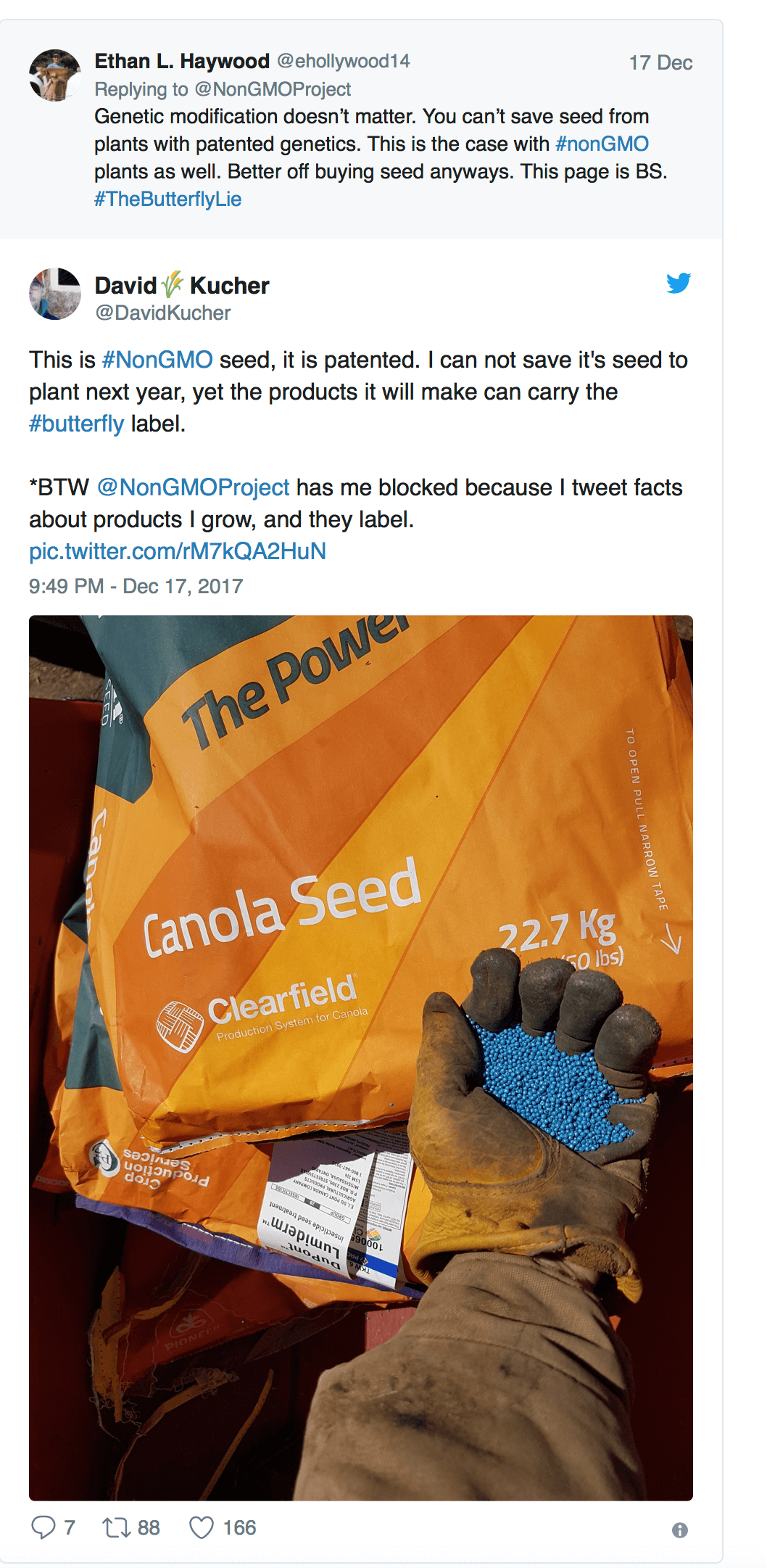
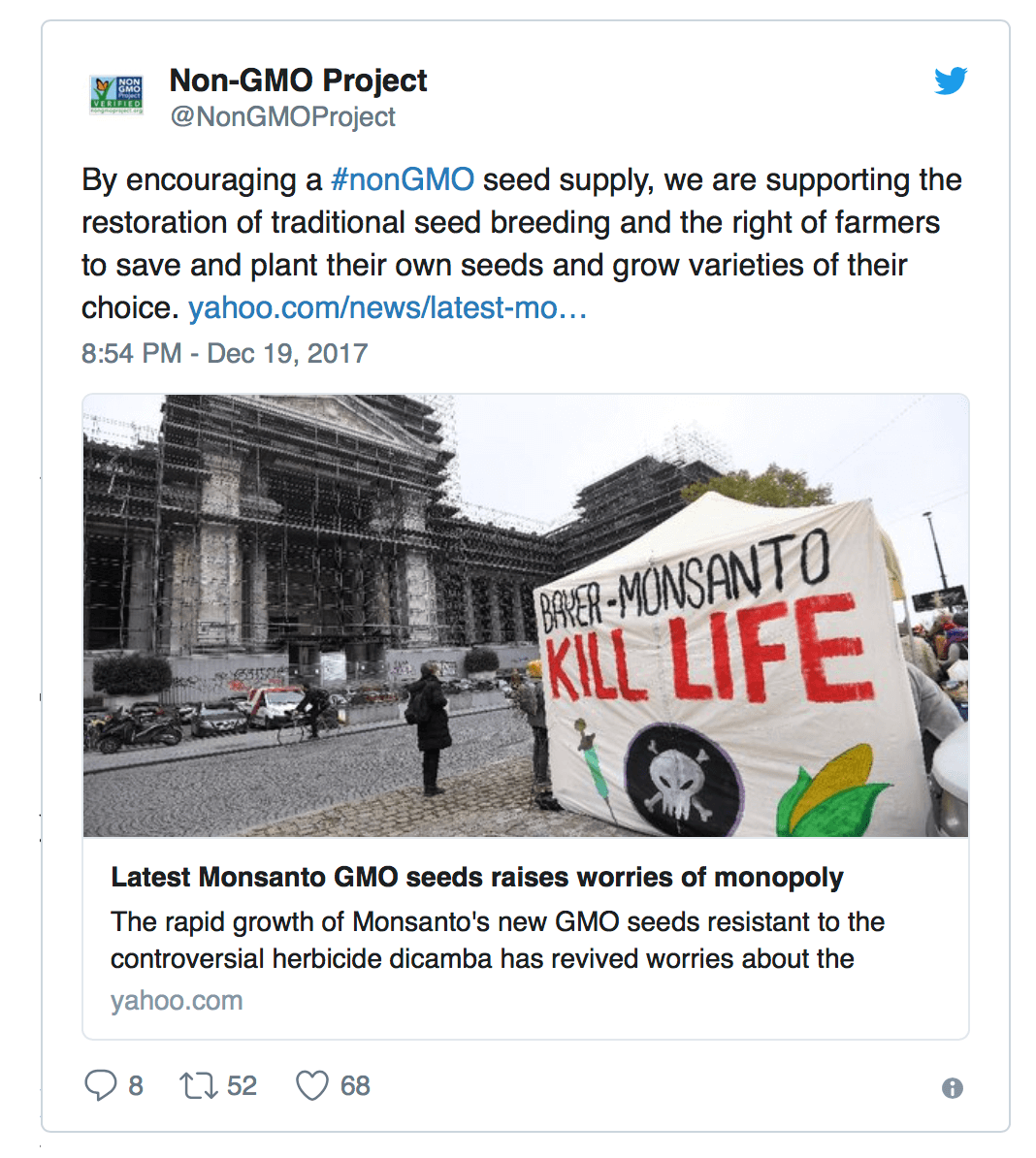
The Non-GMO Project spreads misleading and inaccurate information about food, agriculture and health on its website and social media. This was apparent on Sunday, December 17th, when the organization tweeted about farmers’ rights and plant breeding: …
Holding “GMO” liable for the transformation of plants into intellectual property remains a common misconception about agriculture, and one that the Non-GMO Project espouses regularly. As Forbes contributor Steven Savage noted in a 2013 post for the Biology Fortified blog, “plant variety patents have been a common feature of crop genetics since 1970 and that a great many of those patents are held by universities, by the USDA, and by similar international agencies (Patents for vegetatively propagated plants have been an option since 1930).”
…
Following Non-GMO Project’s tweet, Canadian farmer David Kucher, who regularly corrects the third-party verifier’s social media commentary, chimed in:
French President Emmanuel Macron has declared he will ban the American herbicide glyphosate within three years, and sooner if a replacement is ready. Italy has vowed to do the same. Activists have said the replacement is already available, and it has been used in France since 1863 – a fatty acid called pelargonic (a.k.a. nonanoic, because of the nine carbon atoms) acid. Chemically, it’s pretty close to a soap. Does this make any sense toxicologically? Is this another case of “natural = safe?” Or is something else going on? Let’s take a look at the toxicological and environmental properties of both chemicals.
First, a qualitative look at safety
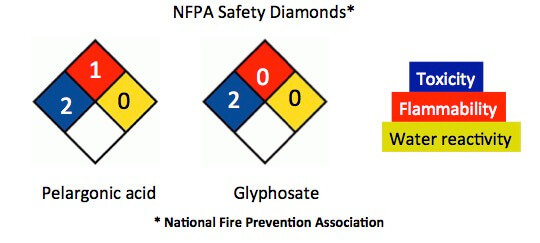
For a quick and dirty way to get a rough idea of the toxicity of a chemical, the National Fire Prevention Association (NFPA) maintains an enormous database of tens of thousands of chemicals. It is always a good place to start. A fire prevention database? Yes, because first responders need to know on a practical level what they’re dealing with in the event of a chemical spill or fire, no endocrine disruptor or parts per billion nonsense. It classifies chemicals by toxicity, flammability, and water reactivity. Chemicals are placed into five toxicity categories, zero through four. In categories zero and one are things like salt, water, and baking soda. Harmless.
Group 2 hazards, where these two both reside, are slightly worse.
“Intense or continued exposure could cause temporary incapacitation or possible residual injury unless prompt medical attention is given.” – NFPA definition of a Group 2 toxin.
Members of this group include ether, benzaldehyde (almond oil), butyric acid (in rancid butter), and hydroquinone (skin bleaching agent). Like vinegar, you wouldn’t want to drink a glassful, but they are unlikely to do serious harm with normal exposure.
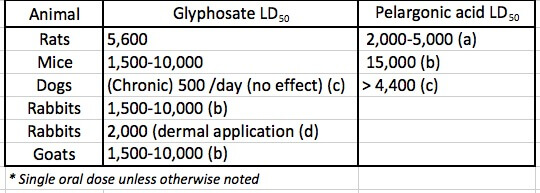
Both pelargonic acid and glyphosate are characterized as Group 2 chemicals for acute issues but there is more to overall toxicity than a diamond will tell you so let’s look at the animal toxicity data. One important parameter is called the LD50 and that is the dose at which half the animals will die. The lethal dose data of pelargonic acid and glyphosate in animals is interesting…because they are both uninteresting. Neither compound has any appreciable acute toxicity.
Relative toxicity of glyphosate and pelargonic acid.
By comparison, the LD50 values in rats for aspirin, caffeine, and alcohol are approximately 200, 192, and 7000, respectively. Caffeine and aspirin are significantly more toxic than either herbicide. Alcohol is similar.
So neither glyphosate nor has worrisome acute toxicity in animal models. But what about the scary stories that environmentalists tell regarding glyphosate? Ignore the hysteria. It is one of the most thoroughly studied chemicals of all time because it is one of the top chemical boogeymen for environmental activists. While there are numerous methods for determining toxicity, carcinogenicity, etc., it doesn’t cause cancer, even though IARC claimed it probably did and was even jeered by its own bosses at the United Nations for shoddy, agenda-driven work. (See “Glyphosate-Gate: IARC’s Scientific Fraud,” my colleague Alex Berezow’s exposé of glyphosate here.)
Both chemicals are so non-toxic that it would be impossible to eat enough of either to harm yourself unless you were really, really trying.
What about the environment?
Neither chemical poses much of a risk to the environment. According to Marin Municipal Water District Herbicide Risk Assessment:
“Glyphosate poses… low risks to aquatic species. (Chapter 3, Glyphosate)”
Pelargonic acid poses low risks to … aquatic and terrestrial wildlife. (Chapter 7, Pelargonic acid)
Although the magnitude of toxicity of pelargonic acid and glyphosate toward various fish both vary according to species, it is important to note at these low concentrations neither is harmful. Both products are approved for agriculture and even for human consumption at concentrations found in drinking water:
“Glyphosate poses the least risk to workers and the general public,”
“Pelargonic acid poses low risks to workers [and] the general public…”
Yet you’d never know any of this according to some activists. activists, which declare glyphosate harmful and pelargonic safe even though they are toxicologically similar. The Cleveland Museum of Natural History states “[T]he most common fatty acid, pelargonic acid, is considered to have very low toxicity and to be environmentally friendly” while also declaring glyphosate a cause of cancer.
How about cost?
With regard to expense, the material cost of the alternative herbicides was more than the conventional herbicides, sometimes substantially more. The need for repeated applications of the alternative herbicides further increases the costs of their use
“Scythe (57.0% pelargonic acid a.i.) was mixed with water at a 10.0% volume to treat the guiderails along the entire 8-mile section of Route 80, from mid-morning to mid-afternoon on July 22, 2014. … Total area of treatment was 1.48 acres… Treatment costs were $1,954 based on materials alone.”
Compare that to:
“In comparison, estimated cost of Materials and Methods 3-3 materials for conventionally treating the same area using Accord XRT II herbicide (synthetic glyphosate as active ingredient) would have been $18.24 total.”
A lot more chemicals will be needed
Even if they are about the same toxicity, pelargonic acid requires a lot of more chemical, which means more runoff, which most environmentalists should be against. Pelargonic acid will only kill the green parts of the plant they contact, so most treated plants are able to recover because the roots remain intact. Glyphosate and products like 2,4-D work better with far fewer applications they go to the roots to kill larger plants and perennial weeds.
Does *anything* about French and Italian politics make sense here? Neither herbicide has any appreciable mammalian toxicity, that’s good, but the “organic” pelargonic acid costs 100-times more and it works less on weeds.
If you’re a farmer in France you may have no choice than to use it but if you’re anywhere else and decide to switch to pelargonic acid simply because it is “natural” you may want to think twice. Instead of growing food you may end up selling it. At McDonalds.
Josh Bloom is Senior Director of Chemical and Pharmaceutical Sciences at the American Council on Science and Health. He has a Ph.D. in organic chemistry from the University of Virginia and postdoctoral training from the University of Pennsylvania. Follow him on Twitter @JoshBloomACSH
23andMe, following a banner Christmas season for sales of its personal DNA-testing kits, has just announced a large-scale study intended to uncover the genetic reasons why diet and exercise have different effects on different people.
…
“We’d like to better understand the genetic, demographic, psychosocial and behavioral characteristics that predict weight loss success overall, and on different lifestyle interventions,” said Liana Del Gobbo, 23andMe’s lead scientist on the study. “This will help us begin to pave the way toward more personalized lifestyle recommendations.”
…
Participants in the study — recruited from existing customers who have already agreed to be research subjects — will be randomly assigned to one of three regimes: One group will shun carbohydrates, one will eat more fiber but avoid animal fat, and one will eat as usual but add exercise, according to the MIT Technology Review.
“They’ll report back to the company about how often they have ‘cravings,’ whether they’re stressed, and if they succeed in following the diets,” according to the Technology Review. “The company thinks that people, on average, will have roughly the same results on all the plans. What it may be able to figure out, though, is whether there are genetic or personal reasons why some individuals will end up losing 40 pounds, and others gaining 10, no matter which advice they follow.”
In New Zealand, Australia and many other countries, it’s hard to escape Christmas in December.
But even if you don’t believe in Christ or a God, religion can still be a powerful force. Research shows that even nonreligious people may hold unconscious beliefs linked to religion that can affect their psychology.
It’s not that surprising that religious symbols and traditions remain in secularised societies. What is surprising is how religious beliefs may remain in and affect the minds of secular people.
Subconscious responses to God
A study in Finland explored how religious and non-religious people responded to the idea of God.
The researchers used electrodes to measure how much sweat people produced while reading statements like “I dare God to make my parents drown” or “I dare God to make me die of cancer”. Unexpectedly, when nonbelievers read the statements, they produced as much sweat as believers — suggesting they were equally anxious about the consequences of their dares.
And that’s not simply because nonbelievers didn’t want to wish harm on others. A companion study showed that similar dares that did not involve God (such as, “I wish my parents would drown”) did not produce comparable increases in sweat levels. Together, then, these findings suggest that despite denying that God exists, nonbelievers behaved as though God did exist.
Does this mean that nonbelievers are lying when they say they reject God? Not exactly. Rather, these contradictory behaviours probably arise in part due to living in a theistic culture that hammers home the idea that God exists. Perhaps this leads nonbelievers to form “implicit” attitudes that are at odds with their “explicit” ones.
Explicit and implicit attitudes
Explicit attitudes are those people can call to mind consciously and can report when asked: for example “carrots are good for me” or “God does not exist”.
By contrast, people have little or no awareness of their implicit attitudes — the learned associations between ideas in their minds, such as how easily the concept “carrot” brings to mind another concept like “bland,” or how easily the word “God” brings to mind “existence”.
As these examples illustrate, implicit and explicit attitudes can clash. It’s possible for a person to say they “love carrots” while unconsciously bringing negative associations to mind about them. Or, to say “God does not exist” while unconsciously bringing to mind ideas of God’s existence.
In this way, it makes sense for nonbelievers to get nervous at the thought of daring God to do harm.
How attitudes shape health
The idea that mismatches between explicit and implicit attitudes can create conflict is consistent with the theory of cognitive dissonance.
Studies exploring this psychological phenomenon found that conflict between your behaviour (for example, meeting parental expectations of being a submissive daughter) and your own perception of who you are (for example, being an independent woman) was associated with relatively high scores on measures of neuroticism and depression, and low scores on measures of self-esteem, compared to people whose behaviours and self-perceptions better align.
Likewise, people whose implicit and explicit attitudes about their self-esteem are misaligned (those who report high self-esteem, but hold negative unconscious associations about the self, or vice versa) suffer negative outcomes. They are more likely to become defensive in response to negative feedback, to suppress their anger and to take days off of work for health reasons.
Might cognitive dissonance also be at play in the context of religion?
Religion and health
Cognitive dissonance, and the degree of alignment of implicit and explicit beliefs might help us understand relationships between religion and health. Indeed, positive outcomes of religious belief could help explain why implicit beliefs persist in nonbelievers.
A study of over 400 white American men showed that those who attended church had lower blood pressure, and a separate study found having a religious affiliation is associated with a greater sense of well-being. Tweets posted by Christians have been interpreted to reflect greater happiness and social connectivity than those from atheists, and believers in God are reported to be less anxious about their eventual death, and more certain about the meaning of their existence.
But things aren’t so simple when religious belief is less robust. People with moderate religious beliefs report lower well-being than those with very strong or very weak beliefs. Many factors will be at work here, but one to consider is that moderate believers are more likely to hold conflicting implicit and explicit beliefs.
This might be particularly true if that group includes people who developed strong links between God and concepts of existence during their religious upbringing, but who have begun explicitly doubting those ideas.
If you are a nonbeliever then, you may have lingering beliefs in God that put you at risk of, at best, amusing self-contradictions, and at worst, poorer well-being.
At this point, you’re probably wondering what you can do to reduce that risk. Unfortunately we can’t offer much advice until more is understood about the links between religious beliefs and well-being.
For now, it is safe to assume that if you are a staunch (explicit) nonbeliever, then putting yourself in situations that reinforce your implicit religious beliefs (by, for example, attending church services at Christmas) may exacerbate your internal conflict.
Brittany Cardwell is an Affiliate Researcher at the University of Otago. Cardwell’s research has broadly investigated why people come to believe the things they do. Her PhD research examined how photographs affect what people believe to be true about the world, and about their personal experiences.
Jamin Halberstadt is a Professor at the University of Otago. His eclectic research interests include emotion and decision making, social categorization and aesthetics, religious cognition, and “in vivo behavioral tracking,” a methodology he pioneered to permit the experimental study of large groups in unfettered context.
[The following is part of a letter from the editor of MIT Technology Review, David Rotman.]
Decades of fretting over the safety and virtue of genetically modified organisms have led to a perverse outcome. Plant scientists in academia and startup companies have largely shied away from creating new GM crop varieties because it takes, on average, more than a hundred million dollars and over a decade to get such a plant approved by regulators in the United States, and also because the idea of GMO food has elicited public outrage. As a result, a few large agricultural and chemical producers like Monsanto—or MonSatan, if you prefer—dominate the GM industry, making a killing off herbicide- and insect-resistant corn and soybeans.
…
That stunts progress in plant breeding just as climate change and population growth are putting growing pressure on agriculture (see “Why We Will Need Genetically Modified Foods”).
…
New gene-editing tools, either CRISPR or the slightly older TALEN, don’t insert a foreign gene into the plant to create a new trait (as typically happens with conventional GMOs) but, rather, tweak the plant’s existing DNA. The engineered crops thus sidestep the lengthy regulatory process and could avoid the stigmas surrounding GMOs entirely.
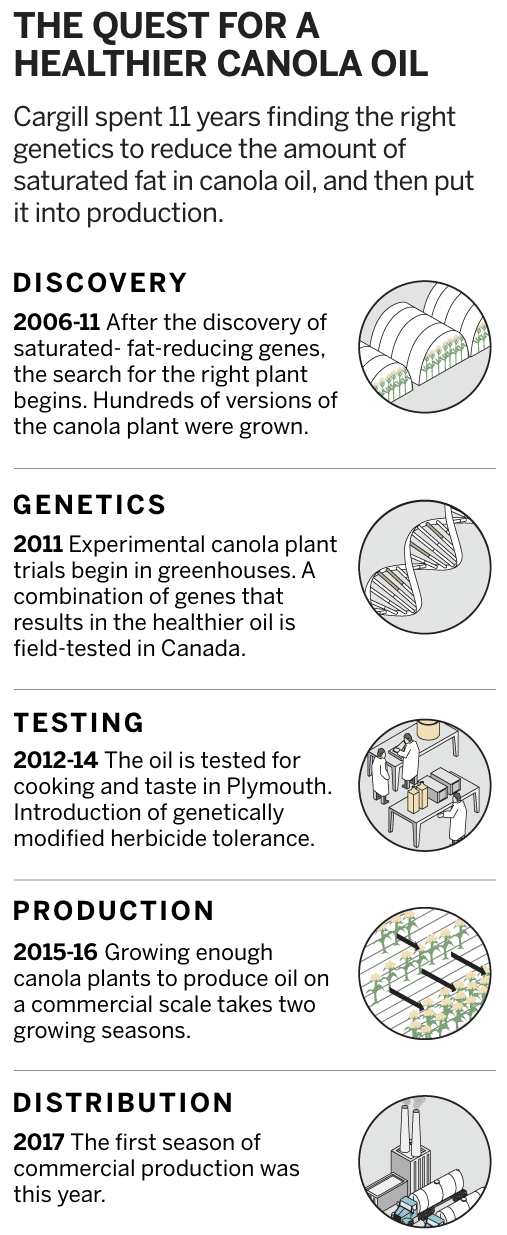
Rich Fletcher spent 11 years tinkering with the genetics of the canola plant in pursuit of a single goal: Lowering the fat content of the oil it produces, one of the most widely used food additives in the world.
He succeeded. His employer, Cargill Inc., will begin selling the new, healthier oil to food companies around the world as soon as [January 2018]. Thanks to Fletcher and his team of scientists, those companies will be able to sell healthier French fries, cookies and thousands of other food items.
But a lot of people will refuse to buy those products.
Cargill’s breakthrough included altering the genetic code of the new canola plant to withstand weed killers that growers might use in their fields. That makes the oil it produces a genetically modified organism, or GMO, something a growing number of consumers fear and that governments in some parts of the world outlaw.
…
Fletcher believes that consumers ultimately will accept the canola oil that he has devoted much of his professional life to developing.
“I think, in the end,” Fletcher said, “we’ve created a healthier oil, and that will overcome any of the current public perception concerns.”
When cotton traders in Burkina Faso announced in 2015 that they were phasing out the cultivation of genetically modified cotton, they attributed it to losing 50 billion CFA (US$89.5 million) in five of the seven seasons the nation had grown the variety.
The GM seeds were producing cotton with shorter fibers, which produces a lower quality fabric, so trading companies had to discount their prices on the international market.
As a result, they directed farmers to stop growing GM cotton and return to conventional varieties. But the profits of trading companies and mills aren’t the only consideration. A national study has shown that the introduction of GM cultivars in Burkina Faso led to a 22 percent increase in yield over conventional cultivars and farming households recorded an average profit gain of 51 percent. Now, they have lost all that.
…
Some farmers are struggling to take care of their children as a result of the move to abandon GM cotton.
…
“When they asked us to vote, we said we don’t want conventional back. We want GMOs,” said cotton farmer Soro Mahmoud. “But they didn’t listen to us. We should be making the decisions on these issues not them.”
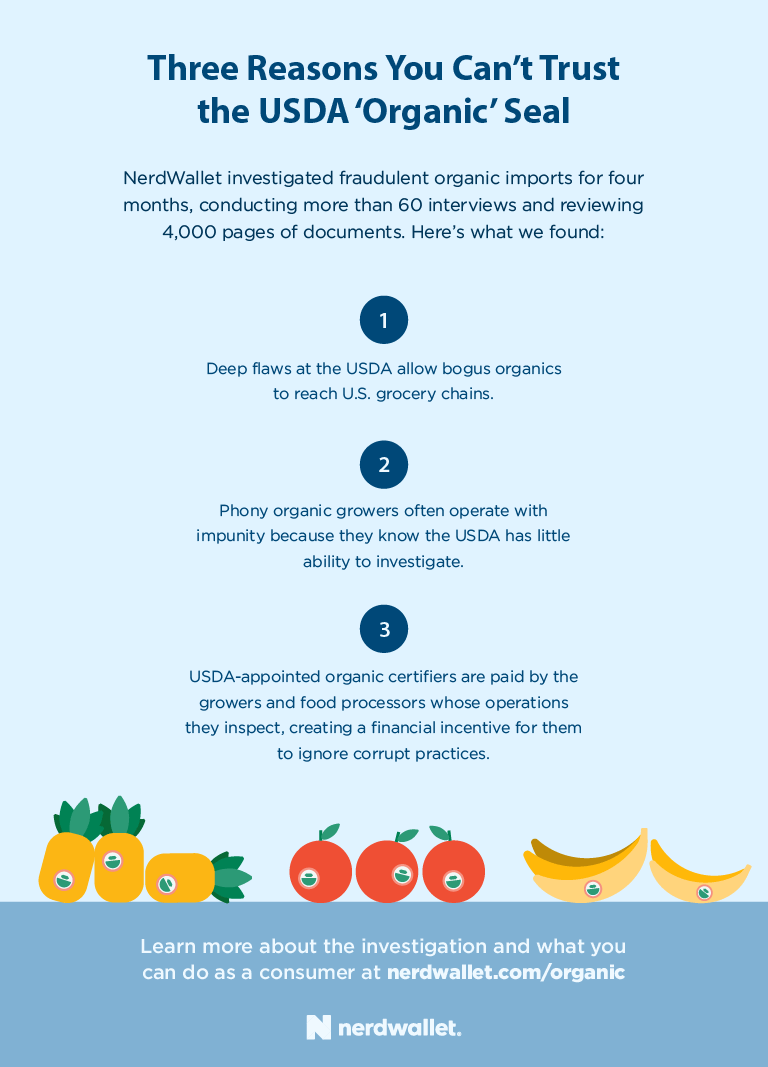
The U.S. Department of Agriculture fails at regulation of organic food as fraudulent products overwhelm the agency’s conflicted, compromised system, a NerdWallet investigation has found.
The USDA’s National Organic Program has not kept up with the explosive growth of organic food production and sales — either in staffing or enforcement, NerdWallet found.
…
The system today enables high-dollar fraud, as swindlers exploit high premiums charged by honest players for the risks, expense and hard work of producing genuine organics.
The USDA’s failings undermine authentic producers and tarnish the agency’s organic seal, jeopardizing its promise as an emblem of trust.
…
The USDA creates conflicts of interest by allowing cozy relationships between growers/processors and the companies that certify their operations as organic. The USDA accredits 80 certifiers worldwide. However, those certifiers are paid not by the agency, but by the growers and processors they certify. And the growers and processors get to choose their certifiers from the list.
It does not require certifiers to be neutral arbiters. Instead, certifiers are allowed to advocate on behalf of the companies they certify, harass critics and lobby for changes in rules governing the organics industry.
The agency often asks and trusts certifiers to look into alleged violations by their customers, instead of investigating independently.
Just like humans, plants can succumb to the effects of general anesthetic drugs, researchers report in the Annals of Botany. The finding is striking for a variety of reasons—there’s the pesky fact that plants lack a central nervous system, for one thing. But, perhaps more noteworthy is that scientists still aren’t sure how general anesthetics work on humans—let alone plants. Despite that, doctors have been using the drugs daily for more than a century to knock people out and avert pain during surgeries and other medical procedures. Yet the drugs’ exact effects on our body’s cells and electrical signals remain elusive.
The authors of the new study, led by Italian and German plant biologists, suggest that plants could help us—once and for all—figure out the drugs’ mechanism of action.
…
In all cases, the anesthetics temporarily caused the plants to go still and unresponsive. The Venus flytrap’s spikey trap didn’t slam shut when poked. The shy plant was no longer shy; it’s leaves stayed open when gently brushed. Similarly, the sundew plants didn’t bend to capture dead fruit flies and the pea plant’s tendrils drooped and curled up instead of whirling in normal upward fashion.
When David Liu first heard about a strain of mouse from his colleague Zheng-Yi Chen, he got excited. The mice carry a gene, TMC1, with a mutation that leads to deafness over time, giving them the name Beethoven mice. Their mutation matches one in humans that produces the same effect.
…
In the Beethoven mouse, he saw an ideal testing ground for the new gene editing technology, bringing hope that it might accomplish something new: improve hearing by disrupting a single genetic mutation. Other forms of gene modification add copies of genes, but are ineffectual if a dominant mutation remains.
In a paper published Dec. 20 in Nature, Liu, who is also a professor at Harvard University and an investigator of the Howard Hughes Medical Institute, and Chen, a hearing biologist at Massachusetts Eye and Ear Infirmary and professor of otolaryngology at Harvard, along with colleagues, report that the idea worked. The mice treated showed improved hair cell survival and hearing thresholds, and were startled by loud noises while untreated mice weren’t. “To our knowledge, this is the first time that genome editing has been used to correct hearing loss in an animal model of human genetic deafness,” Liu says. “There is a lot of work to do to translate these results into patients, but there is some proof of principle here.”
Working with mice, researchers have used gene therapy to restore sight to the blind, reprogram the body’s own T cells to attack cancerous tumors, prevent the formation of amyloid plaques in Alzheimer’s brains, and more. But the US Food and Drug Administration and many other international regulatory bodies have been slow to approve human trials due to the high risks associated with tinkering with a patient’s DNA.
Liz Parrish thinks that the FDA and the medical establishment have it backward. Parrish is the founder and CEO of BioViva, a Seattle-based company that is pushing for open access to potentially life-saving gene therapy technology now, not later. The real risk, Parrish argues, is that more than a hundred thousand people die each day, and millions more suffer, while we wait for regulatory agencies to approve drugs that can save lives.
…
BioViva isn’t a research institute and Parrish isn’t a scientist. Instead, the company positions itself as a “translational engine,” a private company bringing together international researchers and physicians to speed the delivery of experimental therapies.
…
The only way to truly know if these therapies work in human bodies — as opposed to mice or human cells in the lab — is to give patients the right to decide if the risk is worth it. And the more people who choose to undergo these therapies, the more data BioViva can collect and publish about their true risk and efficacy.
It was a big year for the building blocks of life. Here were the most significant breakthroughs in genetics research of 2017.
…
In a landmark decision made this past August, the Food and Drug Administration approved a treatment for childhood leukemia that works by genetically modifying a patient’s own blood cells to turn them into cancer killers.
Over the summer, scientists in the United States accomplished a major first: genetically modifying a human embryo to treat a common genetic heart disease.
…
In March, a British fertility clinic was granted permission to start performing what’s known as the ‘three-parent baby’ technique, a controversial in vitro fertilization procedure that prevents genetic diseases from being passed on to children by giving them three genetic ‘parents.’
What if we could fix a kid’s genetic disease, cure them for their lifetime? What if we make that for all of their children, forever? Or enhance humans to be genetically better? What’s your opinion of gene editing and enhancement?
A survey asked what people thought. Participants gave a green light for adult gene therapy. They were cautious about embryo gene therapy, and disfavoured gene editing for enhancements. Do my readers feel the same way? What do you think legislation say?
Surveys and demographics can help develop policy by learning what people think. It can help prevent the views of vocal minorities being over-represented.*
Important, too, is the advice of experts. Policy by popularity alone isn’t necessarily ‘right’ or best for people. (Never mind policy by loudest voice!) Towards the end of this article I look at some suggestions made by geneticist George Church.
The survey
People from 10 European nations and from the USA gave their moral views on gene editing. The survey tested two contexts—gene therapy and genetic enhancement—over two categories—prenatal and adult.
Participants recorded if they thought the person did the morally correct thing, and if they would have done the same. Scores ranged from 0 to 10, with 10 being strong approval. The researchers also collected written comments.
Successful gene therapy in an embryo lasts not only the life time of the yet-to-be-born kid, but is carried on into their children’s DNA. Gene therapy after birth could last that person’s lifetime, but would not be in their children’s DNA.
Mutations are changes in our DNA. The key thing is that they cause a change, not that they are ‘bad’ or weird. We can blame cheap science fiction for that idea! Most mutations do nothing. Some break stuff, sometimes in tiny ways, sometimes in bigger ways. Some of these mutations cause genetic disease. A few (rare) mutations are beneficial, and actually add abilities. Gene therapy changes mutations that cause genetic disease back to the DNA sequence found in people without the genetic disease.
Enhancements, if we were to do them, would be mutations (changes to our DNA) that gave the person something more than what they would otherwise be. The big, sweeping things reported in breathless media reports are mostly fantasy; realistic options are small, focused things. I imagine early targets will be the very rare mutations that cause beneficial mutations in a few people.
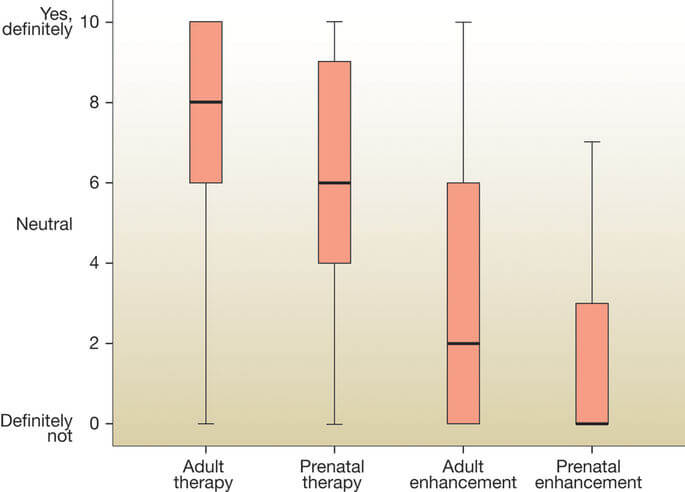
Survey participants indicated they approved of gene therapy in adults. They were a little less certain for prenatal gene editing, mostly against editing adults for ‘enhancement’, and strongly against editing prenatal embryos for enhancement. The median scores for enhancement were low, 2 for adults and 0 (zero) for embryos.
The researchers report that:
More than half of the sample in Austria, Denmark, Germany, Hungary, Iceland, Italy, the Netherlands, Portugal and the UK say they would not use gene editing for prenatal enhancement. This pattern is also seen in Austria, Denmark and Germany for adult enhancement.
The range of responses for all the options were wide. With the exception of embryo enhancement, at least some people were strongly against it, and some strongly for it.
Most of the people surveyed gave scores of 8 or higher for gene therapy for adults, suggesting most of the public thinks this should continue.
People disfavoured gene enhancement in adults. That said, the range of responses is quite wide. This suggests a sizeable minority were neutral or in favour of it.
People strongly disfavoured embryo enhancement. No-one at all was strongly in favour of it, unlike all the other three situations.
The worded comments people added showed a similar pattern. The researchers divided these into 21 categories, listed in the Footnotes below.**
A caution
The survey article ends with a caution:
A final word on the value of surveys in this controversial territory. Public opinion cannot and should not tell us what is right to do.
Essentially this is a warning not to use ‘the argument from popularity’ fallacy: just because something is popular, does not mean it is ‘right’ or even in the best interests of the people in favour of it. Something unpopular may be ‘right’ or better for people.
Evidence-based research can inform what might be best to do. Hence the need for science commissions, professional working groups, and similar.
Surveys of opinions can help. They might tell you if a previous objections have moved on, for example. One example of this in New Zealand might be a survey indicating that public opinion about the safety of GM food has changed.
Some thoughts
One concern is that the study categories did not include kids or infants, at least not by name. Gene therapy would often aim to often treat the young, at earlier stages of their disease (and with more to live for). It would have been good if this were covered more explicitly or directly.
Most people were neutral or cautiously supported prenatal therapy, but some indicated they were unsure about it or against it. It would be useful to know why some people have reservations. Some medical conditions are likely to be best treated as early as is possible. For some it may be the only opportunity to treat them. Is more communication of why prenatal gene therapy can be helpful needed?
It would interesting to know if there are any thresholds for these views. For example, do people’s thoughts parallel Dr. Siddhartha Mukherjee’s? (Paraphrased in SciCurious’ live-tweet of a panel discussion with him and Eric Nestler):
If we are going to intervene genetically in the germline, there has to be a threshold of extraordinary suffering.
The special issue this survey paper occurs within also covers so-called ‘three-parent babies’, the ‘14-day rule’, and wider issues. In my opinion embryo screening is too often left out of these discussions despite that it’s a way we can avoid some serious genetic conditions. Similarly, there may be other ways to tackle some disorders (stem cell treatment, for example). Gene editing is not the only game in town.
George Church’s thoughts on embryo enhancement
We might not favour genetic enhancement, but well-known(and out-spoken) geneticist George Church thinks we should consider when to use it. He essentially rallies against a sweeping ‘ban’, encouraging people to think about options within the option of genetic enhancement.
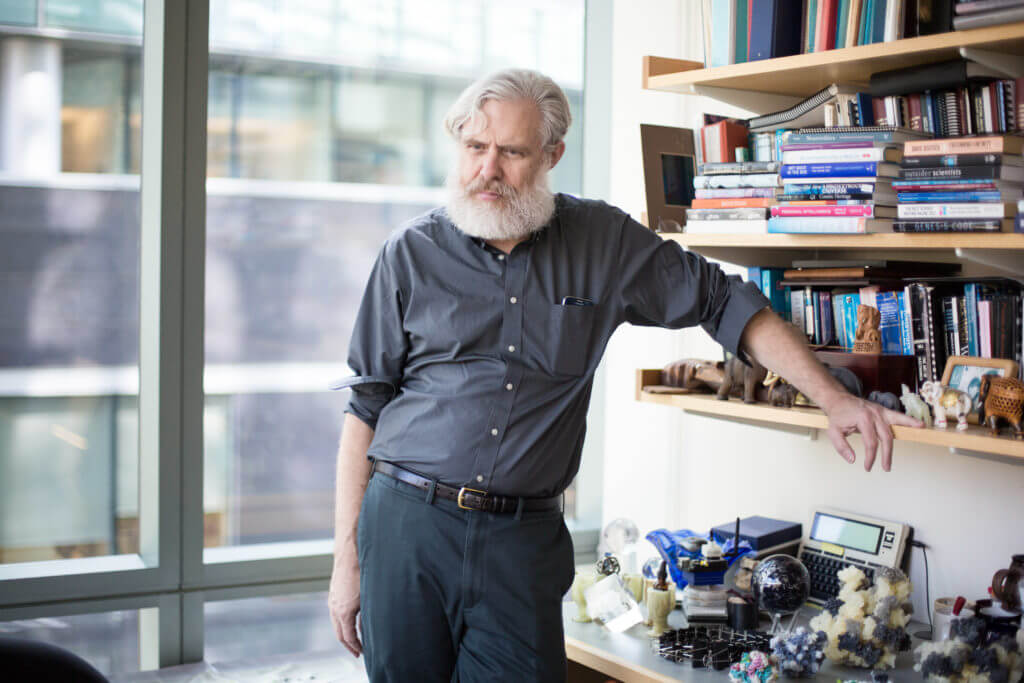
Geneticist George Church
Church notes the scientific bodies did not recommend a ‘pause’. They suggested basic research develop a better understanding first. In time this understanding would allow trials under controlled circumstances:
A June 2015 report from the Congressional Subcommittee on Research and Technology claimed that “an April editorial in Science Magazine called for a prudent path forward for genomic engineering. It recommended a moratorium on further research.” The cited article, however, did not include the word “moratorium” (or “ban” or “pause”). Moreover, a recent report by the National Academies of Sciences, Engineering, and Medicine (NASEM) concluded that “germline genome-editing research trials might be permitted, but only following much more research aimed at meeting existing risk/ benefit standards for authorizing clinical trials and even then, only for compelling reasons and under strict oversight.”
Church suggests pausing out of fear of unknown risks mostly delays medical advances for little sound gain:
Doing nothing merely for fear of unknown risks is itself risky — greatly restricting the advance of medicine. It may seem tempting to draw a line for permissible gene editing at some qualitative or quantum step such as “germline versus soma” or “enhancement versus basic health,” but the reality is that we often regulate practices on the basis of ethical costs and benefits at specified points along a continuum — for example, speed limits, blood alcohol levels, and age limits.
Genetic enhancements
He suggests we should be wary of ‘banning’ enhancements:
The issue for many critics lies not in enhancement relative to our ancestors, but rather relative to one another. We should study cases in which technologies are equitably distributed to all 7.5 billion of us, such as the extinction of smallpox and polio through global enhancement of immunity.
My read is that he doesn’t want to see a ‘ban’ on enhancements. He believes the real issues are not with (approved) enhancements, but with the equal opportunity to access to enhancements. If the enhancement is of benefit to everyone, and available to everyone, perhaps we should consider it.
It is a topic worth exploring. There has been a lot discussion on this, especially from those interested in the ethical and legal aspects of gene editing. Some responses to Church’s suggestions can be found online, for example in these Twitterthreads.
Worth remembering is that gene enhancements or therapies for a long time to come will be for small, focused things, not the big sweeping things we often see in media stories. It’s one reason why scientists have focused on rare diseases. Aside from clearer ethics, their cause is often changes in just one gene in a simple well-understood way. Sometime in the (distant) future we might be able to tackle complex things involving many genes, but they’re not possible now or the near future.
Footnotes
(Footnotes indexed from the text using asterix are in the next subsection.)
I would like to have seen the distribution of scores plotted, rather than just a box and whisker plot. This would make for a ‘noisier’ graph, but it would give a better idea of the distribution of the scores. Is there a very tight median? Does there look to be a bimodal distribution? And so on.
I’ve used the terms ‘gene editing’ and ‘gene therapy’. Others would argue that ‘genome editing’ is more accurate, and that it’s a different thing to ‘gene therapy’. I’ve taken my lead from the survey article, and that, in general, people are more interested in the outcome than the details of how the work was done.
Explaining more about the techniques and applications would take entire articles (or a series of them). If readers are interested in this, let me know.
On a more personal note, I have been distracted from starting a series on gene therapy by illness, then other projects. Perhaps this piece might get me back on track. I can hope…? (Feeling shut out of paid writing didn’t help. If you know an editor that would like a story related to molecular genetics or similar, let me know!)
Indexed notes
* Demographics may help develop policy for other contentious issues. Some issues are dominated by a few overly vocal voices, with the middle ground barely represented. Formal submissions for government review are also likely to be views from those with interests or extreme views. Surveys can try to see the full picture, and give context.
** Worded response categories identified:
1—Support – unqualified statement
2—Support mentioning therapy, improving quality of life







 …
…