The first people to cross into North America from Eurasia did so by traveling through the Bering Strait, or so the theory goes. A new theory has emerged proposing a coastal route into the continent, but evidence has been lacking. A recent analysis of boulders, bedrock, and fossils in Alaska is now providing a clearer picture, pointing to the emergence of a coastal route some 17,000 years ago.
New research published…in Science Advances is offering some of the first geological evidence of an Alaskan coastal migration route that would have made it possible for humans to cross over from Eurasia into North America when the Ice Age was still going strong. Importantly, the paper also includes evidence of aquatic and terrestrial life in the region during the same time period, which means venturing humans would have had access to food.
…
This paper addresses a major gap in our knowledge about how, and potentially when, humans colonized the Americas.
“We now know that the glaciers may have blocked the coastal route for a few thousand years. However, these glaciers retreated around 17,000 years ago, which opened the door for human migration along the coast,” said [researcher Alia] Lesnek. “The timing of glacier retreat lines up very well with the genetic and archaeological evidence for the peopling of the Americas.”
As Brazil grew richer in the 2000s, its agricultural workers left their farms in droves and headed to work in the rapidly growing industrial sector.
But what exactly was happening? Did new economic opportunities lure workers off farms or did changes in farming lead to industrialization?
…
In 2003, Brazil legalized the revolutionary Monsanto’s Roundup Ready soybean seed. The seed (called “Maradona soy” in South America after a famously agile soccer player) had been genetically engineered to be herbicide resistant.
…
In a pair of papers, [Jacopo Ponticelli, an associate professor of finance at Northwestern University] and coauthors trace how businesses across Brazil reaped the benefits of this revolutionary seed. In the first paper, the researchers find that the seed freed up farm laborers to find other jobs, allowing Brazil’s industrial sector to grow. In the second, the researchers find that the seed helped farmers put more money in the bank, which led to urban centers getting access to cheaper credit, allowing banks to finance more manufacturing and services firms.
Ponticelli says the research not only sheds new light on how economies develop, but also challenges the widespread belief that funneling resources into farming stifles growth and innovation.
Editor’s note: Read the full papers here (behind paywall) and here (behind paywall)
When you’re dead, you’re dead—right? No pulse, no brain activity, no signs of life. But at the cellular level, things can still be ticking right along—cells and processes ignorant of the fate of the whole organism. And some things—such as developmental genes—even kick into gear.
This video explores what scientists are learning about what happens inside our bodies after we die—and how it could lead to everything from better organ transplants to accurately estimating time of death.
The Government of Ethiopia is the latest African country to authorize cultivation of biotech crops by granting two landmark approvals for environmental release of Bt cotton and research trials on biotech maize. In a letter signed by the Minister for Environment, Forest and Climate Change H.E. Gamado Dale to the Ethiopian Institute of Agricultural Research (Applicant), the country will start with two Bt cotton hybrids: JKCH1050 and JKCH1947. The release for Bt cotton is based on experts’ analysis of the results from two-season confined field trials conducted under the supervision of the Biosafety Affairs Directorate of Ministry of Environment, Forest and Climate change and Biosafety technical working team drown from different institutions that have evaluated the final report submitted by the applicant. The Ethiopian government has identified cotton as a strategically important commodity crop to supply raw material for the rapidly growing textile sector and to generate thousands of jobs along the cotton sub-sector value chain.
On maize, the research institute will commence confined field trials of an event with stacked traits for drought tolerance and insect resistance in partnership with the African Agricultural Foundation. The research permit is for five years.
An Atlantic article from July 2017 has been widely discussed on Twitter over the past few days. It’s called Power Causes Brain Damage.
…
The piece, by Jerry Useem, centers around research on ‘power priming‘. In power priming experiments, participants (usually students) perform a task which is supposed to create a, perhaps unconscious, ‘feeling of power’.
…
Power-primed people, according to several studies, are prone to antisocial and egocentric behavior. Subjects under the influence of power, [researcher Dacher Keltner] found in studies spanning two decades, acted as if they had suffered a traumatic brain injury – becoming more impulsive, less risk-aware, and, crucially, less adept at seeing things from other people’s point of view.
…
There is absolutely no evidence that power causes brain damage – all of the studies discussed in the article are about behavioral changes lasting minutes or an hour or so at most. Sure, we can speculate that these power-priming effects might become chronic in people with long-term power.
…
This aside, I’m not sure these power priming studies tell us much about the real world. Power priming is a psychology lab tool which is all about the feeling of power. In a lab context, that’s fine, but in the real world, the behavior of the powerful is influenced by something much harder to study in the lab: the reality of power.
Bayer’s decision to drop the name means Monsanto products like Roundup will still be Roundup, but now they will be Bayer’s Roundup, not Monsanto’s Roundup. Roundup will still contain glyphosate.
“Bayer will remain the company name. Monsanto will no longer be a company name. The acquired products will retain their brand names and become part of the Bayer portfolio,” Bayer said in a statement to Reuters.
Andrew Kimbrell, the executive director of Center for Food Safety, an advocacy group which campaigns against GMO food, said in a statement on Tuesday (June 5) that Bayer “should not assume that just by dropping a name they have dropped the liability. The worldwide food and environmental movements know that Bayer is now the ‘new Monsanto.’”
In an apparent nod to the controversies surrounding Monsanto, Bayer’s CEO Werner Baumann said the company aims to “deepen our dialogue with society. We will listen to our critics and work together where we find common ground. Agriculture is too important to allow ideological differences to bring progress to a standstill.”
Lisa Mosconi has a web and media presence and a book Brain Food: The Surprising Science of Eating for Cognitive Power. She claims, “There is increasing evidence that implementing the lifestyle changes described in this book has the potential to prevent Alzheimer’s from developing and also to help slow down or even halt progression of the disease.”
there’s strong evidence that several factors associated with leading a healthy lifestyle may play a role in reducing your risk of Alzheimer’s disease and other types of dementia. However, more research is needed before any of these factors can be considered a proven strategy to prevent Alzheimer’s disease.
Mosconi is not waiting for more research.
…
She concludes:
…simply drinking more water and eating water-rich foods could be one of the healthiest changes you make to bring about better health as well as greater cognitive power in your life.
I suppose it “could” be, but I seriously doubt it.
…
Much of what she says is standard health advice. Avoid trans fats. Eat fresh vegetables and fruit.
…
With her training and experience, she ought to understand and practice rigorous science. She makes all the right noises about scientific literacy and recognizing pseudoscience, but she seems unable to look in the mirror and see her own errors.
The cotton revolution in India, through the use of genetically modified (GM) BT cotton, has been well researched and documented. Even then, a repeat of its success story is in order. Ever since the introduction of Bollgard 1 in 2002 and Bollgard II in 2006, the area under cotton cultivation with GM strains nearly peaked to 11.6 million hectares or 95% of total cotton acreage by 2014.
…
Higher productivity was not the only plus factor in the return to good times, but it also coincided with the lower use of fertilisers, weedicides and pesticides in the last one to two decades.
…
Yet, that success story may be short-lived because of two policy measures initiated by the recent government. These include the Cotton Seed Price (Control) Order of December 2015 and the Licensing and Agreements for GM Technology Assessment Guidelines of May 2016, which will not only regulate the price of cotton seeds—maximum selling price or MSP—and related technologies across India, but also put a cap on input costs like seed value and trait value….
…
[T]he recent order and the draft guidelines together not only has the potential to scare away big biotechnology firms, but also goes against the government’s declared policy of “Minimum Government, Maximum Governance” or even its long-term plan of making India an innovation hub for the world.
Hope for [children with rare genetic diseases] and their families may be coming in the form of DNA sequencing, or screening of a patient’s genetic code for telltale aberrations. Right now, DNA sequencing is rarely used in a clinical setting, partly because of cost and because insurance rarely covers it. But recent studies are raising hopes that, due to technological advances and re-engineering of processes, DNA sequencing of acutely ill newborns may be moving closer to mainstream clinical practice, allowing neonatal physicians to make diagnoses much faster—sometimes in a matter of days—to administer effective treatments sooner, and to cut the cost of care.
…
In a paper published in NPJ Genomic Medicine in April, the researchers reported the results of a study involving 42 acutely ill infants whose symptoms had previously eluded diagnosis. Whole-genome sequencing provided a definitive diagnosis within days for 43% of the cases, and immediately changed the medical treatment for 72% of those. The outcomes: 11 babies potentially avoided serious illness and long-term disabilities, and one had a greatly increased chance of surviving.
For the sequencing to result in treatment changes for nearly a third of the cases looked at “is remarkable,” says Dr. Trotter of the American Academy of Pediatrics.
The public conversation around glyphosate is all flowing in one direction. A cluster of environmental campaigners, organic food activists and crusading scientists are dominating the discussion around the controversial herbicide.
Over the last few weeks, groups like the Organic Consumers Association and Beyond Pesticides have blitzed the North American media with news releases and social media activity to convince the public that glyphosate is a grave risk to human health.
…
Meanwhile, North American farm groups and growers who use glyphosate say little or nothing in defence of the herbicide. The silence is surprising, seeing how glyphosate is a critical tool for weed control and that dozens of regulatory bodies around the world, including the European Food Safety Authority and Health Canada, have concluded that the herbicide is not a health risk.
The absence of public support from farm groups means ag industry groups such as Crop Life Canada are left to do much of the work defending the safety and benefits of modern agriculture.
“That’s why I’m suggesting that farmers take a crack at it, as well. Because I think that’s who people want to hear from,” said Owen Roberts, director of research communications at Ontario’s University of Guelph.
“I encourage all farmers to make communications, social media in particular, a part of their farm management strategy.”
Read full, original post: No reprieve for glyphosate
If you were born with a rare form of blindness, there is now a treatment for you that may restore your eyesight. That’s because gene therapies became a clinical reality in 2017. Yet many people with rare diseases that could be treated in this way may never benefit from these therapies because they are too expensive for drug companies to develop, or too costly for the patient or health service to afford. Is witnessing a starry night worth an eye-watering US$425,000 per eye?
There are fewer things more harrowing than news that your child suffers from a rare genetic disorder that will consign them to a disabled, progressively worsening or possibly very short life. For example, spinal muscular atrophy is a debilitating, muscle-wasting disease caused by death of neurons (nerve cells) in the spine. The neurons are meant to produce a protein that is necessary for their survival, but in these patients, the levels of this protein are low to nonexistent. And the lower the level of this protein, the more the patient suffers.
The most severely affected are unable to sit and may even die before their second birthday without mechanical support for their breathing. Yet, almost a year ago, the US Food and Drug Administration approved the sale of a new drug, nusinersen, for the treatment of this disease. Nusinersen tricks the spinal neurons into using another gene to produce the protein, allowing the patient to survive.
Many doctors have rightly called the drug a miracle. There are severely affected children who received nusinersen in clinical trials and are now at school, enjoying ball games in the playground.
Hope arrived for other rare diseases, too. Genetically engineered skin stem cells restored about 80% of the skin of a seven-year-old who had suffered from blisters and open wounds from birth due to a genetic disorder. Two drug companies received approval for groundbreaking gene therapies for childhood leukemias. Another gene therapy designed for so-called bubble boy syndrome also hit the market, followed recently by a fourth for an inherited form of blindness.
Besides fixing the genomes of embryos, editing the genome of an adult has now also been attempted to fix small but devastating genetic errors.
Children who received nusinersen in clinical trials for spinal muscular atrophy are leading normal lives. Image credit: NadyaEugene, Shutterstock.com
Lifetime costs
The cost of these treatments, though, ranges from about US$500,000 to US$1.5m. And over a lifetime, drugs like nusinersen can be even more expensive: US$750,000 in the first year followed by US$375,000 a year after that – for life.
As these prices suggest, it’s expensive to get a gene therapy drug to the market. It takes many years from drug design to approval. Even if the drug is approved by the regulators, costs might be so high, and patients so few, that it ultimately makes no commercial sense for drug companies to make and sell such drugs.
So far, four gene therapies have been pulled off the market, the last one being the US$1m gene therapy, Glybera, used to treat a rare inherited disorder called lipoprotein lipase deficiency. Approved in 2012 and apparently sold to just one patient, it was eventually dropped in 2016.
Mis- and disinformation are distorting science and public policy. Subscribe to our Daily and Weekly Digests for incisive coverage of ‘disruptive’ innovations in AI, agricultural biotechnology, food, chemicals, nuclear energy, vaccines, and other disruptive innovations.
So, what does the future hold for gene therapy treatments and the patient’s purse? Since 2015, drugs companies have started adopting pay-only-if-it-works approaches. Previous false starts illustrated the need to find new ways for patients to access specialist drugs and for payers to afford this new form of medicine. This needs a very clear definition of what “it works” means, by when and, crucially, for how long. Often, in these desperate situations, emotion can get in the way of reason, making the value of a day of life very difficult to price.
Could a crowdfunded, open-source model work? One young girl, Mila Makovec, was diagnosed with a unique mutation causing Batten’s disease (a disorder of the nervous system). An American doctor, based in Boston, believes he has designed a nusinersen-like drug for Makovec that appears to be working when tested in the lab. The owners of the nusinersen technology have given the Boston doctor the freedom to use it for Makovec. Crowdfunded money has helped manufacture the drug and test it in animals, and now Makovec is being dosed with this experimental drug.
This is the apex of personalising medicine: a unique drug, probably suitable only for a single patient, ever. However, in the six months that I’ve been following Makovec’s story, the costs have more than doubled. So far, this new drug has cost more than US$1.6m.
Approving an entire class of drugs
These successes and challenges have forced researchers, pharmaceutical companies and organisations, such as the UK’s National Institute for Health and Care Excellence (NICE), to re-evaluate payment models for personalised medical treatments. One group of experts even called for approving an entire class of drugs and extrapolating between trials, drugs and possibly even diseases, helping to bring the cost down.
There is merit in this proposal; it opens the doors of hope for the handfuls of patients, or even unique patients like Makovec, that would otherwise be impossible to treat and condemned to premature, painful death. History, however, teaches us that there is no such thing as a safe family of drugs. In 2006, a phase one clinical trial for an experimental drug called TGN1412 caused an adverse reaction in the participants, all six of whom ended up in intensive care, fighting for their lives. Although TGN1412 was not a gene therapy, the story serves as a sombre reminder of things could go wrong and how experiments in cells and animals do not always prepare us for what may happen in a human.
Sterghios A. Moschos is an RNA biologist with a specific interest in Personalised Medicine and Gene Therapy. His work explores innovative ways by which RNA and big data can be used to better understand disease, measure with high accuracy and precision what happens to the patient, and use systems approaches to intervene optimally, eliminating the cause of disease where possible. Follow him on Twitter @DocMoschos.
I don’t know about you, but I have never liked the sound the letters TO, TWO, and TOO makes. Maybe because it sounds like boo or pooh. I don’t know. So, I have proclaimed that one plus one equals three. It just feels right.
After all, the words used for the sums of things are clearly arbitrary and all things must come to an end. While perhaps considered radical, the idea of the “new math” is starting to catch on. I mentioned it to my colleagues in Computer Sciences and they are in fact rewriting software for calculators. I like the sound of 12, but not numbers ending in 2, so this has given them an extra challenge. My colleagues have taken it on as an academic exercise, but I think the idea will gain traction.
In fact, I am applying the concept of “it just feels right” to my research. We engineer genes involved in starch synthesis and our conventional approach is to identify candidate amino acids for change, change them, express them in bacteria, pick out the interesting ones and put them in corn plants. Then, we grow these plants out for several seasons with proper controls and measure their effect on starch content and yield. It is lots of work.
So I am going to try a new approach. I am going to identify superior amino acids that “just feel right”. Since we live in world of “alternative facts” and judging from some of the “literature” published by the anti-GMO folks, I am sure that, with enough money, I can find a journal home for our new results. Given publication, I can then take our publications to the patent office and seed companies and then sit back and collect a nice royalty stream. Life will be good.
While this idea of “it just feels right” is amazing, I must admit — full disclosure – that it is not mine. I got the idea from listening to a new ad put out by Fage Yogurts. The ad says they are non-GMO because “it just feels right!!” I called the company asking for an explanation, talked to a real person, was supposed to get a call back, but no response. So, here is a technology, endorsed by virtually all the credible scientific organizations around the world, 100 plus Nobel laureates, that is important in feeding a growing human population in the face of climate change, and Fage Yogurts demonizes it. I assume they do this simply to increase sales. The end justifies the means I suppose.
Surely, Fage Yogurts has food chemists and scientists who know better. If not, one must ask how they make their yogurt. Do they use scientific equipment and measure the ingredients going into their yogurt, or do they just stop adding things when “it feels right”?
Foods, like people, should be judged by their intrinsic merits rather than their genetic origin. While some might question my new math system, at least I am not a food bigot.
L. Curtis Hannah is a professor of plant molecular and cellular biology teaching advanced genetics at the University of Florida.
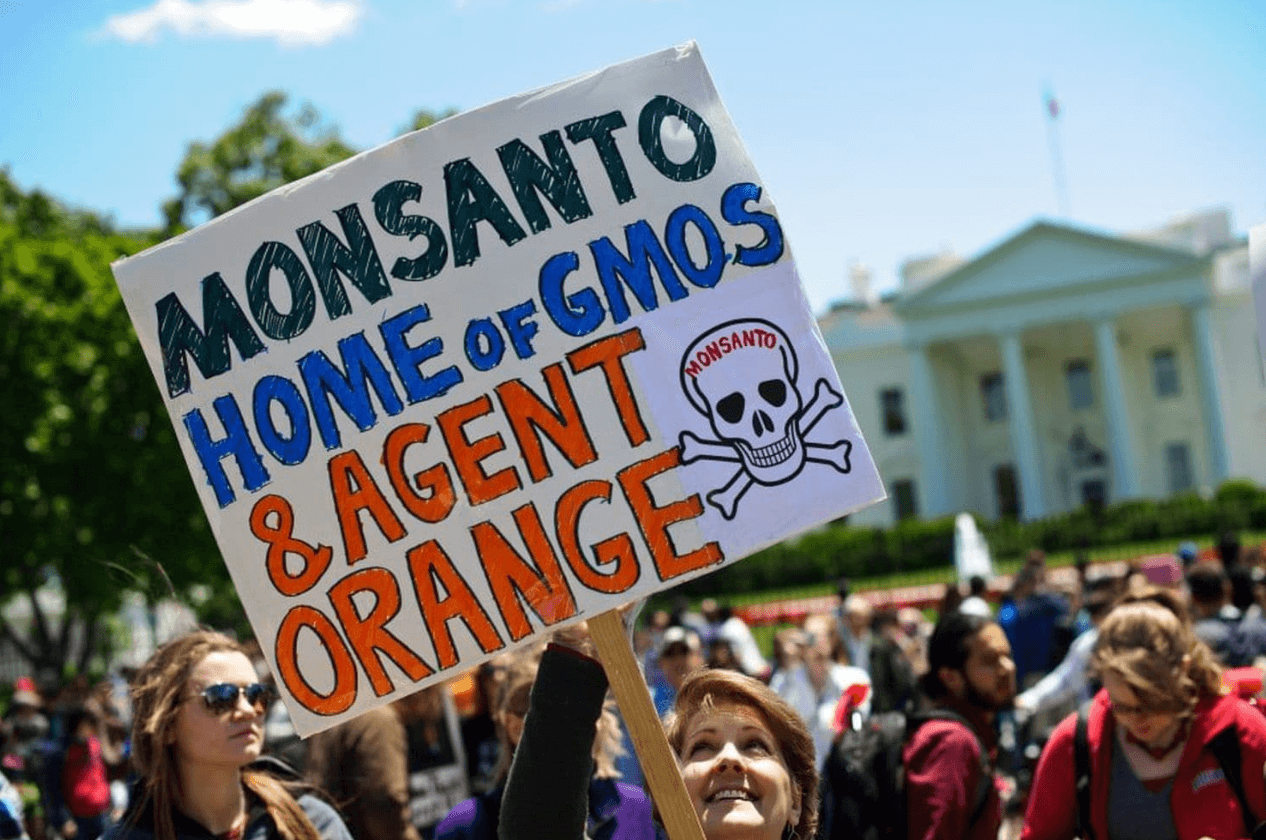
Though critics will no doubt accuse Monsanto of greenwashing its products under the less-familiar Bayer brand, I’d like to argue that the nominal end of Monsanto is a good thing. Perhaps more than any other company, Monsanto became the emblem of distrust in the American food system, a stand-in for a range of anxieties about the roles technology and commerce play in determining what we eat.
The problem with this was that, too often, invoking Monsanto was used as an easy way out. The brand became a kind of bogeyman, used to stoke fear, revulsion, and division, rather than to encourage meaningful debate. And that was never good for the public discourse about genetically modified food, and the attendant ethical and environmental questions that surround it.
We need to be having more substantive conversations. Food technology is evolving rapidly. The climate is changing. Industries are consolidating. The only thing that’s for sure is that nothing is going to stay the same. And so as we continue to hurtle into 21st century, we can’t continue to let a fixation on one company overwhelm the conversation.
In the three months before she was even born, Elianna Constantino received five blood transfusions and a bone-marrow transplant. All were given with a needle passed through her mother’s abdomen and uterus, into the vein in her umbilical cord.
Elianna, born Feb. 1 with a robust cry and a cap of gleaming black hair, has a genetic disease that usually kills a fetus before birth. The condition, alpha thalassemia major, leaves red blood cells unable to carry oxygen around the body, causing severe anemia, heart failure and brain damage.
The transfusions in the womb kept her alive, but only treated her illness. The bone-marrow transplant has the potential to cure it.
…
If the treatment works, it could open the door to using bone-marrow transplants before birth to cure not just Elianna’s blood disease but also sickle cell anemia, hemophilia and other hereditary disorders.
…
So far for Elianna, in her first three months, there has been no obvious benefit from the transplant. Like all children with her blood disorder, she needs a transfusion every three weeks.
But tests have found some of her mother’s stem cells in her blood. Whether they will start to help her is unknown. If they do not, her parents could eventually opt for a bone-marrow transplant to cure the disease and free her from a lifetime of transfusions.
Far be it from us to tell 23andMe how to run its business, but if it or any other DNA company wants to give customers a better read of disease risk, they might start asking how mom’s pregnancy went.
That’s the key message of a schizophrenia study, published [May 28], which showed that 108 regions of the genome previously identified as raising the risk of schizophrenia do so only slightly if the mother experiences no complications during pregnancy — but by some twelvefold if she does.
Taking into account prenatal conditions gives a starkly different read of how risky schizophrenia risk genes are: Taken together, they raise the chance of developing the disease to 12 in 1,000 if there are no complications — or to 80 in 1,000 if there are.
…
The idea that both genes and environment affect risk of disease is conventional scientific wisdom. But that usually means that while both genes and environment are involved, they act via separate biological pathways. BRCA mutations can raise the risk of breast cancer, for instance, and so can not bearing children, but the two don’t work by the same molecular mechanism.
…
23andMe doesn’t disagree. The company’s disease-risk analyses emphasize that, with the exception of single-gene disorders such as Huntington’s, you can have disease genes yet not develop the disease, or develop a disease despite not having the disease genes.
French politicians have backed a proposal for mandatory labelling of meat and dairy products from animals raised on genetically modified (GM) feed.
The proposal is contained in the first draft of president Emmanuel Macron’s Food and Agriculture Bill, which is being debated in French parliament.
The Bill is also seeking to make it mandatory for labels to include details of pesticides used on fruit and vegetables.
Calls for a change in the labelling laws came from France Nature Environnement – a federation of environmental groups – which described the result as a victory.
…
The Food and Agriculture Bill will now be put to the French Senate to examine from 26 June.
If accepted by the senate, the labelling laws will start by January 2023. On-pack labels would have to include information on the conditions under which the animal were raised and whether they had GM feed.
In June 2001, a group of government officials and journalists play-acted their way through a “germ game,” a fictional scenario in which the (then obscure) terrorist group called Al Qaeda sets off an outbreak of smallpox in US shopping malls. The exercise, called Dark Winter, proved influential in shaping US “pandemic preparedness” policy, promoting the notion that this country, and others, should stockpile vaccines, provide extra hospital beds, and make emergency plans in the event of a global disease outbreak that might never materialize.
…
Much has changed since 2001, though, so on Tuesday, May 15, some of the original participants in Dark Winter returned for a new pandemic exercise, CladeX.
…
The group’s task: respond to a fictional outbreak.
…
Someone has genetically modified a mostly harmless parainfluenza virus to kill. The fictional culprit is A Brighter Dawn, a shadowy group promoting the philosophy that fewer people—a lot fewer—would be a good thing for planet Earth.
…
[The U.S needs to] invest more heavily in ultra-fast paper diagnostics and new vaccine manufacturing systems that could provide antidotes in months rather than years. All that is within reach, says [Dark Winter creator Tara] O’Toole. “We have the capacity, technologically and socially, to defend ourselves,” she says. “But we have to get it into our heads that it’s a real threat.”
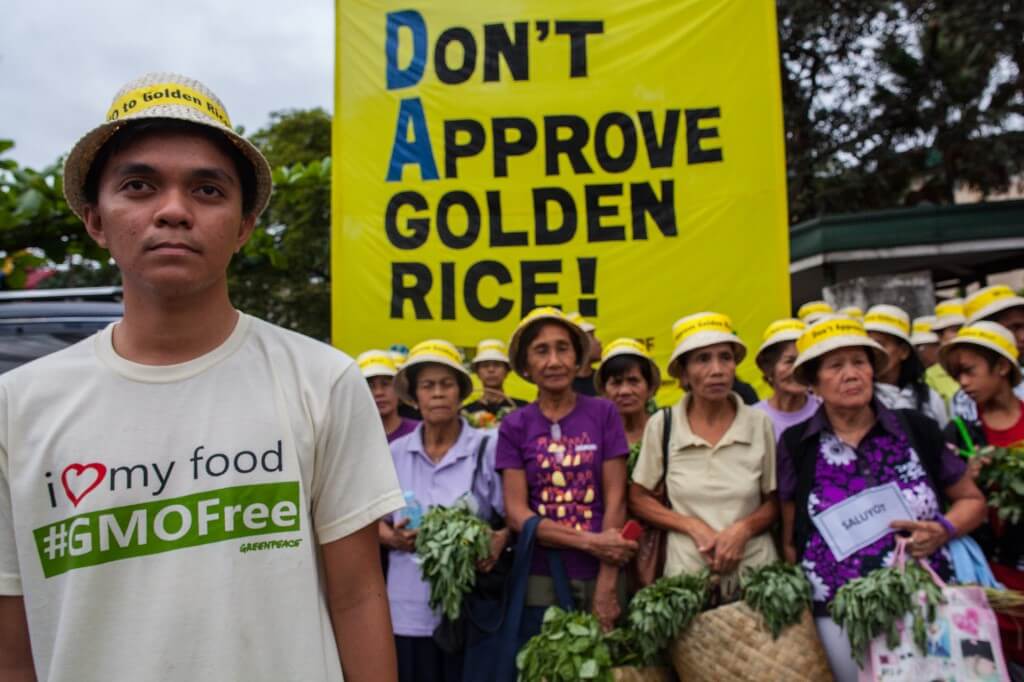
The campaign against GR2E was partly misinformed, partly politically motivated.
…
One argument is that the benefits of GR2E are too little. But this isn’t the case at all. Several studies have shown that GR2E provides enough Vitamin A to combat VAD with a minimal amount of rice, just over half a cup a day.
Detractors also offer alternative sources for Vitamin A such as sweet potatoes, but such foods are not available in all seasons or affordable to everyone. Contrary to popular belief, carrots do not have as much Vitamin A as one would think.
Greenpeace is probably the biggest critic of any GM crop developed. Its primary argument is that the crop does not benefit farmers, only commercial enterprises. But data disproves this. GR2E has a cap of commercial use set at $10,000. Farmers or any consumers are allowed to plant and replant this crop as long as they don’t exceed this amount in profits. Farmers are also allowed to keep the seeds and replant them. Furthermore, licences are free as well.
On a recent visit to [genetic data website] DNA.Land, I scanned down the list of traits they offered to tell me about [my own DNA]. I stopped at intelligence. I took a breath before I clicked.
…
The bell curve was surrounded by notes, disclaimers, and symbols. But my eye stayed locked on that lavender hill—especially on that personalized marker that located me on the low side of the scale. What was I to make of this?
…
I called up Yaniv Erlich, the scientist who wrote the intelligence program.
..
Erlich explained that he designed the program to make people cautious about the connection between genes and intelligence. All those disclaimers and notes that surrounded the bell curve were intended to show that these predictions are, in a sense, worse than just wrong. They’re practically meaningless.
…
[W]ith millions of people flocking to sites like 23andMe and Ancestry.com to get reports on their genes, we have to wonder what will happen if they start handing out intelligence predictions. After talking with Erlich, I fear it will turn out badly.