

In the new study, by a group of scientists from UC Berkeley, Mount Sinai School of Medicine, and the University of Washington, the authors (L. Zhang et al.) decided to focus exclusively on people with the highest exposures to glyphosphate. They point out that including people with low exposure, who might have no increased risk of cancer, tends to dilute risk estimates. Statistically speaking, this is undeniably correct, but it also means that their results may only apply to people with high exposures, and not to ordinary consumers.
After I posted this article, the….Genetic Literacy Project pointed me to Geoffrey Kabat’s piece [on the Genetic Literacy Project site] about the Zhang et al. [glyphosate-cancer] study. Kabat did a deep dive into the studies that Zhang et al.’s work is based on and uncovered a critical flaw in the study, one that I hadn’t found. More than half of the “weight” of the meta-analysis by Zhang, and by far the largest number of cancer cases, come from a single study by Andreotti et al. published in 2018. That study reported risks for 4 different time points: 5, 10, 15, and 20 years.
It turns out, as Kabat reports, that only the 20-year period showed any increase in risk of cancer. The relative risks of cancer at 5, 10, and 15 years were actually lower in the group exposed to glyphosphate, and yet Zhang et al. didn’t mention this fact.
Now, no one thinks that glyphosphate lowers the risk of cancer, but Zhang et al. did not report that they had cherry-picked in this way. At a minimum, they should have reported what their findings would be if they used the other time periods. I suspect that they’d have found no increased risk of cancer–but this wouldn’t make for such a catchy headline. This omission on their part is a serious flaw, indicating that they (and their results) might have been unscientifically biased.
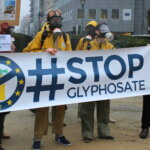 New Zealand scientist challenges ‘scaremongering’ about herbicide glyphosate
 Viewpoint: Aftershocks from American Academy of Pediatrics attack on glyphosate—‘Misinformation about the genetic engineering of crops hinders the development of sustainable agriculture technologies’
 Pesticides cause prostate cancer? Cedars Sinai Medical Center epidemiologist criticizes ‘biased’ ecological study


The bottom line: even in those with very high exposures to glyphosphate, the evidence that it causes any type of cancer is very weak. And for ordinary consumers, there’s nothing to worry about.
Steven Salzberg is the Bloomberg Distinguished Professor of Biomedical Engineering, Computer Science, and Biostatistics at Johns Hopkins University. Follow him on Twitter at: @StevenSalzberg1
Read full, original article: Does The Herbicide RoundUp® Cause Cancer?