Food companies can boost public trust in GMOs by engaging consumers, marketing researcher says

BenJerrysProtest KSTPJimOConnell
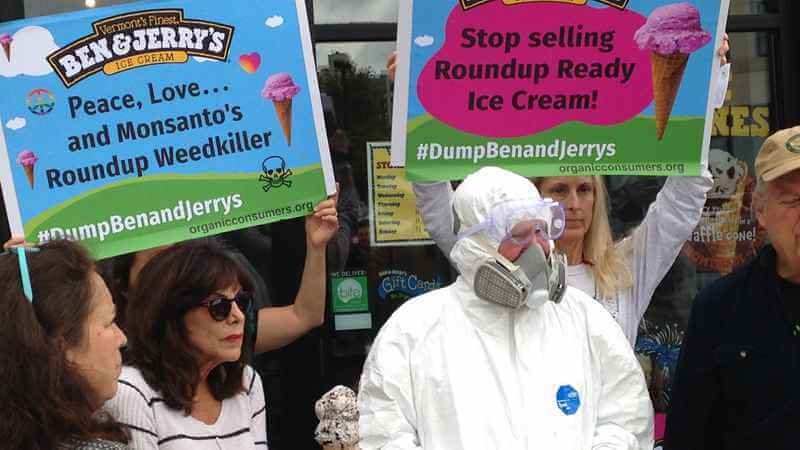
Organic Consumers Association activists protest Ben & Jerry's (Image credit: KSTP/Jim O'Connell)

Sixty-two percent of U.S. consumers say the fewer ingredients a food product contains the healthier it must be to eat.

“If that were true, I’m a happy girl because my favorite food only has three ingredients–potatoes, salt and oil,” said Lynn Dornblaser to agricultural media attending the 2019 Bayer AgVocacy meeting in Orlando, Fla. Dornblaser is director of innovation and insight for Mintel, a market research company. Her presentation at the event focused on what consumers think, what they feel and how to communicate with them.

One of her conclusions, based on research Mintel has done, is that consumers don’t have a good understanding of food science. For instance, she shared that….35% of consumers believe GMOs are bad.

Dornblaser says there’s a lot of opportunity for companies to communicate better with consumers about the food products they produce.


….“That’s what hasn’t happened in the food industry. The food industry has given away their knowledge to others and let….consumer activist groups and people who don’t understand the science communicate directly to consumers. And that’s resulted in a lot of this [wrong] information and a lot of misunderstanding.”

GMOs are the obvious case in point, Dornblaser notes.

Read full, original article: GMOs Are Good For Food And Other Facts

{{ reviewsTotal }}{{ options.labels.singularReviewCountLabel }}
{{ reviewsTotal }}{{ options.labels.pluralReviewCountLabel }}
{{ options.labels.newReviewButton }}
{{ userData.canReview.message }}

Related Articles

Infographic: Global regulatory and health research agencies on whether glyphosate causes cancer

Infographic: Global regulatory and health research agencies on whether glyphosate causes cancer

Does glyphosate—the world's most heavily-used herbicide—pose serious harm to humans? Is it carcinogenic? Those issues are of both legal and ...

Most Popular

d-b
Blocked arteries, kidney stones, nausea, constipation, fatigue: Long list of health problems caused by too much vitamin D 
Screenshot-PM-24
Viewpoint: The herbicide glyphosate isn’t perfect. Banning it would be far worse.
circular-bioeconomy-should-focus-on-sustainable-wellbeing
GLP podcast: What's wrong with 'doomsday' environmentalism? It's false.
Screenshot 2026-02-25 at 11.20
Why the herbicide glyphosate is key to sustainable agriculture
screen shot at pm
Word games: How Moderna is selling its newest vaccine without using the “v” word
ChatGPT-Image-Feb-16-2026-01_04_32-PM
Raw milk myth wake-up call
ChatGPT-Image-Apr-28-2026-12_46_14-PM-2
Kennedy has quietly stopped touting problematic raw milk. Health concerns aren’t why
ChatGPT-Image-Feb-16-2026-01_57_31-PM
Viewpoint: ‘Science-as-Satan’ unites the MAHA—MAGA movements. Is a breakup in the works?
ChatGPT-Image-Apr-22-2026-11_06_18-AM
Wellness influencer nonsense: No, nicotine does not boost cognition and productivity, but it can damage your health 
glp menu logo outlined

Get news on human & agricultural genetics and biotechnology delivered to your inbox.