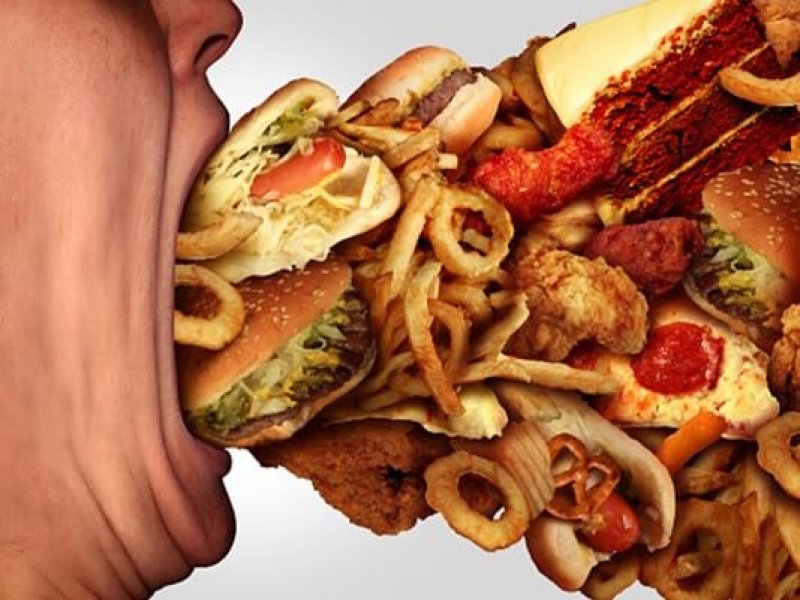
Consider the simple act of eating. We may think our food consumption is driven by spur-of-the-moment choices. But the reality is that our individual genetics play a major role in the pleasure we derive from eating. Our physiological response to food (anticipation, selection, consumption, satisfaction) is based in a complicated reward system in the brain involving the mesolimbic network, as well as neurotransmitters such as dopamine. There is a question that stems back to at least the ancient Greeks: In one version, Hera asked Tiresias, “who derived more pleasure from sex, men or women?” (Spoiler: Apparently women do — 9x more!) Of course it’s rhetoric, but similarly, we can’t assume and shouldn’t presume that one person’s experience with eating behaviors is the same as another’s. This could be at the root of why some people find dieting so miserable and difficult, while others find it effortless.

Why do we think it’s genes?
It’s been established that a series of gene variants is associated with addiction, which is an aberration of the brain’s reward system, and that these gene variants are heritable (having an alcoholic or other drug addict in the family increases the likelihood that others would be found to have addictive behaviors). More research must be done, but it’s a good bet that the two (drug cravings and food cravings) are closely linked in the brain.
An interesting look at this issue from a different direction can be found in the workings of the drug Contrave (a combination of bupropion and naltrexone) approved in 2014 for treatment of obesity. Bupropion has shown effectiveness as an appetite suppressant, while naltrexone blocks the effects of opioid drugs — removing the “reward” offered to addicts.
One of the things we learn is that there are similarities between drugs and eating — at least in terms of the pleasure derived by users. Naltrexone (and the similar naloxone) work through a direct and interesting mechanism: They prevent or reverse the effects of opioids by blocking opioid receptors, thereby preventing the drugs from having an active site to ‘dock’ and cause physiological activation.
Many drug overdoses lead to death because of respiratory depression, sedation, and hypotension (low blood pressure). By halting these drug effects, doctors have successfully revived opioid users from unresponsive states. Naloxone also can reverse the negative mental and mood effects of certain drugs.





In those people using it for weight loss (as a component of Contrave), the drug modifies the response to the pleasure and craving of food — in much the same way that it stops drug cravings. The person never feels the “high” he or she would typically experience from eating.
Establishing further connection between genetics, brain architecture and food cravings, Contrave has been suggested to work by stimulating neurons in the hypothalamus to generate the appetite-suppressant effect, while blocking feedback mechanisms in the brain.
Researchers of Contrave’s dual mechanism of action also suggest that it might have effects on the mesolimbic reward system, adding, that this “may lead to further weight reduction by modulating reward values and goal-oriented behaviors.”
So certainly which foods we find desirable is in part influenced by our genetics, as well as our life experiences. But how ‘effortful’ we need to be in our vigilance to avoid or reduce certain ‘trigger foods’ may have more to do with the neurobiological effects of addiction than we may like to think.
A version of this article originally ran on the GLP on March 15, 2017.
Ben Locwin is a behavioral neuroscientist and astrophysicist with a masters in business, and a researcher on the genetics of human disease. BIO. Follow him on Twitter @BenLocwin