
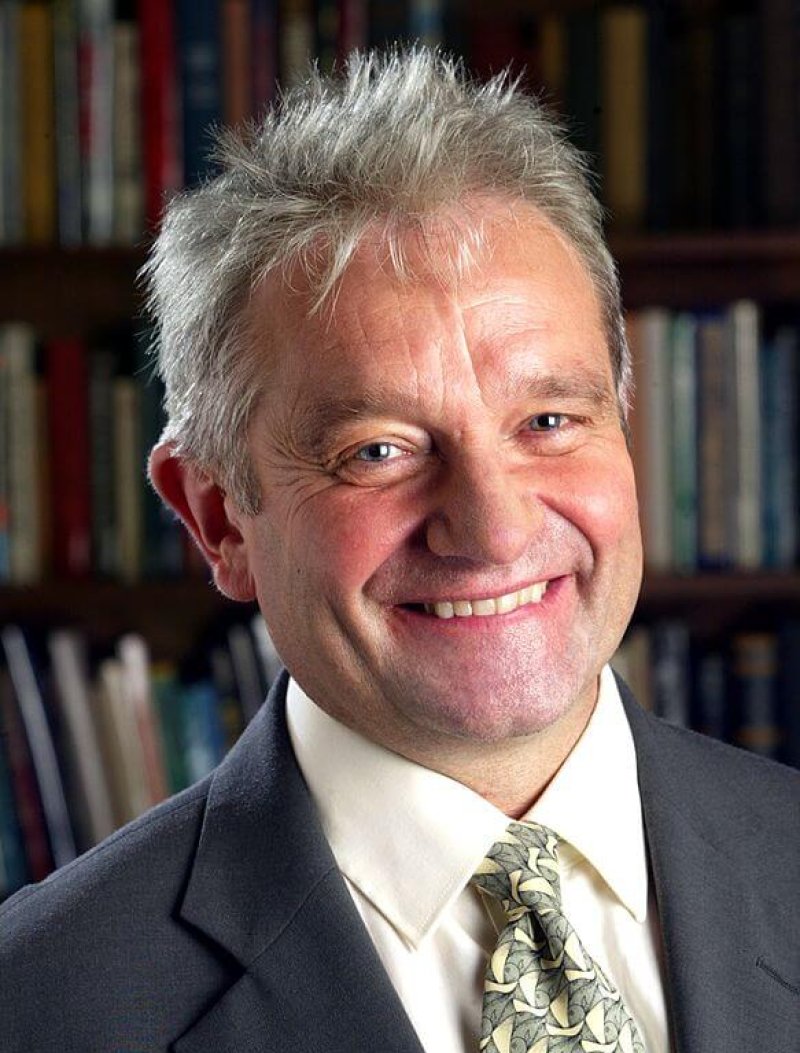
Podcast: Nobel prize winner Sir Paul Nurse on his ‘barking mad’ discovery of the genes responsible for cell division

Sir Paul Nurse
Leading English geneticist and Nobel prizewinner Sir Paul Nurse
Serendipity plays a surprisingly important role in scientific discovery. On this episode of Genetics Unzipped, biologist Kat Arney talks to leading British geneticist Sir Paul Nurse about his audacious experiments that identified the genes responsible for regulating cell division.

In the mid 1970s, Nurse showed that the gene cdc2 was a key regulator of cell-cycle events in yeast, including cell division. With the help of his graduate student Melanie Lee, he later found the homologous human gene Cdk1. The result indicated that the fundamental mechanisms of cell division operate in humans just as they do in far simpler organisms, remaining constant over millions of years of evolution. One of Nurse’s colleagues said the research that led to this latter finding was “barking mad“:

 [N]obody thought for even one moment that a complicated process like cell reproduction could be the same in a simple yeast and a human cell. It was thought ludicrous …. I remember [geneticist Peter Goodfellow] thinking that this was completely barking mad and I had to agree with him. It was pretty barking mad, but it actually worked.

Nurse’s work greatly aided cancer researchers seeking to understand how the disease progresses and put the geneticist on track to win a Nobel prize.
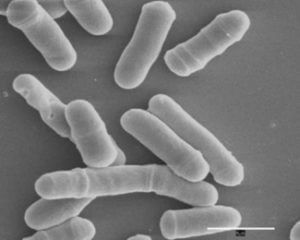
 

Fission yeast
Fission yeast. Image: David O Morgan – The Cell Cycle. Principles of Control via Wikimedia Commons

Arney offers highlights of Nurse’s lecture celebrating the centenary of the UK Genetics Society, given at the John Innes Centre in Norwich on June 25—the anniversary of the very first meeting of the Society, held at Burlington House in London.

Past president of the Royal Society and the Genetics Society and current director of the Francis Crick Institute in London, Nurse is all too aware of the role that serendipity has played in his science, sharing the story of cycling back to his Edinburgh lab on a bleak November night to recover a crucial experiment from the trash. He also has a stern warning about the dangers of giving newly discovered genes funny names (which may not turn out to be quite so funny 40 years later).
Nurse explains why questioning your assumptions about the “right” answer is so crucial in science—and how buying better lab equipment can make or break your experiments. The geneticist also shares an amusing tale of the time he and legendary maize researcher Barbara McClintock left a boring lecture and went for tea and biscuits.

Full transcript, credits and show notes here.

[irp]

Genetics Unzipped is presented by award-winning science communicator and biologist Kat Arney and produced by First Create the Media for the UK Genetics Society. Follow Kat on Twitter @Kat_Arney and Genetics Unzipped @geneticsunzip

Listen to Genetics Unzipped on Apple Podcasts (iTunes) Google Play, Stitcher, Blubrry, TuneIn, Spotify, and Spreaker

Related Articles

Infographic: Global regulatory and health research agencies on whether glyphosate causes cancer

Infographic: Global regulatory and health research agencies on whether glyphosate causes cancer

Does glyphosate—the world's most heavily-used herbicide—pose serious harm to humans? Is it carcinogenic? Those issues are of both legal and ...

Most Popular

ChatGPT-Image-Mar-10-2026-01_39_01-PM
Viewpoint—“Miracle molecule” debunked: Why acemannan supplements don’t work
Screenshot-2026-10-07-at-1.03.15-PM
Anti-vaxxers’ double whammy: Exaggerated vaccine fears have fueled measles outbreaks and preventable deaths—and left survivors more vulnerable to other infections for years
Crossed-Out-Calendar-with-Milk-Carton
Viewpoint: The shocking consequences after a year of Robert F. Kennedy Jr.'s distortions, deceptions, and flat-out falsehoods
Frosted Blueberries Under Magnification
MAHA moms divided over RFK Jr.’s food‑safety efforts, as recall alerts grow and outbreaks spread
Pride and Patriotism in the Breeze
Retreat from identity labels: Does the sharply declining number of young teens identifying as gay and bisexual reflect an ideological shift?
Screenshot-2026-10-08-at-10.41.33-AM
Viewpoint: Wellness patches: Most vitamin supplements are useless and sometimes even dangerous, but this craze is even worse
Golden Wheat Under a Starry Sky
Viewpoint: ‘Bureaucratic and economic obstacles’ to agricultural biotechnology: Europe creeps into the 21st century, but blocks remain
Screenshot-2026-10-13-at-10.35.49-AM
Challenging health misinformation? People are more likely to believe AI when it responds with empathy
Prescription Capsules Scattered on Twenty-Dollar Bills
Facts & Fallacies podcast: America's health care system is broken. A doctor explains how to fix it, Part 2
Screenshot-2026-10-12-at-10.44.38-AM
Widely condemned as unethical, hepatitis B vaccine study funded by RFK Jr’s CDC gets a final greenlight
Executive-Greeting-in-a-Futuristic-Boardroom
Viewpoint: RFK Jr. touts AI to guide health care…but searches using the technology he champions expose him as scientifically illiterate
Cross and Syringe Standoff
Viewpoint: Hijacking Jesus: How anti-vaccine fanatics are exploiting religious exemptions and killing children
Deepfake Democracy Media Mosaic
31 states have passed a patchwork of laws to limit election deepfake commercials. They’re not working very well.
glp menu logo outlined

Get news on human & agricultural genetics and biotechnology delivered to your inbox.



























