Why 3 countries planted GMO Bt cotton and got ‘wildly different results’

cotton

Three countries used the same tactic to fight the same pest on the same crop, but they had wildly different results. Why? A new article published in June in the Journal of Economic Entomology explores this intriguing tale of three countries and the broader lesson it holds for pest management.

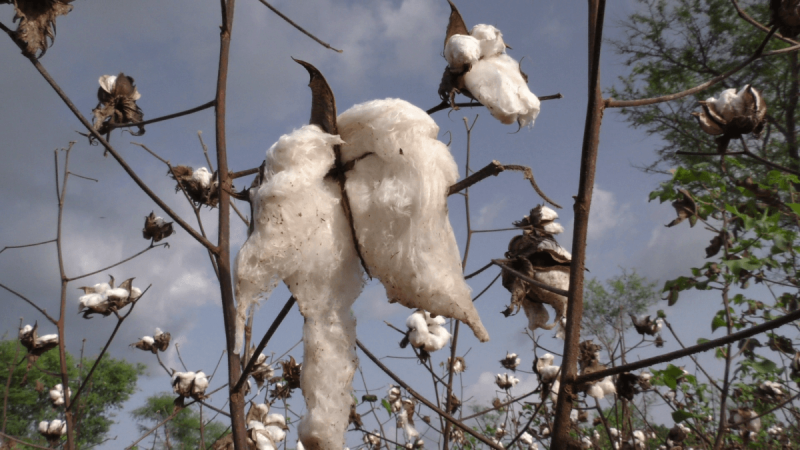
Starring in this trilogy is the pink bollworm (Pectinophora gossypiella), a caterpillar pest that can devastate cotton. To fight this invasive insect, millions of growers worldwide have reduced their need for chemical sprays by planting transgenic cotton, called Bt cotton, which was genetically engineered to produce caterpillar-killing proteins from the bacterium Bacillus thuringiensis (Bt), says the articleโ€™s lead author Bruce Tabashnik, Ph.D., Regentsโ€™ professor and head of the University of Arizona (UA) Department of Entomology.

At first, Bt cotton worked well against pink bollworm in all three countries, but this adaptable pest harbors mutations that confer resistance to Bt toxins. These mutations were rare before Bt cotton was commercialized. However, when two resistant caterpillars develop into moths and mate, their offspring are also resistant. If unchecked, the proportion of resistant insects increases every generation. Conversely, if a resistant moth mates with a normal, toxin-susceptible moth, the progeny remain susceptible.

Read full, original article: Pink Bollworm Versus Bt Cotton: Three Countries, Three Results

{{ reviewsTotal }}{{ options.labels.singularReviewCountLabel }}
{{ reviewsTotal }}{{ options.labels.pluralReviewCountLabel }}
{{ options.labels.newReviewButton }}
{{ userData.canReview.message }}

Related Articles

Infographic: Global regulatory and health research agencies on whether glyphosate causes cancer

Infographic: Global regulatory and health research agencies on whether glyphosate causes cancer

Does glyphosateโ€”the world's most heavily-used herbicideโ€”pose serious harm to humans? Is it carcinogenic? Those issues are of both legal and ...

Most Popular

Screenshot-2026-04-20-at-2.26.27-PM
Viewpoint โ€” Food-fear world: The latest activist scientists campaign: Cancer-causing additives
Screenshot-2026-05-01-at-11.56.24-AM
โ€˜Science moves forward when people are willing to think differentlyโ€™: Memories of DNA maverick Craig Venter
Screenshot-2026-03-13-at-12.14.04-PM
The FDA wants to make many popular prescription drugs OTCโ€”a great idea. Hereโ€™s why itโ€™s unlikely to happen
Screenshot-2026-04-03-at-11.15.51-AM
Paraben panic: How a flawed study, media hype, and chemophobia convinced the public of the danger of one of the safest classes of preservatives
ChatGPT-Image-May-1-2026-02_20_13-PM
How RFK, Jr.โ€™s false vaccine claims are holding up $600 million to fight diseases in poor countries
viva-la-vida-watermelons
Misinformation and climate change are endangering summer watermelons
Screenshot-2026-04-30-at-2.19.37-PM
5 myths about summer dehydration that could damage your health โ€” or even kill you
ChatGPT-Image-Mar-27-2026-11_27_05-AM
The myths of โ€œprocessโ€: What science says about the โ€œdangersโ€™ of synthetic products and ultra-processed foods
Drinking lots of water can help reduce the effects of aging
Nanoplastics in drinking water: MAHA activists forge science-based bipartisan coalitionย 
79d03212-2508-45d0-b427-8e9743ff6432
Viewpoint: The Casey Means hustleโ€”Wellness woo opportunism dressed up as medical wisdom
ChatGPT-Image-Mar-10-2026-01_39_01-PM
Viewpointโ€”โ€œMiracle moleculeโ€ debunked: Why acemannan supplements donโ€™t work
ChatGPT-Image-Apr-30-2026-12_21_05-PM-2
The tech billionaires behind the immortality movement
Screenshot-2026-05-04-at-12.54.32-PM
How Utah became the countryโ€™s supplement capitalย  โ€” and a haven for unregulated, ineffective and fake products
glp menu logo outlined

Get news on human & agricultural genetics and biotechnology delivered to your inbox.