One year after EU decision to regulate CRISPR crops as GMOs, 120 research institutions call for updated plant breeding rules

gmo justice x
Credit: Beyond GM

Scientists from 120 European research institutions support an open statement [arguing] that crops created using gene-editing techniques should not be treated as conventional genetically modified plants.

Coinciding with the first anniversary of the resolution of case C-528/16 by the Court of Justice of the European Union (ECJ), the European plant science community has released an Open Statement reaching out to the newly elected European Parliament and European Commission to enable the use of new genome editing techniques to achieve …. more sustainable agriculture, in line with the UN sustainable development goals.

CRISPR-Cas [gene editing] technology allows [scientists to modify] genes with great precision and ease, opening a wide range of possibilities with applications both in the fields of medicine and plant breeding.

Researchers around the world are already using the CRISPR-Cas system to carry out targeted modifications on species of agronomic interest in a faster, relatively simple and much more directed way compared to previous plant breeding techniques such as random mutagenesis. As with conventional breeding techniques, the objective of researchers using CRISPR-Cas is to introduce mutations that confer advantageous characteristics to the plant, such as resistance to plant pathogens or to drought ….

Read full, original article: European scientists call for a review of the European Union legislation on genome-edited crops


{{ reviewsTotal }}{{ options.labels.singularReviewCountLabel }}
{{ reviewsTotal }}{{ options.labels.pluralReviewCountLabel }}
{{ options.labels.newReviewButton }}
{{ userData.canReview.message }}

Related Articles

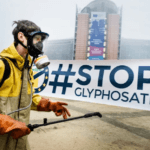
Infographic: Global regulatory and health research agencies on whether glyphosate causes cancer

Infographic: Global regulatory and health research agencies on whether glyphosate causes cancer

Does glyphosate—the world's most heavily-used herbicide—pose serious harm to humans? Is it carcinogenic? Those issues are of both legal and ...

Most Popular

Screenshot-PM-24
Viewpoint: The herbicide glyphosate isn’t perfect. Banning it would be far worse.
79d03212-2508-45d0-b427-8e9743ff6432
Viewpoint: The Casey Means hustle—Wellness woo opportunism dressed up as medical wisdom
d-b
Blocked arteries, kidney stones, nausea, constipation, fatigue: Long list of health problems caused by too much vitamin D 
ChatGPT-Image-Mar-10-2026-01_39_01-PM
Viewpoint—“Miracle molecule” debunked: Why acemannan supplements don’t work
Screenshot-2026-04-30-at-11.33.46-AM
Anti-seed-oil to anti-vax pipeline: MAHA movement spreads to teen influencers
lab grown meat research kelly schultz lehighuniversity main
Profiles of the 10 top global cultured meat companies
ChatGPT-Image-Apr-30-2026-05_00_48-PM
Wellness grifter physician turned wellness influencer out as surgeon general nominee
ChatGPT-Image-Mar-27-2026-11_27_05-AM
The myths of “process”: What science says about the “dangers’ of synthetic products and ultra-processed foods
Screenshot-2026-04-28-at-1.21.37-PM
How America’s medical system encourages psychiatric overdiagnosis
ChatGPT-Image-Apr-30-2026-12_21_05-PM-2
The tech billionaires behind the immortality movement

Sorry. No data so far.

glp menu logo outlined

Get news on human & agricultural genetics and biotechnology delivered to your inbox.