Human-monkey chimeras created in China in quest to grow transplantable human organs

images stories chimera

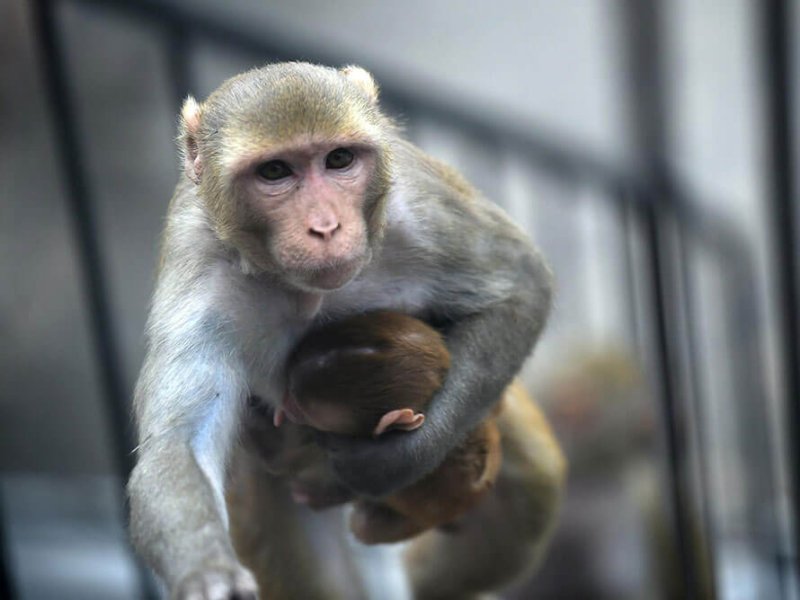
An international team of researchers has created embryos containing both human and monkey cells, the Spanish newspaper El País reported July 31. The controversial project was conducted in China, rather than in the US where the project leader is based, “to avoid legal issues,” according to the newspaper, and ultimately aims to grow viable organs for transplantation into humans.

Juan Carlos Izpisúa Belmonte of the Salk Institute in San Diego is spearheading the project with scientists from his own lab and those from the Murcia Catholic University in Murcia, Spain. The team wants to develop chimeras—organisms composed of cells from two or more species—capable of growing human organs.

The National Institutes of Health forbids the use of federal funds to create human-monkey embryos. China … has no such restriction. … Should a human-animal hybrid develop a human-like nervous system capable of consciousness, or be brought to term and display human-like behaviors, the ethical consequences could be extreme.

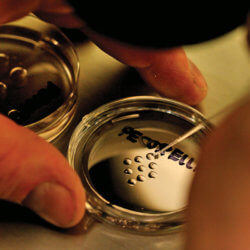
In July, Japanese researchers—including Hiromitsu Nakauchi of the University of Tokyo and Stanford University—first received permission from the government to create human-animal embryos to be transplanted into surrogates. … Although legal now, it remains unlikely that any of these animals will soon be brought to term … according to The Guardian.

Read full, original post: First Human–Monkey Chimeras Developed in China

{{ reviewsTotal }}{{ options.labels.singularReviewCountLabel }}
{{ reviewsTotal }}{{ options.labels.pluralReviewCountLabel }}
{{ options.labels.newReviewButton }}
{{ userData.canReview.message }}

Related Articles

Infographic: Global regulatory and health research agencies on whether glyphosate causes cancer

Infographic: Global regulatory and health research agencies on whether glyphosate causes cancer

Does glyphosate—the world's most heavily-used herbicide—pose serious harm to humans? Is it carcinogenic? Those issues are of both legal and ...

Most Popular

ChatGPT Image Jun 3, 2026, 03_14_43 PM
Viewpoint: How Earthjustice became the poster child for the abuse of special interest activist funding
ChatGPT-Image-Jun-11-2026-01_15_03-PM
Selective Pressure, Selective Silence
ChatGPT Image Jun 3, 2026, 03_54_37 PM
Viewpoint: “Turn on, tune in, drop out”—Kennedy embraces the Timothy Leary psychedelic revolution
Screenshot-2026-06-05-at-2.12.30-PM
Some plants can poison you. So how did humans figure out what is safe to eat?
ChatGPT-Image-Mar-10-2026-01_39_01-PM
Viewpoint—“Miracle molecule” debunked: Why acemannan supplements don’t work
Screenshot 2026-05-26 at 10.15
Viewpoint: Double standard—Why does the wellness industry get a free pass while Big Healthcare is treated as morally suspect?
ChatGPT Image May 28, 2026, 08_16_38 PM
Viewpoint: Why the EPA mismeasures cancer risk of chemicals and what should be done to fix it
ChatGPT-Image-May-26-2026-07_51_21-AM-2
Viewpoint: There are more than 1,000 chemicals in a cup of coffee—including many substances that can cause cancer. Why isn’t it banned?
Picture1
Sounds we can’t hear — the hidden planetary signals behind science, fear, and misinformation
Screenshot-2026-06-03-at-1.24.46-PM
Challenging anti-GMO disinformation: Why genetically-tweaked crops offer bushels of benefits

Sorry. No data so far.

glp menu logo outlined

Get news on human & agricultural genetics and biotechnology delivered to your inbox.