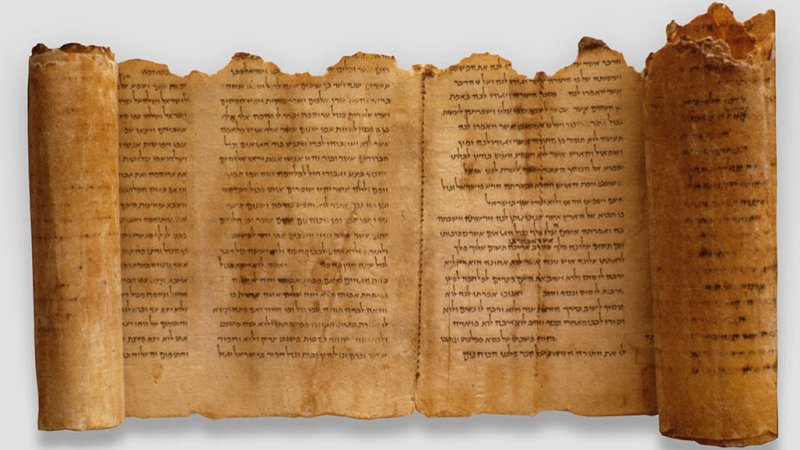
The Dead Sea scrolls have given up fresh secrets, with researchers saying they have identified a previously unknown technique used to prepare one of the most remarkable scrolls of the collection.
Scientists say the study poses a puzzle, as the salts used on the writing layer of the Temple scroll are not common to the Dead Sea region.
…
The bright, pale scroll – which is more than 8 metres long and written on parchment sheets whitened through treatment with a salt called alum – has a number of unusual features. It is wafer thin – experts have suggested it might have been made from an animal skin split in two – and unlike most scrolls, the text is on the flesh side of the skin. Even more surprisingly, the text is written on a thick mineral-containing layer that forms a writing surface on top of the collagen.
…

The results suggest the writing surface is largely composed of sulfate salts, including glauberite, gypsum and thenardite – minerals that dissolve in water and are left behind when the water evaporates.
However, the researchers say these salts are not typical for the Dead Sea region, raising questions of where exactly they came from.
Read full, original post: Dead Sea scrolls study raises new questions over texts’ origins