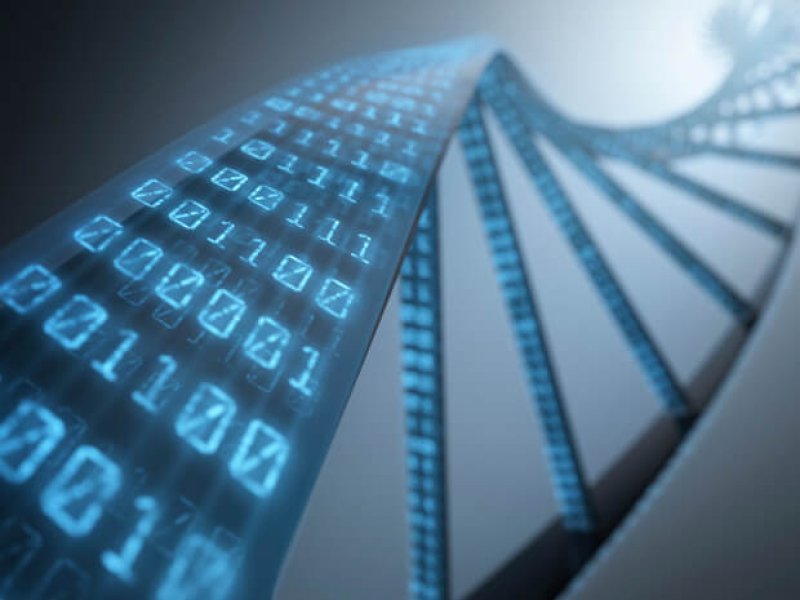
Using DNA to store information: All of YouTube’s data could be held ‘in a single teaspoon’

mjywmdu ma

Researchers at the Technion-Israel Institute of Technology in Haifa and the Interdisciplinary Center (IDC) in Herzliya have significantly optimized the process needed to store digital information on DNA, the Technion reported on [September 9].

According to the press release, in a paper published in the journal Nature Biotechnology, the group demonstrated storage of information in a density of more than 10 petabytes, or ten million gigabytes, in a single gram, while significantly improving the writing process. This, theoretically, allows for storing all the information stored on YouTube in a single teaspoon.

As server farms are responsible for about 2% of global carbon emission, similar to the emission if global air traffic, and for 3% of global electricity consumption – a rate higher than the entire electricity consumption of the UK – DNA-based information storage may also help reduce our carbon footprint.

According to the researchers, “the technology we presented in the paper has the potential to streamline further processes in synthetic biology and biotechnology.

“We believe that in the coming years, we will see a significant increase in the use of synthetic DNA in research and industry,” they said.

Read full, original post: Israeli scientists store digital information in DNA

Related Articles

Infographic: Global regulatory and health research agencies on whether glyphosate causes cancer

Infographic: Global regulatory and health research agencies on whether glyphosate causes cancer

Does glyphosate—the world's most heavily-used herbicide—pose serious harm to humans? Is it carcinogenic? Those issues are of both legal and ...

Most Popular

ChatGPT-Image-Aug-4-2026-10_15_14-AM
Viewpoint—A hard look at the Fauci diaries: Do they change what we know about COVID’s origins?
ChatGPT-Image-Mar-10-2026-01_39_01-PM
Viewpoint—“Miracle molecule” debunked: Why acemannan supplements don’t work
ChatGPT-Image-Aug-4-2026-12_42_58-PM
Viewpoint: Fact-checking CNN interview with RFK, Jr. underscores the depth of his disinformation delusions
Picture1
Hiroshima at 81: America’s new nuclear bomb, a buried Iranian target, and a question no one wants to ask
ChatGPT-Image-Jul-17-2026-09_50_27-AM
Viewpoint: How disease tracking and prevention has cratered under the Kennedy-Trump administration
ChatGPT-Image-Aug-4-2026-07_52_00-PM
No liability for scientific due diligence: California Supreme Court rejects bizarre lawsuit faulting Gilead for fully evaluating HIV drug before release
ChatGPT-Image-Aug-4-2026-09_31_50-AM-2
Viewpoint: Could the U.S. become dependent on China to develop critical new genetic and drug therapies?
Screenshot-2026-07-17-at-1.34.59-PM
Poll: Vaccine hesitancy soars when patients distrust health providers and turn to social media
png livestock cow cattle a
Consumer skepticism about gene-edited milk is neither fixed nor particularly high—and falls even more if it’s priced lower
ChatGPT-Image-Aug-4-2026-02_05_46-PM
Does Congress have the guts to successfully challenge Trump’s politicization of science funding?
ChatGPT Image Jul 29, 2026, 09_08_15 AM 2
The retreat of environmental extremism: Why activist NGOs are losing favor
ChatGPT Image Jul 29, 2026, 10_17_59 AM
Viewpoint: What does it mean when critics of conventional agriculture say many fruits and vegetables are “linked” to pesticide poisoning?
ChatGPT-Image-Jun-25-2026-12_23_17-PM
No, Bill Gates did not secretly engineer ticks to promote veganism
glp menu logo outlined

Get news on human & agricultural genetics and biotechnology delivered to your inbox.