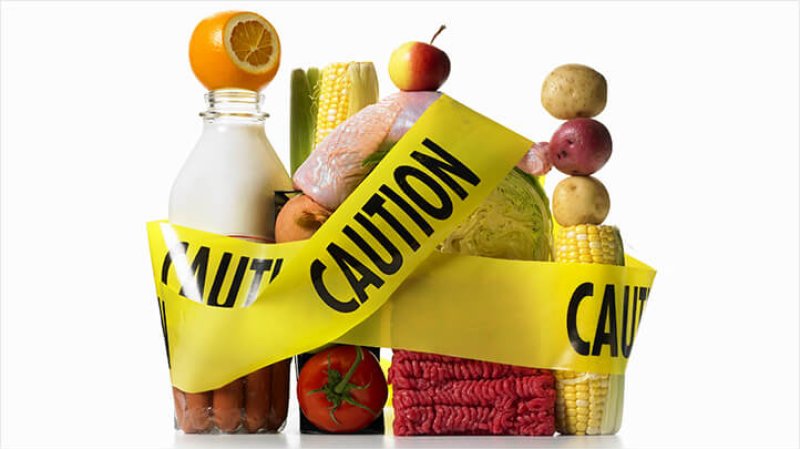
Foodborne illnesses strike almost 48 million Americans annually. Do we need better food safety testing?

SG How Do I Protect My Family From Foodborne Illnesses RM x

In the U.S. alone, there are an estimated 47.8 million illnesses, more than 127,000 hospitalizations and 3,000-plus deaths attributed to foodborne illness each year. Salmonella alone accounts for 1 million foodborne illnesses each year to an overall economic cost of $2.65 billion per year, according to the Centers for Disease Control.

Consider this: Of the estimated 280 million tests for pathogens in 2016, salmonella was the target in approximately 120 million tests …. In 2015, a study from the American Proficiency Institute on about 18,000 testing results from 1999 to 2013 for salmonella found false negative rates between 2% and 10% and false positive rates between 2% and 6%.

If you multiply the sheer volume of tests by incidence rate of salmonella and those accuracy rates, the difference of just a few percentage points creates a compounding effect that unnecessarily increases public health risks through elevated false negative results as well as …. false positives that result in unnecessary but costly recalls.

Fast, accurate and specific results can help identify the cause of a public health issue and cause a faster resolution …. The technology capable of achieving all three today is a cutting edge and advanced method of next-generation sequencing (NGS) testing. This method looks at specific locations of the genome that are useful for identifying specific pathogens ….

Read full, original article: Accuracy in food safety: Why good enough isn’t good enough

{{ reviewsTotal }}{{ options.labels.singularReviewCountLabel }}
{{ reviewsTotal }}{{ options.labels.pluralReviewCountLabel }}
{{ options.labels.newReviewButton }}
{{ userData.canReview.message }}

Related Articles

Infographic: Global regulatory and health research agencies on whether glyphosate causes cancer

Infographic: Global regulatory and health research agencies on whether glyphosate causes cancer

Does glyphosate—the world's most heavily-used herbicide—pose serious harm to humans? Is it carcinogenic? Those issues are of both legal and ...

Most Popular

d-b
Blocked arteries, kidney stones, nausea, constipation, fatigue: Long list of health problems caused by too much vitamin D 
Screenshot-PM-24
Viewpoint: The herbicide glyphosate isn’t perfect. Banning it would be far worse.
circular-bioeconomy-should-focus-on-sustainable-wellbeing
GLP podcast: What's wrong with 'doomsday' environmentalism? It's false.
Screenshot-2026-04-29-at-11.31.42-AM
Dad brains: Only women undergo bodily changes during and after childbirth? Think again.
ChatGPT-Image-Feb-16-2026-01_04_32-PM
Raw milk myth wake-up call
png-pill-omega-Supp-fish-oil
Fish oil supplements for brain injuries probably don’t work 
screen shot at pm
Word games: How Moderna is selling its newest vaccine without using the “v” word
ChatGPT-Image-Apr-22-2026-11_06_18-AM
Wellness influencer nonsense: No, nicotine does not boost cognition and productivity, but it can damage your health 
ChatGPT-Image-Feb-16-2026-01_57_31-PM
Viewpoint: ‘Science-as-Satan’ unites the MAHA—MAGA movements. Is a breakup in the works?
Screenshot 2026-02-25 at 11.20
Why the herbicide glyphosate is key to sustainable agriculture
ChatGPT-Image-Mar-11-2026-11_58_46-AM
The Trump administration has run out more than 4,000 National Institutes of Health employees. Here are the consequences
ChatGPT-Image-Apr-20-2026-11_17_18-AM-2
10,000 scientists gone: Trump’s cuts create an unprecedented brain drain
glp menu logo outlined

Get news on human & agricultural genetics and biotechnology delivered to your inbox.