‘Dicamba fatigue’: State regulators anticipate more off-target damage from Bayer’s controversial herbicide in 2020

img wide cbc e a c cd f ffc cd d af a ce s c
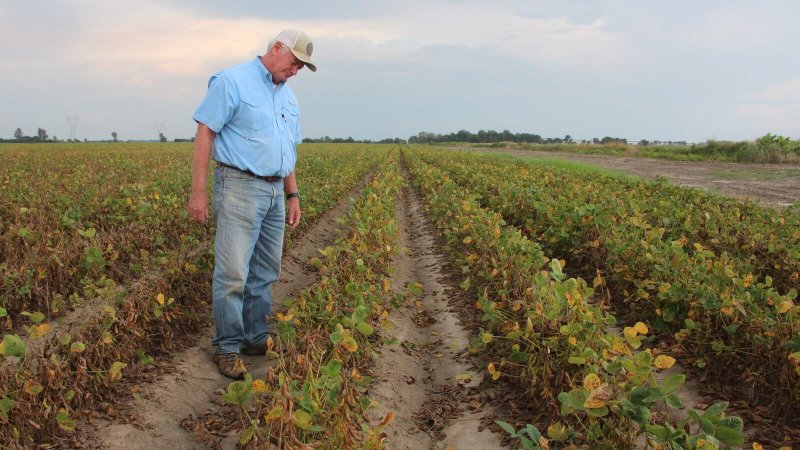
Arkansas farmer David Wildy inspects a field of soybeans that were damaged by dicamba in 2017. Credit: Dan Charles/NPR

Three consecutive years of off-target dicamba injury is taking its toll on the agricultural industry. Leo Reed even has a name for it: dicamba fatigue.

“States recognize that both we and the [EPA], we’re all suffering from dicamba fatigue — staffing shortages and issues and processing a huge number of complaint cases again this year,” said Reed, an Indiana state pesticide regulator serving as president-elect of the Association of American Pesticide Control Officials (AAPCO).

Communication with EPA over dicamba problems hit an all-time low in 2019. Unlike the weekly conference calls and data reporting of 2018, very little regular communication between state regulators and EPA occurred this year, Reed noted.

The federal agency had its first formal contact with states regarding dicamba problems in 2019 on Nov. 26, in an hour-long conference call, Reed noted. The most pressing question that states have for EPA remains unanswered so far, however, he added.

“The No. 1 question we need an answer to is: Does EPA consider plant damage from dicamba usage an ‘unreasonable adverse effect?’ We need a yes or no.”

Until then, regulators are not optimistic that 2020 will bring relief for overworked regulators and state agricultural departments.

Read full, original article: Dicamba Fatigue: States Report Another Year of Dicamba Injury to EPA


{{ reviewsTotal }}{{ options.labels.singularReviewCountLabel }}
{{ reviewsTotal }}{{ options.labels.pluralReviewCountLabel }}
{{ options.labels.newReviewButton }}
{{ userData.canReview.message }}

Related Articles

Infographic: Global regulatory and health research agencies on whether glyphosate causes cancer

Infographic: Global regulatory and health research agencies on whether glyphosate causes cancer

Does glyphosateโ€”the world's most heavily-used herbicideโ€”pose serious harm to humans? Is it carcinogenic? Those issues are of both legal and ...

Most Popular

Picture1-5
Science Disinformation Gap: The transatlantic battle over social media and censorship
ChatGPT Image May 10, 2026, 08_16_59 PM 2
Overmedicalization? RFK Jr.โ€™s antidepressant crackdown raises conflict questions over his fee stake in Wisner Baum, the tort firm built on suing drug makers
Picture1-1
Cooling the planet with balloons: Could a geoengineering gamble slow global warming?
Screenshot-2026-05-11-104424
Hantavirus outbreak research: Trump administration shut down study last year on rodent-to-human transmission
Picture1-14
When superbugs threaten vulnerable children: Can AI help solve antibiotic resistance?
Screenshot 2026-05-11 at 11.30
Despite politicized disinformation, Midwest AI data centers are fueling a solar energy boom
ChatGPT-Image-Apr-13-2026-02_20_22-PM
Viewpoint: Misinformation infodemic? Why assessing evidence is so challengingย 
S
As vaccine rejectionism spreads, measles may be taking a more dangerous turn
Screenshot-2026-05-08-at-11.55.47-AM
Anti-vax activists falsely blame COVID vaccines for the rising U.S. cancer rate among younger people.
Screenshot-2026-05-08-at-3.40.33-PM
Seeds of power: China turns to genetic engineering to become global superpower
Screenshot-2026-05-01-at-1.29.41-PM
Viewpoint: What happens when whole grains meet modern food manufacturing? Labels donโ€™t tell the whole story.
glp menu logo outlined

Get news on human & agricultural genetics and biotechnology delivered to your inbox.