Explaining consciousness: These 2 brain networks show how we turn experiences into memories

ap web
Credit: AP

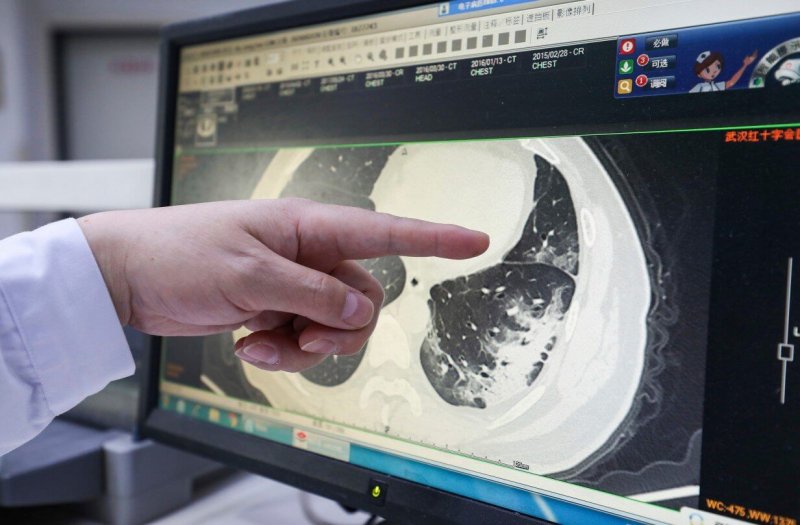
One of the most recent studies showed a clear relationship between two brain networks critical to consciousness. In a paper published [March 11] in Science Advances, a team from the University of Michigan described their finding that the default mode network (DMN) and the dorsal attention network (DAT) are anti-correlated, meaning that when one is active, the other is suppressed. The team also found that neither network was highly active in people who were unconscious.

These findings suggest that the interplay of the DMN and the DAT support consciousness by allowing us to interact with our surroundings then to quickly internalize those interactions, essentially turning our experiences into thoughts and memories.

The default mode network (DMN) is active when we’re internally focused, thinking about ourselves and using our memory and imagination. The dorsal attention network (DAT), on the other hand, is activated when we’re aware of and paying attention to the environment around us.

The relationship between the two has been studied before, but the Michigan team’s research yielded the first definitive proof that the DMN and DAT are, in fact, anti-correlated.

If you think about it, it makes sense; it’s hard to be fully engaged with your surroundings and be deep in thought about yourself at the same time.


Read the original post

{{ reviewsTotal }}{{ options.labels.singularReviewCountLabel }}
{{ reviewsTotal }}{{ options.labels.pluralReviewCountLabel }}
{{ options.labels.newReviewButton }}
{{ userData.canReview.message }}

Related Articles

Infographic: Global regulatory and health research agencies on whether glyphosate causes cancer

Infographic: Global regulatory and health research agencies on whether glyphosate causes cancer

Does glyphosate—the world's most heavily-used herbicide—pose serious harm to humans? Is it carcinogenic? Those issues are of both legal and ...

Most Popular

Screenshot-2026-04-20-at-2.26.27-PM
Viewpoint — Food-fear world: The latest activist scientists campaign: Cancer-causing additives
Screenshot-2026-03-13-at-12.14.04-PM
The FDA wants to make many popular prescription drugs OTC—a great idea. Here’s why it’s unlikely to happen
Screenshot-2026-05-04-at-12.54.32-PM
How Utah became the country’s supplement capital  — and a haven for unregulated, ineffective and fake products
Screenshot-2026-05-01-at-11.56.24-AM
‘Science moves forward when people are willing to think differently’: Memories of DNA maverick Craig Venter
Screenshot-2026-04-03-at-11.15.51-AM
Paraben panic: How a flawed study, media hype, and chemophobia convinced the public of the danger of one of the safest classes of preservatives
ChatGPT-Image-May-1-2026-02_20_13-PM
How RFK, Jr.’s false vaccine claims are holding up $600 million to fight diseases in poor countries
Screenshot-2026-04-30-at-2.19.37-PM
5 myths about summer dehydration that could damage your health — or even kill you
ChatGPT-Image-Mar-27-2026-11_27_05-AM
The myths of “process”: What science says about the “dangers’ of synthetic products and ultra-processed foods
viva-la-vida-watermelons
Misinformation and climate change are endangering summer watermelons
Drinking lots of water can help reduce the effects of aging
Nanoplastics in drinking water: MAHA activists forge science-based bipartisan coalition 
ChatGPT-Image-Mar-10-2026-01_39_01-PM
Viewpoint—“Miracle molecule” debunked: Why acemannan supplements don’t work
circular-bioeconomy-should-focus-on-sustainable-wellbeing
GLP podcast: What's wrong with 'doomsday' environmentalism? It's false.
glp menu logo outlined

Get news on human & agricultural genetics and biotechnology delivered to your inbox.