Viewpoint: LA restaurants tried to sell groceries during the COVID-19 pandemic. Why did the city shut them down?

bb vgbt img
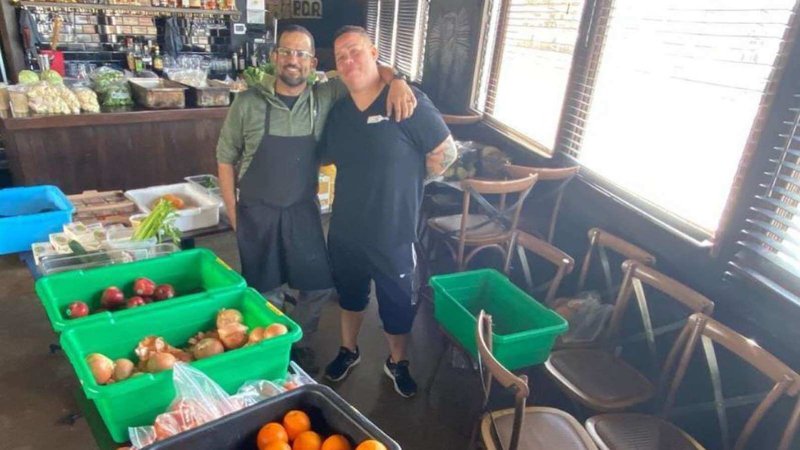
LA restaurant Bacari PDR tried to sell groceries during the pandemic. Credit: Bacari

A few Los Angeles restaurants struggling to maintain footing amid the COVID-19 outbreak identified a clever way to generate revenue while still serving the community: Start selling groceries.

The city’s public health department promptly shut them down. The reason? The small businesses don’t have a “grocery permit.”

“It’s not really possible for a restaurant to become a grocery store,” Dr. Barbara Ferrer, director of Los Angeles County Public Health, said in a briefing [on March 30]. “You cannot just decide you want to sell groceries.”

The restaurants-turned-grocery stores actually provide a rather obvious public health benefit. They are significantly less crowded than traditional grocery stores, which is convenient when considering that every major health organization has advised individuals to maintain a six-foot distance from surrounding passersby.

“Elderly people in the neighborhood really enjoy coming to Bacari PDR,” Robert Kronfli, the co-owner of one such restaurant-turned-grocery store, tells Reason. Foremost, “it was a super chill shopping environment,” he says, with “only one or two people in there at once.” Contrast that with the major chains, which have been overwhelmed with an onslaught of patrons. “They’re afraid to go to large supermarkets right now because of the lines and because of the social distancing thing.”


Read the original post

{{ reviewsTotal }}{{ options.labels.singularReviewCountLabel }}
{{ reviewsTotal }}{{ options.labels.pluralReviewCountLabel }}
{{ options.labels.newReviewButton }}
{{ userData.canReview.message }}

Related Articles

Infographic: Global regulatory and health research agencies on whether glyphosate causes cancer

Infographic: Global regulatory and health research agencies on whether glyphosate causes cancer

Does glyphosate—the world's most heavily-used herbicide—pose serious harm to humans? Is it carcinogenic? Those issues are of both legal and ...

Most Popular

Screenshot-2026-04-14-at-11.11.06-AM
‘Turbo cancer’ or mRNA cancer cure? Strategies to counter misinformation
ChatGPT Image May 28, 2026, 08_16_38 PM
Viewpoint: Why the EPA mismeasures cancer risk of chemicals and what should be done to fix it
ChatGPT-Image-May-22-2026-10_56_42-AM-2
‘It’s not super useful’: As wariness about AI grows, Trump proposes rollback of healthcare safeguards
fda_logo_decimated
Viewpoint: RFK, Jr.’s FDA is on a screaming downward path—and why it may never recover
edb7f6d7-2370-418f-9578-74e29678e35c
Facts & Fallacies Podcast: Nicotine vaping—public health miracle, or risk to children? Professor Cliff Douglas
ChatGPT-Image-May-28-2026-11_31_47-AM-2
Relying on your doctor or AI miracle cure, death and debilitation? Neurologist makes the wrong choice
ChatGPT-Image-May-22-2026-10_26_09-AM
Gutting the National Science Board: How the Trump-RFK, Jr. crusade is erasing the separation of science and state
Screenshot-2026-05-27-at-10.51.25-AM
Viewpoint: ‘Monsanto’ blues—Planned Netflix movie promises yet another round of anti-glyphosate disinformation
ChatGPT-Image-Mar-10-2026-01_39_01-PM
Viewpoint—“Miracle molecule” debunked: Why acemannan supplements don’t work
ChatGPT-Image-May-26-2026-11_51_01-AM
Viewpoint: RFK, Jr.’s ‘sadistic’ solution to autism, depression, and other ills looks a lot like prison camp
vax-misinformation-main
Facts & Fallacies Podcast: Limit free speech to blunt social media misinfo?
Picture1
The Orange Bowl without oranges: Can CRISPR save Florida citrus?

Sorry. No data so far.

glp menu logo outlined

Get news on human & agricultural genetics and biotechnology delivered to your inbox.