Tackling coronavirus medical supply shortages with 3-D printers

screenshot d printer companies build face shields masks more to fight coronavirus
Credit: Stephen Shankland/CNET

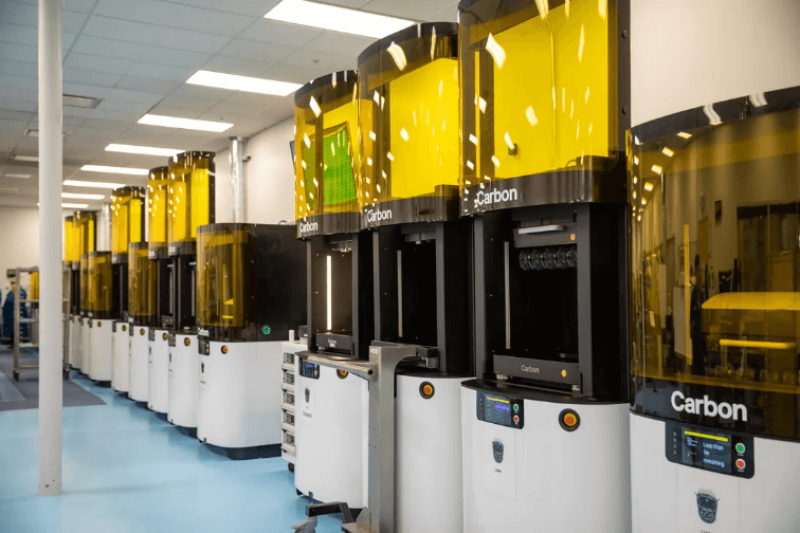
Multinational companies and startups world-wide are reprogramming their cutting-edge 3-D printers to tackle shortages of critical medical equipment caused by the coronavirus outbreak.

Many industrial companies are jumping to manufacture medical equipment like ventilators and respirators. With 3-D printers, producers can shift faster, make an array of equipment in one factory and spit out items near where they are needed. The technology, which creates products by building them up in successive layers, can deliver almost any shape from a range of materials. …

HP … is using printer farms in the U.S. and Spain to make hospital equipment such as face-mask adjusters and face shields. … They have been among the first movers because their facilities are already certified by the Food and Drug Administration to make medical-grade equipment.

For industrial companies unaccustomed to printing medical equipment, certification poses a challenge. The danger gets worse with hobbyist 3-D printers who want to help local hospitals, industry officials say.

“Every garage maker is trying to make their own masks, showing up at hospitals with protective gear that no one’s validated,” said Kit Parker, a Harvard professor and Army Reserve lieutenant colonel. He is working with the chief executive of nearby 3-D-printing startup Desktop Metal to tackle the shortage of nasal swabs.


 

Read the original post

{{ reviewsTotal }}{{ options.labels.singularReviewCountLabel }}
{{ reviewsTotal }}{{ options.labels.pluralReviewCountLabel }}
{{ options.labels.newReviewButton }}
{{ userData.canReview.message }}

Related Articles

Infographic: Global regulatory and health research agencies on whether glyphosate causes cancer

Infographic: Global regulatory and health research agencies on whether glyphosate causes cancer

Does glyphosate—the world's most heavily-used herbicide—pose serious harm to humans? Is it carcinogenic? Those issues are of both legal and ...

Most Popular

Screenshot-PM-24
Viewpoint: The herbicide glyphosate isn’t perfect. Banning it would be far worse.
79d03212-2508-45d0-b427-8e9743ff6432
Viewpoint: The Casey Means hustle—Wellness woo opportunism dressed up as medical wisdom
d-b
Blocked arteries, kidney stones, nausea, constipation, fatigue: Long list of health problems caused by too much vitamin D 
ChatGPT-Image-Mar-10-2026-01_39_01-PM
Viewpoint—“Miracle molecule” debunked: Why acemannan supplements don’t work
ChatGPT-Image-Apr-30-2026-05_00_48-PM
Wellness grifter physician turned wellness influencer out as surgeon general nominee
Screenshot-2026-04-30-at-11.33.46-AM
Anti-seed-oil to anti-vax pipeline: MAHA movement spreads to teen influencers
lab grown meat research kelly schultz lehighuniversity main
Profiles of the 10 top global cultured meat companies
ChatGPT-Image-Mar-27-2026-11_27_05-AM
The myths of “process”: What science says about the “dangers’ of synthetic products and ultra-processed foods
ChatGPT-Image-Apr-30-2026-12_21_05-PM-2
The tech billionaires behind the immortality movement
Screenshot-2026-04-28-at-1.21.37-PM
How America’s medical system encourages psychiatric overdiagnosis

Sorry. No data so far.

glp menu logo outlined

Get news on human & agricultural genetics and biotechnology delivered to your inbox.