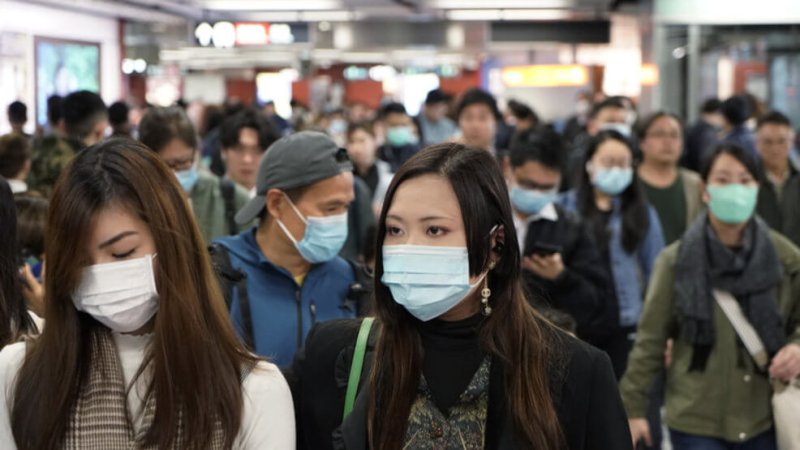
Does the coronavirus ‘linger in the air’ long enough be dangerous? Why we can’t answer that question.

d b e f b c bf ac large x ap wide f c d cbbbd d s c
Credit: Kin Cheung/Associated Press

Scientists are debating a key aspect of the coronavirus that causes covid-19: whether the virus lingers in the air for long enough and in a great enough quantity for airborne transmission to be a common source of infection. It seems like a simple enough question, but it’s actually posing quite a challenge to researchers.

The new coronavirus, called SARS-CoV-2, infects the body primarily through a person’s respiratory tract.

Every exhalation contains large and small particles of moisture. Larger particles, or droplets, can only travel a short distance before they hit the ground. Smaller particles, however, can float in the air for much longer before they fall or dry up. …

We know for sure that SARS-CoV-2 spreads easily through larger droplets—that’s why we’ve spent the last three months desperately trying to stay at least six feet apart from one another. Past that point, experts generally agree that the risk of catching the virus through droplets is significantly much lower. But if the coronavirus can be routinely transmitted through aerosols, then these precautions are far too meager.

While knowing that the virus isn’t airborne wouldn’t change the need for physical distancing, it might provide some added margin for error as we start to reopen parts of society.


Read the original post

{{ reviewsTotal }}{{ options.labels.singularReviewCountLabel }}
{{ reviewsTotal }}{{ options.labels.pluralReviewCountLabel }}
{{ options.labels.newReviewButton }}
{{ userData.canReview.message }}

Related Articles

Infographic: Global regulatory and health research agencies on whether glyphosate causes cancer

Infographic: Global regulatory and health research agencies on whether glyphosate causes cancer

Does glyphosate—the world's most heavily-used herbicide—pose serious harm to humans? Is it carcinogenic? Those issues are of both legal and ...

Most Popular

Screenshot 2026-05-06 at 2.56
Singularity crisis ahead? Can super babies save us from rogue AI geniuses?
Screenshot-2026-03-13-at-12.14.04-PM
The FDA wants to make many popular prescription drugs OTC—a great idea. Here’s why it’s unlikely to happen
Screenshot-2026-05-01-at-1.29.41-PM
Viewpoint: What happens when whole grains meet modern food manufacturing? Labels don’t tell the whole story.
Screenshot-2026-05-01-at-11.56.24-AM
‘Science moves forward when people are willing to think differently’: Memories of DNA maverick Craig Venter
Screenshot-2026-04-20-at-2.26.27-PM
Viewpoint — Food-fear world: The latest activist scientists campaign: Cancer-causing additives
Screenshot-2026-04-03-at-11.15.51-AM
Paraben panic: How a flawed study, media hype, and chemophobia convinced the public of the danger of one of the safest classes of preservatives
images
The never-ending GMO debate: Pros and cons
Screenshot-2026-04-12-135256
Bixonimania: The fake disease scam that AI swallowed whole
Screenshot-2026-05-06-at-2.07.43-PM
Manufacturing a conspiracy: The timeline of how  the White House embraced the fringe claim that scientists are being mysteriously murdered
Screenshot-2026-04-30-at-2.19.37-PM
5 myths about summer dehydration that could damage your health — or even kill you
glp menu logo outlined

Get news on human & agricultural genetics and biotechnology delivered to your inbox.