Bolivian farmers reject activist opposition to GMO seed approvals, expecting crops yields to triple

ae px Bolivia soybean e
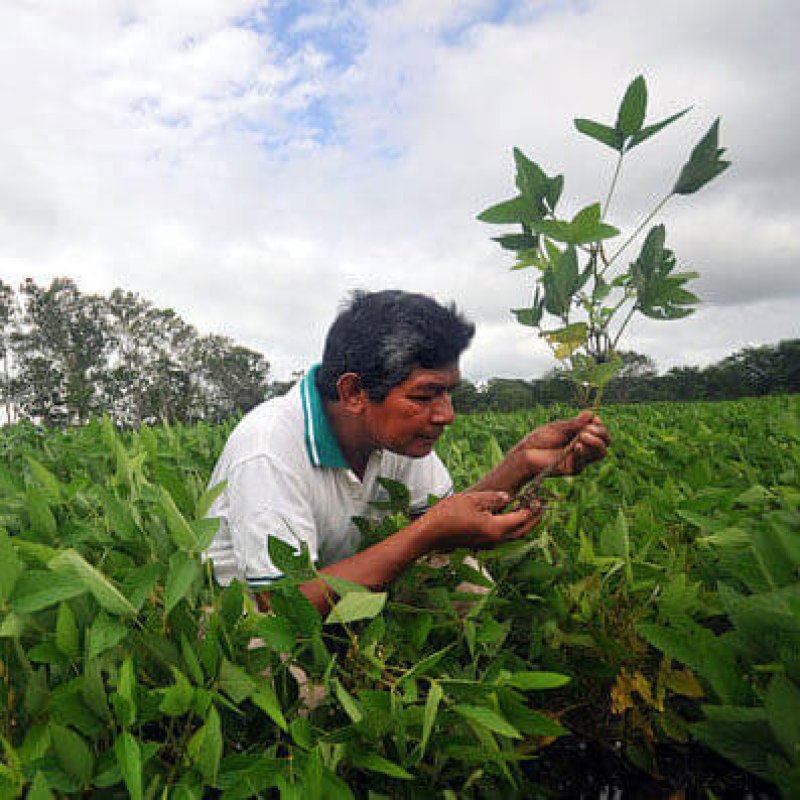
A Bolivian farmer inspects his soybean plants

The Federation of Peasant Workers of Cochabamba (FTCC) announced its discontent against the use of transgenic seeds promoted by the government of Jeanine Áñez, because it threatens food security.

“We reject the attempt to use transgenic seeds because it threatens the food security and sovereignty of the entire general population,” says the statement.

Meanwhile, the Bolivian Agroecological Movement (MAB) demanded the immediate repeal of DS 4232 as it is considered an attempt against national production and food. “We demand that the central government implement actions that promote healthy eating, by strengthening family farming with an agroecological approach, to face the pandemic,” he said.

The Association of Oilseed and Wheat Producers (Anapo) supports the decision made by the transitional government …. Anapo expects to triple its production from 4.5 million tons per year to 12 million, according to the president of this business entity, Marcelo Pantoja.

[T]he Eastern Agricultural Chamber (CAO) …. noted that the use of transgenic seeds will [allow] …. better use of agrochemicals, elimination of carcinogenic insecticides in the control of pests, less use of water by reducing the number of applications, and reduction of soil erosion and predation.

[Editor’s note: This article was published in Spanish and has been translated and edited for clarity.]

Read the original post

{{ reviewsTotal }}{{ options.labels.singularReviewCountLabel }}
{{ reviewsTotal }}{{ options.labels.pluralReviewCountLabel }}
{{ options.labels.noReviewsLabel }}
{{ options.labels.newReviewButton }}
{{ userData.canReview.message }}

Related Articles

Infographic: Global regulatory and health research agencies on whether glyphosate causes cancer

Infographic: Global regulatory and health research agencies on whether glyphosate causes cancer

Does glyphosate—the world's most heavily-used herbicide—pose serious harm to humans? Is it carcinogenic? Those issues are of both legal and ...

Most Popular

ChatGPT-Image-Jul-22-2026-09_13_07-AM
Viewpoint—The Strategic Litigation boom: Understanding the tightening coalition among NGOs, foundations, journalists, and tort lawyers
ChatGPT-Image-Mar-10-2026-01_39_01-PM
Viewpoint—“Miracle molecule” debunked: Why acemannan supplements don’t work
close up arabica coffee farmer s hands picking beans plant his farm colombia
Viewpoint: Why do so many ‘mainstream’ and ‘respected’ media outlets exaggerate climate change threats?
How to Include More Strawberries in Your Diet
Strawberries are berries—and 35 other surprising food and drink myths
organic scaled
Facts & Fallacies podcast: Organic food cuts pesticide exposure? A response to Dr. Rhonda Patrick
diversity
We are entering a new era of personalized medicine—if you’re white
Screenshot-2026-07-07-at-12.55.44-PM
Viewpoint: Yes, we can adapt to a changing climate without devastating the environment and the economy
ChatGPT-Image-May-22-2026-10_26_09-AM
Trump-RFK, Jr. National Science Board firings: Accountability vs. partisan meddling
kratom
Viewpoint: Kratom ‘supplement’ crisis: DEA sits on its hands while patient addictions to this ineffective drug  rise
Screenshot 2026-07-22 at 10.25
Science brain drain escalates as Trump purge extends to USDA
using genetics to reverse aging
Is the longevity obsession a new form of ageism?
Screenshot-2026-07-01-at-2.49.48-PM
Dr. TikTok and male fertility: Viral claims tout GLP-1 drugs as fertility boosters. What does the science say?
ChatGPT-Image-Jul-6-2026-02_25_26-PM
40 million Americans take glucosamine. If you have memory loss, it could accelerate cognitive decline.
glp menu logo outlined

Get news on human & agricultural genetics and biotechnology delivered to your inbox.