
Infographic: ‘Bionic breasts’ could restore sensation after mastectomies

flexible electronics
Credit: Shutterstock

As many as 100,000 breast cancer patients have one or both breasts removed in mastectomies every year in the United States. This surgery frequently leads to loss of breast sensation, which is thought to contribute to the high rates of sexual dysfunction among breast cancer survivors. But a bionic breast now under development could restore these important tactile sensations.

The project is the brainchild of Stacy Lindau, a gynecologist at the University of Chicago who specializes in the sexual function of women with cancer.

โ€ฆ

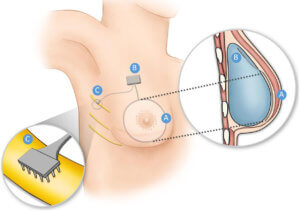
Patients often undergo breast implant surgery to restore the shape of the breasts after a mastectomy, so the team plans to simultaneously install a pressure sensor beneath the nipple that can detect when the breast is touched.

This sensor would be wired to a hermetically sealed electronic circuit lodged beneath the skin of the chest. This circuit would use sensory encoding algorithms, similar to those Bensmaia has developed for his work on hand sensation, to convert the pressure sensorโ€™s output into electrical signals. These would then be delivered to electrodes that stimulate the residual nerves in the chest to give the patient the sensation of being touched.

mzyzotg oa
Schematic illustration of the Bionic Breast concept for a breast reconstructed using an implant. Credit: University of Chicago

Read the original post

{{ reviewsTotal }}{{ options.labels.singularReviewCountLabel }}
{{ reviewsTotal }}{{ options.labels.pluralReviewCountLabel }}
{{ options.labels.newReviewButton }}
{{ userData.canReview.message }}

Related Articles

Infographic: Global regulatory and health research agencies on whether glyphosate causes cancer

Infographic: Global regulatory and health research agencies on whether glyphosate causes cancer

Does glyphosateโ€”the world's most heavily-used herbicideโ€”pose serious harm to humans? Is it carcinogenic? Those issues are of both legal and ...

Most Popular

Screenshot-2026-04-22-at-12.21.32-PM
Viewpoint: Why the retracted Monsanto glyphosate study doesnโ€™t change the scienceโ€”the worldโ€™s most popular herbicide is safeย 
Picture1
The FDA couldnโ€™t find a vaccine safety crisis, so it buried its own research
ChatGPT-Image-May-1-2026-11_42_59-AM-2
Viewpoint: NAD is the wellness grifters latest evidence-lite longevity fad. At least the mice are impressed.
ChatGPT-Image-Apr-16-2026-02_56_53-PM
Financial incentives, over diagnosis, and weak oversight: Autism claims are driving up Medicare costs
ChatGPT-Image-May-12-2026-11_27_01-AM-2
AI likely to improve health care, research showsโ€”but not for blacks and ethnic minorities
ChatGPT-Image-May-7-2026-01_23_27-PM-2
Viewpoint: Will AI democratize personalized cancer treatment or fuel medical misinformation?

Sorry. No data so far.

glp menu logo outlined

Get news on human & agricultural genetics and biotechnology delivered to your inbox.