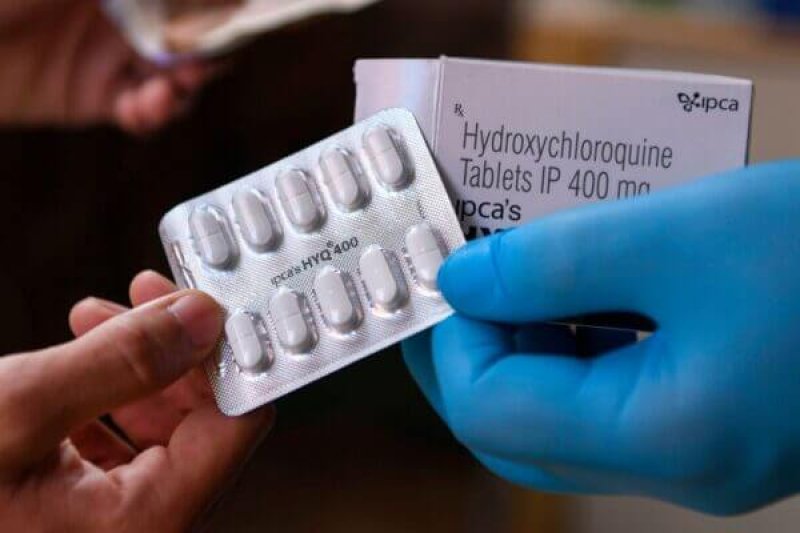
Another Phase III study finds hydroxychloroquine ineffective

gettyimages x
Credit: Getty Images
[H]ydroxychloroquine – the malaria and autoimmune disease drug that President Donald Trump promoted as a potential “game changer” early in the Covid-19 pandemic – not only failed to improve outcomes in those with mild-to-moderate disease, but also produced a higher rate of cardiac and liver side effects.

Results of the randomized, controlled, open-label Phase III trial, which took place at more than two dozen sites in Brazil, were published in the New England Journal of Medicine on [July 30]. The study randomized 667 patients to receive hydroxychloroquine or the drug plus the antibiotic azithromycin on top of standard of care or standard of care alone. When patients were measured on the seven-point ordinal scale of improvement in disease, those in the two hydroxychloroquine groups showed no improvement compared with patients who received standard of care alone. Moreover, those receiving hydroxychloroquine more frequently experienced Qt prolongation and elevation of liver enzymes.

Follow the latest news and policy debates on sustainable agriculture, biomedicine, and other ‘disruptive’ innovations. Subscribe to our newsletter.

The results add to the growing body of evidence not supporting treatment of Covid-19 with hydroxychloroquine, an analogue of chloroquine, which has also been explored without success in Covid-19. Last month, the Food and Drug Administration revoked an emergency use authorization that it had granted to the drug in late March, a move that had been criticized as motivated more by politics than by science.


Read the original post

{{ reviewsTotal }}{{ options.labels.singularReviewCountLabel }}
{{ reviewsTotal }}{{ options.labels.pluralReviewCountLabel }}
{{ options.labels.newReviewButton }}
{{ userData.canReview.message }}

Related Articles

Infographic: Global regulatory and health research agencies on whether glyphosate causes cancer

Infographic: Global regulatory and health research agencies on whether glyphosate causes cancer

Does glyphosate—the world's most heavily-used herbicide—pose serious harm to humans? Is it carcinogenic? Those issues are of both legal and ...

Most Popular

wuhan institute of virology main entrance
​​COVID lab leak? Making a case that the Wuhan market origins theory is wrong
Screenshot-2026-06-17-at-9.44.03-AM
Viewpoint: Embryos are becoming the newest battleground of love, loss, and legal uncertainty
Screenshot-2026-06-18-at-11.41.51-AM
Viewpoint—Protecting baloney science: Far right senators move to protect the phony homeopathy industry
ChatGPT-Image-Mar-10-2026-01_39_01-PM
Viewpoint—“Miracle molecule” debunked: Why acemannan supplements don’t work
ChatGPT-Image-Jun-9-2026-01_11_37-PM
Turmeric supplements: More risks than benefits
Screenshot-2026-06-17-at-11.57.12-AM
Viewpoint: Raw milk and the myth of safety—ProPublica exposes the growing anti-homogenization movement
Screenshot-2026-06-18-at-2.52.05-PM
Activist organization accuses Trump of protecting methane-generating stripper wells to benefit billionaire and donor Jeffrey Hildebrand 
Screenshot-2026-06-16-at-10.02.22-PM
Viewpoint: ‘Industrial food’ primer—Challenging the dangerous delusions of the alternative food movement
ChatGPT-Image-Jun-16-2026-10_01_45-AM-2
Viewpoint—Recursive self-improvement: AI leader Anthropic calls for AI slowdown
ChatGPT-Image-Jun-18-2026-02_32_04-PM
Can illegal social media content be stopped before it goes viral? UK is going to try.
ChatGPT-Image-Jun-4-2026-03_07_27-PM
AAP v. Kennedy: While a court challenge grinds on, RFK Jr. quietly advances his anti-vaccine conspiracy agenda

Sorry. No data so far.

glp menu logo outlined

Get news on human & agricultural genetics and biotechnology delivered to your inbox.