If the United States Department of Agriculture (USDA) accepts the deregulation petition, the blight-tolerant chestnut would be the first GE tree approved for environmental conservation use in the US. China has already approved a GE poplar tree, and the US previously approved virus-resistant GE papaya and plum trees.
“Researchers have been trying for years to control chestnut blight through conventional breeding, bio-controls and biotechnology,” said State University of New York (SUNY) researcher William Powell. “We’ve completed a rigorous research and testing process that confirmed GE trees offer the best defense against the blight, while having no harmful impact on forest ecosystems.”
The key now is getting those GE trees out into the forests, where they can breed with wild-type chestnuts to help them gain better resistance to the disease. When a GE father tree is planted near a wild-type mother tree and they cross, half the resulting nuts will carry the blight-tolerant trait.
“This outcrossing process will allow us to rescue much of the surviving genetic diversity and build in local adaptability for the restoration program,” Powell said. Though blight ultimately kills trees, chestnuts have the ability to sprout from their root collar, Powell said. Millions of stump sprouts are still growing in the forest, comprising a natural reservoir of genetic diversity that will strengthen restoration efforts.
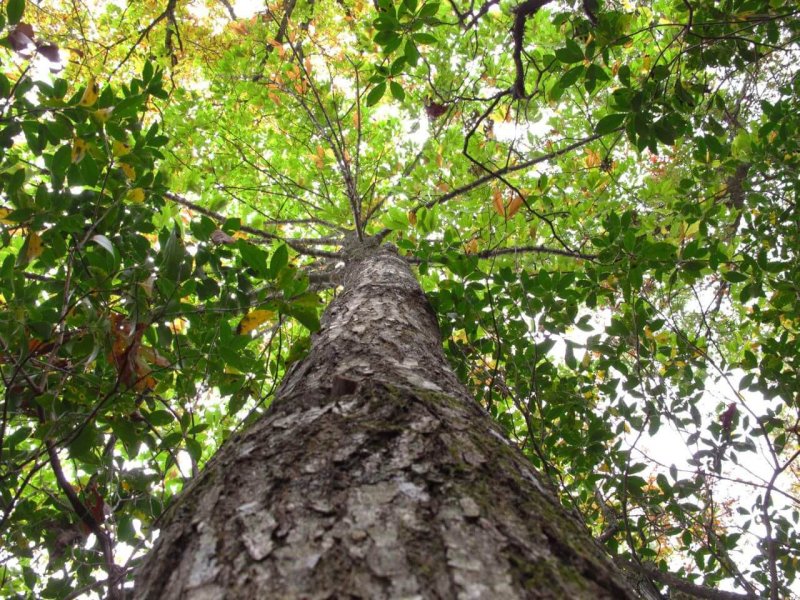
“That’s our game plan, to see it [the chestnut] come back as a keystone species,” said SUNY co-researcher Charles Maynard. “We would like to see it back in the forest, slugging it out with all the other trees.”
Though the restoration effort has won tremendous public support, researchers say regulators now need to hear from all those who want chestnut trees to thrive again in the forest. Public comments may be submitted here. The American Chestnut Foundation has created a page that includes links to all the relevant documents, as well as tips on writing a comment, which are due by Oct. 19.
Over the past century, some three to five billion trees have succumbed to the ravages of chestnut blight, a pathogen inadvertently introduced from Asia. The fungus functions by colonizing a wound in the bark and producing oxalic acid, which creates a canker that eventually proves lethal by girdling the trunk.

To develop the GE variety, Powell and Maynard worked with a team of 100 university scientists and students at the SUNY College of Environmental Science and Forestry. They identified a gene from bread wheat that detoxifies the oxalic, providing an effective defense against chestnut blight.
The wheat gene produces an oxalate oxidase enzyme that is found in all grain crops and many other familiar foods, Powell explained. Though the enzyme does not kill the fungus, it causes it to change its lifestyle. Instead of forming a destructive canker, it can survive on the bark as a harmless saprophyte.
The application comes as a new scientific paper published in Conservation Biology argues that efforts to use biotechnology to improve forest health should be afforded the same consideration, acceptance and support as biotech projects intended to improve human health.
Opposition to biotechnology’s use in agriculture and forestry may be driven by concerns that GE plants will primarily benefit corporations or disrupt the environment, note the paper’s authors, Michael Aucott and Rex A. Parker.
“But to conflate genetic modifications intended to promote healthy ecosystems or preserve threatened species with GE projects aimed at benefiting corporate agriculture and forestry is misleading and illogical,” they write. “Further, the pervasive human disruption and damage to forest ecosystems makes it prudent to bring the best that science can offer to the protection and restoration of critical woodland denizens and broader ecosystem health. The notion that minimal human intervention in the forest environment may be the best approach ignores humanity’s responsibility to help manage and protect some of the very places that have been most damaged by human intrusion.”
“This is a project for our grandchildren,” Powell said. “It will take 100 years before we’re able to get a token of what we had at one time. But it’s a start.”
Joan Conrow has 35 years of experience as a journalist, editor, and communications consultant. She specializes in environmental issues, biotechnology, and agriculture. Follow her on Twitter @joanconrow
This article ran at Cornell Alliance for Science and has been republished here with permission. Follow the Alliance for Science on Twitter @ScienceAlly