Rival COVID vaccine developers issue joint pledge they will not seek government approval until immunizations proven ‘safe and effective’

mw in vaccin zq
Credit: Getty Images

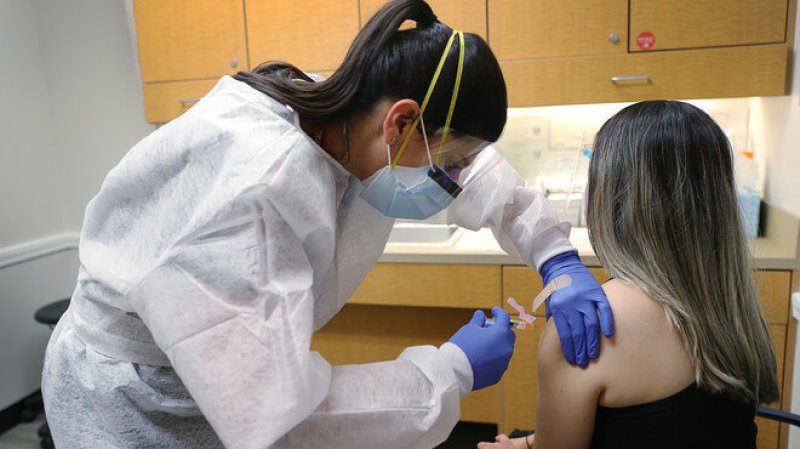
Nine drugmakers said Tuesday their chief executives signed a pledge promising to not file for regulatory approval or authorization of their experimental Covid-19 vaccines until the shots have shown to work safely through late-stage clinical testing.

The pledge was signed by the heads of AstraZeneca, GlaxoSmithKlineGSK, Johnson & Johnson, Merck, Moderna, Novavax, Sanofi, BioNTech SE and Pfizer.

In it, the companies say “the safety and well-being of vaccinated individuals” would always be their top priority. They promise to keep following scientific and ethical standards in clinical trials testing the Covid-19 shots, and in manufacturing. They also pledge to ensure supply across the world.

The FDA has said it won’t green-light a Covid-19 vaccine unless it is proven to be 50% effective compared with a placebo.

Last month, the Centers for Disease Control and Prevention, which is expected to be involved in distributing vaccines, notified states that they should be ready to launch Covid-19 vaccination campaigns by November. …

That timeline, just before the Nov. 3 presidential election, raised concerns among some scientists and other experts that the Trump administration would rush a vaccine to bolster President Trump’s re-election prospects.

On Monday, President Trump said at a news conference that a vaccine “will be very safe and very effective, and it will be delivered very soon.” He said the country “could even have it during the month of October.”


Read the original post

{{ reviewsTotal }}{{ options.labels.singularReviewCountLabel }}
{{ reviewsTotal }}{{ options.labels.pluralReviewCountLabel }}
{{ options.labels.newReviewButton }}
{{ userData.canReview.message }}

Related Articles

Infographic: Global regulatory and health research agencies on whether glyphosate causes cancer

Infographic: Global regulatory and health research agencies on whether glyphosate causes cancer

Does glyphosate—the world's most heavily-used herbicide—pose serious harm to humans? Is it carcinogenic? Those issues are of both legal and ...

Most Popular

ChatGPT-Image-May-7-2026-12_16_37-PM-2
Viewpoint: Are cancer rates ‘skyrocketing’ as RFK, Jr. and MAHA claims? The evidence says mostly the opposite
ChatGPT-Image-May-13-2026-11_56_08-AM
After slashing global health aid by $19 Billion, Trump moves to tap $2.1 billion more—to cover shutdown costs
Screenshot-2026-04-22-at-10.46.29-AM
Viewpoint: How to counter science disinformation? Science journalist offers 12 practical tips
ChatGPT-Image-May-12-2026-08_39_41-PM
GLP podcast: Big Pharma, Big Ag, Big Food—health harming industries or life-saving innovators?
png-pill-omega-Supp-fish-oil
Millions take omega-3 fish oil for brain health. New research suggests it may do the opposite.
Screenshot-2026-04-23-at-11.00.36-AM
Regulators' dilemma: Thalidomide, Metformin, and the cost of getting drug approvals wrong
Screenshot-2026-02-20-at-10.48.04-AM
Deepfakes raise profound ethical questions in science
Picture1-5
Science Disinformation Gap: The transatlantic battle over social media and censorship
Picture1-1
Cooling the planet with balloons: Could a geoengineering gamble slow global warming?
Screenshot-2026-05-08-at-3.40.33-PM
Seeds of power: China turns to genetic engineering to become global superpower
ChatGPT-Image-May-12-2026-01_41_42-PM
Viewpoint: ‘Measles is a canary in the healthcare coal mine’: Challenging RFK, Jr.’s scare campaign
donut-decorated-with-e-food-additives-tablets
RFK, Jr. is targeting chemical food additives. What does science tell us?
glp menu logo outlined

Get news on human & agricultural genetics and biotechnology delivered to your inbox.