Could lab-grown sushi save rapidly declining fish populations?

screenshot our salmon — wildtype
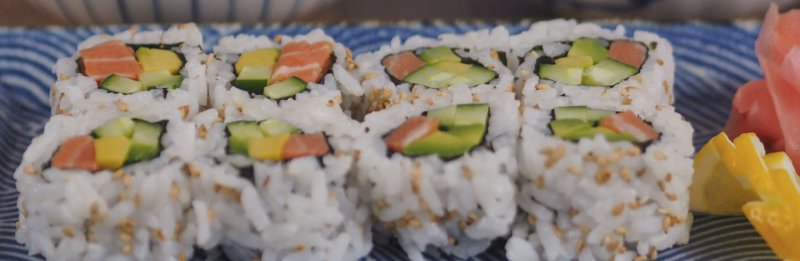
Sushi made with lab-grown salmon. Credit: Wildtype
[A]according to the Global Aquaculture Alliance, 3.1 billion people around the world now rely on fish and seafood for a fifth of their daily animal protein intake. Fish are also one of our only sources of long-chain omega-3 fatty acids.

But—spoiler—it turns out there are some serious issues with the seafood industry …. Water temperatures are rising, throwing off marine ecosystems’ natural balance and kicking off negative ripple effects throughout their food chains. Overfishing—when we take fish out of their natural habitat at a rate too fast for them to keep up with in terms of replenishing the supply—has depleted wild populations of halibut, monkfish, tuna, and salmon ….

A San Francisco-based startup called Wildtype is developing a product that could one day help alleviate the problems caused by fish farming …. lab-grown salmon.

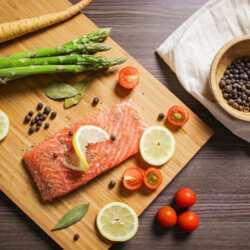
Similar to cultured meat like that made by Memphis Meats, Wildtype’s salmon starts with real animal cells and adds a mixture of nutrients, sugars, salts, amino acids, and growth factor to coax the cells to grow as they naturally would inside an animal’s body. Done right, the process can yield animal tissue that contains muscle, blood, and fat, just like you’d get from a farmed fish. Except in some ways it’s even better, because what you don’t get is mercury, microplastics, and the other contaminants that farmed fish are becoming rife with.


Read the original post


{{ reviewsTotal }}{{ options.labels.singularReviewCountLabel }}
{{ reviewsTotal }}{{ options.labels.pluralReviewCountLabel }}
{{ options.labels.newReviewButton }}
{{ userData.canReview.message }}

Related Articles

Infographic: Global regulatory and health research agencies on whether glyphosate causes cancer

Infographic: Global regulatory and health research agencies on whether glyphosate causes cancer

Does glyphosate—the world's most heavily-used herbicide—pose serious harm to humans? Is it carcinogenic? Those issues are of both legal and ...

Most Popular

Screenshot-2026-03-13-at-12.14.04-PM
The FDA wants to make many popular prescription drugs OTC—a great idea. Here’s why it’s unlikely to happen
Screenshot 2026-05-06 at 2.56
Singularity crisis ahead? Can super babies save us from rogue AI geniuses?
Screenshot-2026-04-20-at-2.26.27-PM
Viewpoint — Food-fear world: The latest activist scientists campaign: Cancer-causing additives
Screenshot-PM-24
Viewpoint: The herbicide glyphosate isn’t perfect. Banning it would be far worse.
images
The never-ending GMO debate: Pros and cons
Screenshot-2026-05-01-at-11.56.24-AM
‘Science moves forward when people are willing to think differently’: Memories of DNA maverick Craig Venter
Screenshot-2026-04-03-at-11.15.51-AM
Paraben panic: How a flawed study, media hype, and chemophobia convinced the public of the danger of one of the safest classes of preservatives
Screenshot-2026-04-30-at-2.19.37-PM
5 myths about summer dehydration that could damage your health — or even kill you
79d03212-2508-45d0-b427-8e9743ff6432
Viewpoint: The Casey Means hustle—Wellness woo opportunism dressed up as medical wisdom
ChatGPT-Image-May-1-2026-02_20_13-PM
How RFK, Jr.’s false vaccine claims are holding up $600 million to fight diseases in poor countries
glp menu logo outlined

Get news on human & agricultural genetics and biotechnology delivered to your inbox.