Glyphosate-tainted honey? New Zealand honey industry rejects ‘sensationalized’ coverage of pesticide safety report

honey bees fungicides

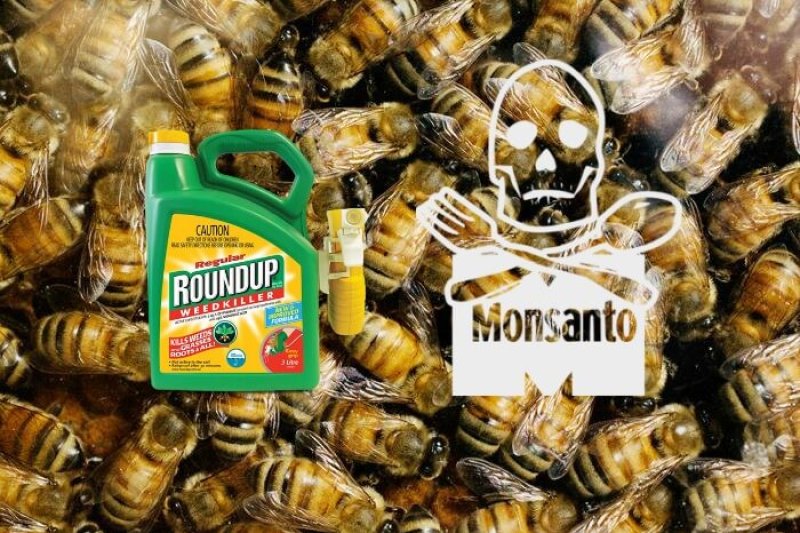
The New Zealand honey industry has refuted recent claims of its products being unsafe for consumption in the wake of reports that over 20% of retail packed honey contains glyphosate residues, saying that these findings have been ‘over-sensationalised’.

The uproar stemmed from a report published by the New Zealand Ministry of Primary Industries (MPI) which performed analysis on some 300 honey samples …. and found that 62 of these samples (20.7%) contained glyphosate residues of glyphosate between the laboratory limit of reporting and current regulatory levels.

The ‘laboratory limit of reporting’ refers to the smallest concentration of a chemical that can be reported by the lab …. Going above regulatory levels would be different, as it would entail a definite food safety concern – but this did not happen here.

“None of the sampled honey that was available for sale had glyphosate residues above the regulatory limits and there are no food safety concerns at all …. ”​ Apiculture New Zealand Chief Executive Karin Kos told FoodNavigator-Asia​.

[T]his statement has been met with derision by organisations protesting glyphosate usage …. “We should be learning from our history of food contamination with pesticides, not repeating the same mistakes. The banning of endosulfan in NZ in 2008 only came about because of the rejection by South Korea of New Zealand beef contaminated by that insecticide,”​ said Pesticides Action Network Aotearoa New Zealand Coordinator Dr Meriel Watts.


Read the original post

{{ reviewsTotal }}{{ options.labels.singularReviewCountLabel }}
{{ reviewsTotal }}{{ options.labels.pluralReviewCountLabel }}
{{ options.labels.newReviewButton }}
{{ userData.canReview.message }}

Related Articles

Infographic: Global regulatory and health research agencies on whether glyphosate causes cancer

Infographic: Global regulatory and health research agencies on whether glyphosate causes cancer

Does glyphosate—the world's most heavily-used herbicide—pose serious harm to humans? Is it carcinogenic? Those issues are of both legal and ...

Most Popular

Screenshot-2026-06-05-at-2.12.30-PM
Some plants can poison you. So how did humans figure out what is safe to eat?
Credit: ACSH
Viewpoint: Who and what’s to blame for the surge in vaccine-preventable diseases?
Organic-Produce
Viewpoint: Why you should ignore organic food advocates’ advice to avoid ‘pesticide soaked’ conventional fruits and vegetables
ChatGPT-Image-Jun-5-2026-01_17_48-PM
GLP-1 weight-loss drugs may reshape our desires and emotions
Screenshot-2026-06-05-at-11.12.44-AM
‘Protecting religious liberty and parental authority’: Challenging expert guidance, Trump signs off on Kennedy’s gutting of childhood vaccine schedule
Screenshot 2026-06-05 at 12.14
‘Nicotine-free generation’: Should the U.S. emulate Britain and ban all nicotine products, from cigarettes to vapes?
ChatGPT-Image-Mar-10-2026-01_39_01-PM
Viewpoint—“Miracle molecule” debunked: Why acemannan supplements don’t work
Screenshot 2026-05-26 at 10.15
Viewpoint: Double standard—Why does the wellness industry get a free pass while Big Healthcare is treated as morally suspect?
Screenshot-2026-06-04-at-12.05.08-PM
Cases of brain inflammation surge as U.S. measles pandemic approaches 2000
ChatGPT-Image-Jun-4-2026-11_49_36-AM-2
‘You don’t understand Tolkien’: Skeptic Pope trolls tech giants about the exaggerated, risk-less benefits of AI
edb7f6d7-2370-418f-9578-74e29678e35c
Facts & Fallacies Podcast: Nicotine vaping—public health miracle, or risk to children? Professor Cliff Douglas
ChatGPT-Image-May-26-2026-07_51_21-AM-2
Viewpoint: There are more than 1,000 chemicals in a cup of coffee—including many substances that can cause cancer. Why isn’t it banned?
glp menu logo outlined

Get news on human & agricultural genetics and biotechnology delivered to your inbox.