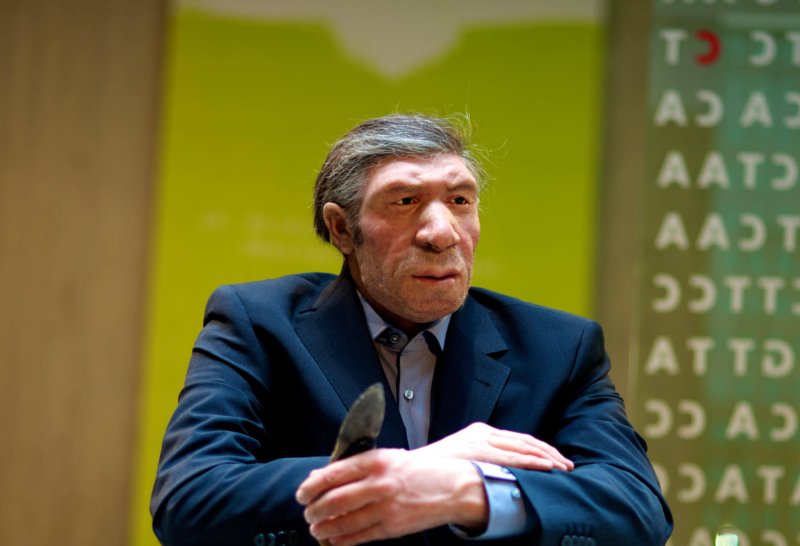
2% of us carry Neanderthal genes. We are at greater risk for COVID

image e neanderthal dna

Scientists have claimed that a strand of DNA that triples the risk of developing severe Covid-19 was passed on from Neanderthals to modern humans. The genetic endowment, a legacy from more than 50,000 years ago, has left about 16% of Europeans and half of South Asians today carrying these genes.

The origins of the risk genes came to light when scientists in Sweden and Germany compared the DNA of very sick Covid-19 patients with that from Neanderthals and their mysterious sister group, the Denisovans. The stretch of DNA that makes patients more likely to fall seriously ill closely matched that collected from a Neanderthal in Croatia.

“I almost fell off my chair because the segment of DNA was exactly the same as in the Neanderthal genome,” Hugo Zeberg, an assistant professor at the Karolinska Institute in Stockholm, told the Guardian.

Mis- and disinformation are distorting science and public policy. Subscribe to our Daily and Weekly Digests for incisive coverage of ‘disruptive’ innovations in AI, agricultural biotechnology, food, chemicals, nuclear energy, vaccines, and other disruptive innovations.

Zeberg and his co-author, Svante Pääbo, director of the Max Planck Institute of Evolutionary Anthropology in Leipzig, suspect the Neanderthal genes have persisted in modern humans because they were once beneficial, perhaps helping to fight off other infections. Only now – when faced with a new infection – has their downside been exposed.
It is unclear how the genes may worsen Covid-19, but one gene plays a role in the immune response and another has been linked to the mechanism the virus uses to invade human cells.


Read the original post

Related Articles

Infographic: Global regulatory and health research agencies on whether glyphosate causes cancer

Infographic: Global regulatory and health research agencies on whether glyphosate causes cancer

Does glyphosate—the world's most heavily-used herbicide—pose serious harm to humans? Is it carcinogenic? Those issues are of both legal and ...

Most Popular

ChatGPT-Image-Mar-10-2026-01_39_01-PM
Viewpoint—“Miracle molecule” debunked: Why acemannan supplements don’t work
Screenshot-2026-09-28-at-11.26.17-AM
Viewpoint: Wellness movement activists reposition nicotine from a killer addictive drug into a cure-all for brain ills
Screenshot-2026-10-02-at-9.11.36-AM
The genetics of personality
strand of dna genetics
No, GMO foods do not “damage genes, natural disposition and hormones, or decrease physical health and intelligence”
Radioactive-Americana-Collage-2
The kooky logic behind the raft of spurious cancer claims from Harvard’s T.H. Chan School of Public Health
Screenshot-2026-10-02-at-8.56.38-AM
Trump finalizes Medicare drug price cuts, drawing Big Pharma’s fury and a legal challenge
Screenshot-2026-10-01-at-10.52.08-AM
Non-browning CRISPR gene-edited bananas move one step closer to British markets
Screenshot-2026-10-02-at-11.12.24-AM
‘Why do we keep falling for this stuff?’ America’s love affair with snake oil salesmen and scams
Screenshot-2026-09-22-at-10.54.12-AM
‘They misunderstand science’: Research attempting to tie autism to changes in the gut microbiome comes under fire
AI-Force-Leadership-Portrait
Jay Clayton controversy: The divisive history of Trump’s newly-appointed AI czar
ChatGPT-Image-Sep-21-2026-11_21_39-AM
Viewpoint: Food cults: Online ‘nutrition communities’ can pose unique dangers
glp menu logo outlined

Get news on human & agricultural genetics and biotechnology delivered to your inbox.