Circadian rhythms: Do men and women tolerate staying up overnight differently?

gettyimages
Credit: Getty Images

Recently, researchers have found evidence that biological differences between the sexes can affect the circadian rhythm of both humans and mice.

There are many indications that women and men have internal clocks that are set a little differently.

Follow the latest news and policy debates on sustainable agriculture, biomedicine, and other ‘disruptive’ innovations. Subscribe to our newsletter.

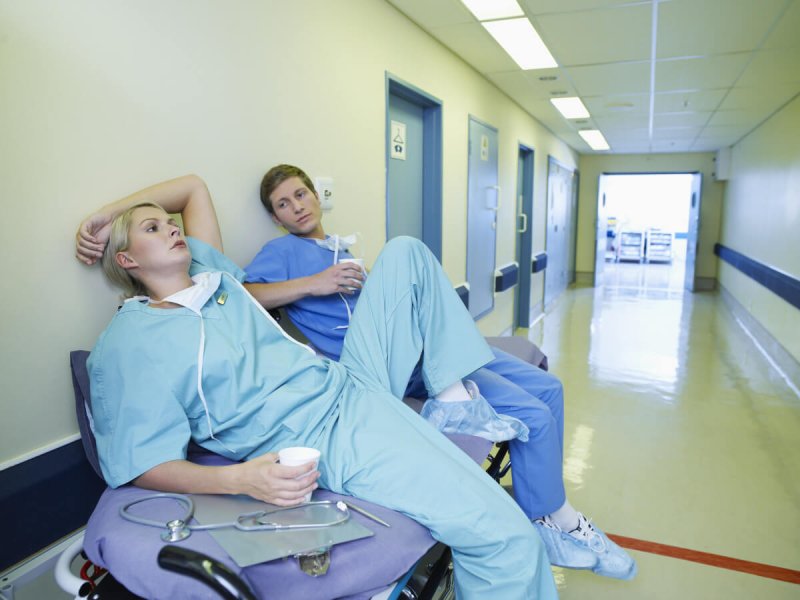
Women are more likely to be morning people and seem to tolerate nocturnal disturbances better than men, according to some research. But why?

There are few studies on the differences between women’s and men’s ‘orchestras’, but animal studies suggest that sex hormones may affect the ‘conductor’, namely the brain.

A study shows that the female sex hormone oestrogen is sensitive to light. When the researchers removed oestrogen in mice, they were less reactive to light.

This means that mice with oestrogen were more likely to be woken by the light, even when they should have been asleep.

“This can be a good thing if you have to travel through several time zones or if you have to perform at night,” Marti says. “But not when you have to go to bed and sleep the morning after your night shift.”

The two American researchers who wrote the Science review wondered if women cope with shift work better than men because they are programmed by nature to take care of children, who can wake quite a lot at night.

But this is currently only a hypothesis.

Read the original post

{{ reviewsTotal }}{{ options.labels.singularReviewCountLabel }}
{{ reviewsTotal }}{{ options.labels.pluralReviewCountLabel }}
{{ options.labels.newReviewButton }}
{{ userData.canReview.message }}

Related Articles

Infographic: Global regulatory and health research agencies on whether glyphosate causes cancer

Infographic: Global regulatory and health research agencies on whether glyphosate causes cancer

Does glyphosateโ€”the world's most heavily-used herbicideโ€”pose serious harm to humans? Is it carcinogenic? Those issues are of both legal and ...

Most Popular

ChatGPT Image May 10, 2026, 08_16_59 PM 2
Overmedicalization? RFK Jr.โ€™s antidepressant crackdown raises conflict questions over his fee stake in Wisner Baum, the tort firm built on suing drug makers
Picture1-5
Science Disinformation Gap: The transatlantic battle over social media and censorship
ChatGPT-Image-Apr-13-2026-02_20_22-PM
Viewpoint: Misinformation infodemic? Why assessing evidence is so challengingย 
Screenshot-2026-05-08-at-3.40.33-PM
Seeds of power: China turns to genetic engineering to become global superpower
Picture1-1
Cooling the planet with balloons: Could a geoengineering gamble slow global warming?
Picture1-14
When superbugs threaten vulnerable children: Can AI help solve antibiotic resistance?
Screenshot-2026-04-12-135256
Bixonimania: The fake disease scam that AI swallowed whole
Screenshot-2026-05-01-at-1.29.41-PM
Viewpoint: What happens when whole grains meet modern food manufacturing? Labels donโ€™t tell the whole story.
Screenshot 2026-05-08 at 3.01
Transforming farming and nutrition with AI and robotics? Larry Ellisonโ€™s half-billion-dollar Hawaii greenhouse dream goes bust
S
As vaccine rejectionism spreads, measles may be taking a more dangerous turn
ChatGPT-Image-Mar-27-2026-11_47_30-AM-2
FDAโ€™s expedited drug reviews are hailed in some quarters but other approval practices are problematic
Farmers can talk to plants
Farmers are a major source of misinformationโ€”about farming
glp menu logo outlined

Get news on human & agricultural genetics and biotechnology delivered to your inbox.