Agroecology has a role to play in transforming agriculture — so long as the movement doesn’t trump the science or farmers’ needs. That was the consensus of the three panelists who joined the “Agroecology: What is it, anyway?” webinar hosted on Alliance for Science Live.
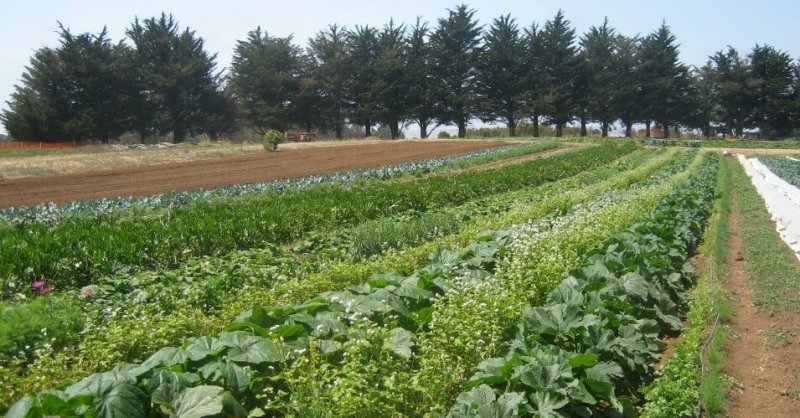
Agroecology is both a science and a movement, merging the broad goal of maintaining biodiversity in agricultural systems to benefit farmers with an ideology that aims to transform society and food systems. Its components were defined by the United Nations Food and Agriculture Organization (FAO) in its 10 elements of agroecology.
“The FAO is a powerful organization and we should be concerned which version of agroecology they are trying to promote,” Nassib Mugwanya, a PhD candidate at North Carolina State University and former extension agent in Uganda, said. “And we should be worried if it’s the one that restrict options for farmers.”
Agroecology has demonstrated its potential in Ethiopia, where its principles of diversification at the landscape level have helped farmers to control the stem borer pest, and in Zimbabwe, where it’s been useful in addressing the devastating fall armyworm (FAW), said Frédéric Baudron, a Zimbabwe-based systems agronomist for CIMMYT.
“It’s not a silver bullet,” he said, but it has a role to play in guiding farmers in pest suppression, crop-livestock integration and the use of trees to support soil enhancement and climate resilience.
Mugwanya said that people in the Global North often don’t realize that the farming practices currently employed by most smallholder African farmers aren’t substantially different than what is promoted by agroecology, in terms of intercropping, seed-saving, mulching and using minimal inputs.
“Where is the novelty in terms of what the movement is trying to promote?” he queried. “I see something that’s been done for centuries.”
However, these traditional methods can’t always address the many problems that farmers face, such as the viral diseases that have devastated cassava, a staple food for millions. “The old ways aren’t solving it, while genetic engineering is offering promising headway,” he said. “I see an opportunity where agroecology can blend with newer advances in science. We need to have a conversation of how we can do that without ruining agroecology.”
Pamela Ronald, a plant scientist at the University of California, Davis, said sustainable practices, such as those promoted by agroecology, can help reduce the use of harmful inputs and identify “alternatives to pesticides that can be quite toxic to farmers and their families.” Other notable goals are fostering soil fertility, managing cropping systems in terms of supporting genetic diversity, improving food security for farmers and supporting rural livelihoods.
As a geneticist, she approaches the issue from the perspective of “how can we develop seeds that contribute to the broader goals of agroecology?” As an example, Ronald pointed to Bt brinjal, a genetically modified eggplant that offers inherent resistance to certain insect pests. It has helped smallholder farmers in Bangladesh dramatically reduce their use of pesticides while improving yields.
Mugwanya noted that there is “almost mainstream scientific consensus” on the value of optimizing different components within a biological system to improve yields. While he agrees with the notion that “nature, if well-handled, will give you the best,” he also believes that technology can be compatible with the goals of an agroecology system.
Baudron, who has written about using mechanization to help farmers in sub-Saharan Africa succeed, said one limitation to the widespread adoption of agroecology is it tends to require more labor, which “is not plentiful in African farming systems. I think that’s often a misconception.”
And because it’s so site-specific, the scalability of agroecology — transferring what’s been learned in one area to other places — is also a challenge, the panelists agreed.
“It’s good for farmers who are really passionate about farming,” Baudron said, explaining that some farmers in the developing world are doing it not out of choice, but because they have no economic alternatives. Others don’t want to go through the adaptive learning required to implement agroecology successfully or face the risk of crop failure while transitioning to its practices.
“Farmers will always approach their farming in terms of practical solutions,” Mugwanya said. “As an extension worker, my role is to help farmers navigate the different options that will help them make an informed decision. This is where we have to have a conversation and go past ideologies and see the contextual challenges of what farmers are facing today, what are the options on the table and how can we harness them into holistic systems…not to exclude some solutions but embrace whatever farmers can adopt on their farms.”
The panelists agreed that the push to implement agroecology in the developing world seems to be driven more by the movement than farmers themselves.
“Farmers are very, very busy and they often don’t have time to get involved in ideological debates,” Ronald said. “Most farmers are very concerned with the challenge of growing crops and every specific ecosystem is going to be different.”
“Farmers in the Global South have a very hard life and not too much time to worry about the ideological debate,” Baudron said. “The ideology is much more at the level of donors and society than the farmers themselves, who are all about flexibility and pragmatism.”

The panelists agreed that this pragmatism prompts farmers to adopt a range of practices on their farms and there is no “one size fits all” approach to agriculture. “There is a need for complementary practices,” Baudron said, and “to be explicit about tradeoffs in modifying a system.”
Mugwanya said that as a scientist, it wasn’t hard from him to accept agroecology as “a hybrid of agriculture and ecology.” But he began to question some of the aspects that the movement was adding to that core definition. “It’s a very complex term and it can mean different things to different people,” he noted.
That isn’t just true for agroecology, but other methods of farming, too, especially industrial and conventional.
“We’ve gotten so deep into these terms,” Ronald said. “It’s very complicated to define agriculture that way. It’s very confusing. Maybe we need to get away from these terms and just think a little bit more about making agriculture more sustainable in all systems. They’re not reflective of the diversity of farms in the world.”
Baudron agreed that the terms have become “largely a semantic debate” that is “confusing consumers, farmers and even scientists.”
Instead of being too fixed on terms, the panelists agreed, the emphasis should be on minimizing the negative social and environmental consequences of agriculture and ensuring farmers have sufficient and nutritious food.
Well-fed Westerners
Mugwanya noted that agroecology advocates may not realize that in Africa, conventional agriculture means something different than it does in the United States or Europe and if they go to Africa to “preach against” conventional, “maybe you’re fighting what you want.”
“All movements start with causes and good intentions,” Mugwanya noted. “At its core it’s to promote taking care of social justice – I wouldn’t fight such a cause. The problem comes in when movements get so radical in terms of their ideology. What I’ve seen in Africa, the dominant version of agroecology to me as an ideological extension of the well-fed, privileged folks in in the West who run to places like Africa and use all these narratives like we don’t want Africa to go through the problems of the West, forgetting the contextual problems that Africa has. I’ve seen the problems you have here [in the US] and food is not one of them. Where I come from, I can tell you, I know what it means to go without a meal a day. We need to have a very honest and nuanced conversation about what kind of agroecology are you trying to promote? And are you really caring about the needs of the farmers, getting them out of poverty, helping them have more food, or are you caring for your ideology?”
“It’s important to have systems that are adaptive to local contexts,” said Baudron, who has worked with farmers in Africa for 19 years. “This is not a romantic life for them. This is a system that needs real transformation.”
But that transformation needs to take a pragmatic approach, Baudron said, noting that he has advised farmers to use improved seeds and inputs, “but I still feel like what I’m doing actually meets the definition of agroecology.”
The role of science
“Fred and others are getting data to know what will work for farmers,” Ronald observed. “If we discard scientific evidence we’re not going to have a sustainable transformative system. We need to support the scientific research and a compassionate, humanitarian approach to the farmers. Not just promote ideologies that are untethered to the needs of farmers in the field.”
Baudron said that funding “influences the science itself.” He noted that there is much less investment in agroecological science than other approaches to farming and “it’s a funding gap that needs to be recognized.”
Mugwanya said that he wrote a critique of the dominant version of agroecology, which “seems to me to be a proxy word for fighting industrial practices.” However, he feels it “diverges from the scientific definition of agroecology, which doesn’t say you can exclude anything” in its practice. “Those with the louder voices, the ideological side, tend to push a point of view that’s very conservative,” that restricts options and can create additional burdens on women.
Baudron said it’s good that people are paying attention to the food system and its contribution to various global crises. He understands the mistrust of industrial farming, concerns about the quality of food and animal welfare and the desire for more localized farming.
“Agroecology could be a solution,” he said. “But perhaps the strict application of agroecology won’t lead to the sort of transformation needed to feed the 1 billion” who are currently going hungry in the Global South.
Farmers and society need a combination of technologies to bring about the real transformation that everyone wants, the panelists agreed.
Joan Conrow has 35 years of experience as a journalist, editor, and communications consultant. She specializes in environmental issues, biotechnology, and agriculture. Follow her on Twitter @joanconrow