A COVID tale of two universities: This historically Black Alabama college got its opening right; their mostly White neighbor flubbed it

large blur d bc eaffbbeb fa ca
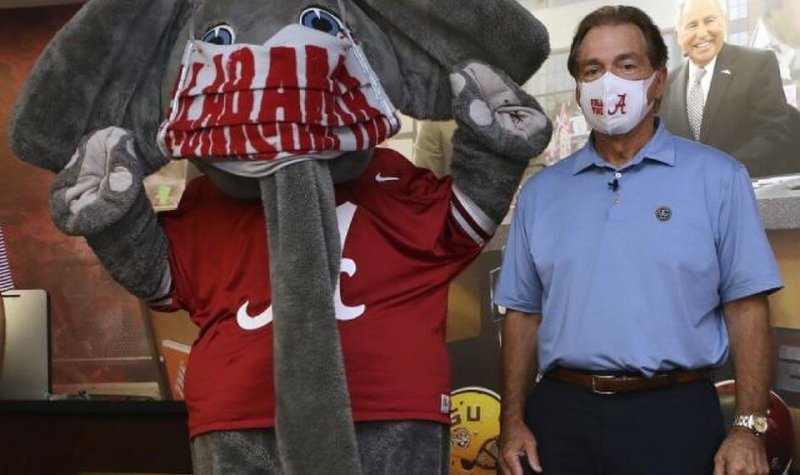
University of Alabama football head coach Nick Saban and the school's elephant mascot, Big Al, wear masks on the Tuscaloosa campus. Credit: Kent Gidley/University of Alabama/AP
[The University of Alabama Tuscaloosa and Birmingham campuses] were supposed to have the same clean slate when classes resumed amid the coronavirus pandemic.

Every student had to test negative before setting foot on campus. Everyone had to use a smartphone application to check for symptoms daily. And everyone heard the same pleas from university leaders: Keep the campuses safe.

More than a month later, 2,375 Tuscaloosa students had tested positive for the virus, 6.2 percent of the student body, according to data through Oct. 1. Birmingham had 109 cases, a tiny 0.48 percent of the students.

The staggering disparity at two of Alabama’s large universities illustrates how the coronavirus can barrel through some schools while barely affecting others, even in a state that is considered a hot spot. Experts say it is difficult to pinpoint why Tuscaloosa and other universities faced outbreaks and others did not, but they suspect that enrollment size, the campus culture and students’ ages probably played roles.

Follow the latest news and policy debates on sustainable agriculture, biomedicine, and other ‘disruptive’ innovations. Subscribe to our newsletter.

Ria Hearld, an associate professor in the UAB Department of Health Services Administration and chair of the Faculty Senate until Sept. 1, said she suspected one reason coronavirus infections at UAB remain low is because many students major in health care and have a front-row view of the hospitals treating covid-19 patients.

“These are our friends, our colleagues, at the front lines,” she said. “It really hits home.”

Read the original post

{{ reviewsTotal }}{{ options.labels.singularReviewCountLabel }}
{{ reviewsTotal }}{{ options.labels.pluralReviewCountLabel }}
{{ options.labels.newReviewButton }}
{{ userData.canReview.message }}

Related Articles

Infographic: Global regulatory and health research agencies on whether glyphosate causes cancer

Infographic: Global regulatory and health research agencies on whether glyphosate causes cancer

Does glyphosate—the world's most heavily-used herbicide—pose serious harm to humans? Is it carcinogenic? Those issues are of both legal and ...

Most Popular

Screenshot-2026-04-23-at-11.00.36-AM
Regulators' dilemma: Thalidomide, Metformin, and the cost of getting drug approvals wrong
Picture1-5
Science Disinformation Gap: The transatlantic battle over social media and censorship
ChatGPT-Image-May-13-2026-11_56_08-AM
After slashing global health aid by $19 Billion, Trump moves to tap $2.1 billion more—to cover shutdown costs
ChatGPT-Image-May-12-2026-08_39_41-PM
GLP podcast: Big Pharma, Big Ag, Big Food—health harming industries or life-saving innovators?
Screenshot-2026-02-20-at-10.48.04-AM
Deepfakes raise profound ethical questions in science
Picture1-1
Cooling the planet with balloons: Could a geoengineering gamble slow global warming?
Screenshot-2026-05-01-at-1.29.41-PM
Viewpoint: What happens when whole grains meet modern food manufacturing? Labels don’t tell the whole story.
ChatGPT Image May 10, 2026, 08_16_59 PM 2
Overmedicalization? RFK Jr.’s antidepressant crackdown raises conflict questions over his fee stake in Wisner Baum, the tort firm built on suing drug makers
ChatGPT-Image-Apr-13-2026-02_20_22-PM
Viewpoint: Misinformation infodemic? Why assessing evidence is so challenging 
Screenshot-2026-05-12-at-9.58.31-PM
'He seems fine': Marty Makary out as FDA commissioner
S
As vaccine rejectionism spreads, measles may be taking a more dangerous turn
ChatGPT Image May 12, 2026, 10_19_00 AM 2
Viewpoint— 'Muscular governance': How authoritarianism is surging corporate-linked energy misinformation
glp menu logo outlined

Get news on human & agricultural genetics and biotechnology delivered to your inbox.