How should we prioritize a COVID vaccine for communities that have been hit hardest?

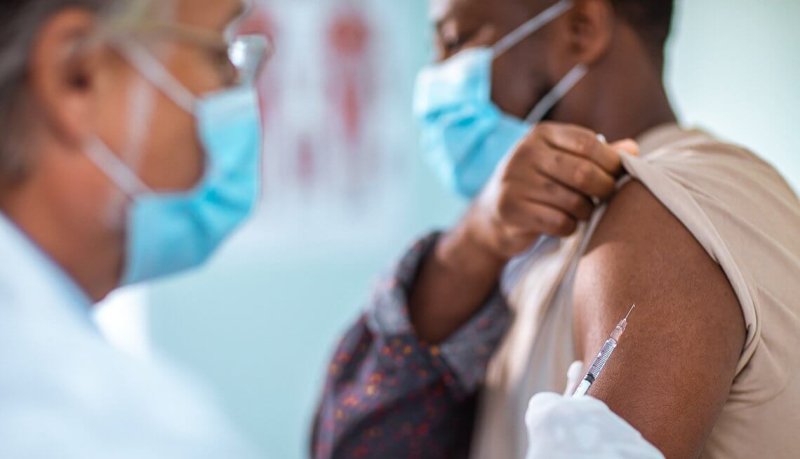
man getting vaccine web
Credit: Getty Images

Frontline health workers, elderly people, and those with chronic conditions that make them especially vulnerable to Covid-19 are likely to be at the head of the line, but there is also support among public health experts for making special efforts to deliver the vaccine early on to Black, Latino, Native Hawaiian and Pacific Islander, and Native American people — who have experienced higher rates of serious illness and death from the coronavirus.

The [Advisory Committee on Immunization Practices] will be guided in part by a framework released [October 2] by the National Academies of Sciences, Engineering, and Medicine, which advocates taking an equitable approach to vaccine allocation.

Follow the latest news and policy debates on sustainable agriculture, biomedicine, and other ‘disruptive’ innovations. Subscribe to our newsletter.

Across all phases, the National Academies says geographic priority should be given to communities that are high on what the CDC calls the Social Vulnerability Index, which identifies communities most endangered and in need of aid during disasters like hurricanes. The index takes into account poverty, unemployment, and health insurance rates, among other socioeconomic, demographic, housing, and transportation vulnerabilities.

“We wanted to make sure that there was real consideration given to getting it to people who are at the highest risk, particularly communities of color, who oftentimes are higher on that social vulnerability scale,” said [Chicago Community Trust CEO Helene] Gayle.


Read the original post

{{ reviewsTotal }}{{ options.labels.singularReviewCountLabel }}
{{ reviewsTotal }}{{ options.labels.pluralReviewCountLabel }}
{{ options.labels.newReviewButton }}
{{ userData.canReview.message }}

Related Articles

Infographic: Global regulatory and health research agencies on whether glyphosate causes cancer

Infographic: Global regulatory and health research agencies on whether glyphosate causes cancer

Does glyphosate—the world's most heavily-used herbicide—pose serious harm to humans? Is it carcinogenic? Those issues are of both legal and ...

Most Popular

ChatGPT Image May 10, 2026, 08_16_59 PM 2
Overmedicalization? RFK Jr.’s antidepressant crackdown raises conflict questions over his fee stake in Wisner Baum, the tort firm built on suing drug makers
Picture1-5
Science Disinformation Gap: The transatlantic battle over social media and censorship
Picture1-14
When superbugs threaten vulnerable children: Can AI help solve antibiotic resistance?
Screenshot-2026-05-08-at-3.40.33-PM
Seeds of power: China turns to genetic engineering to become global superpower
ChatGPT-Image-Apr-13-2026-02_20_22-PM
Viewpoint: Misinformation infodemic? Why assessing evidence is so challenging 
S
As vaccine rejectionism spreads, measles may be taking a more dangerous turn
Screenshot 2026-05-08 at 3.01
Transforming farming and nutrition with AI and robotics? Larry Ellison’s half-billion-dollar Hawaii greenhouse dream goes bust
Farmers can talk to plants
Farmers are a major source of misinformation—about farming
Screenshot-2026-04-20-at-2.26.27-PM
Viewpoint — Food-fear world: The latest activist scientists campaign: Cancer-causing additives
Screenshot-2026-05-01-at-1.29.41-PM
Viewpoint: What happens when whole grains meet modern food manufacturing? Labels don’t tell the whole story.
ChatGPT-Image-May-8-2026-01_41_33-PM-3
Viewpoint: Surge of climate misinformation traced to right wing and anti-wind activists 
Screenshot-2026-03-13-at-12.14.04-PM
The FDA wants to make many popular prescription drugs OTC—a great idea. Here’s why it’s unlikely to happen
glp menu logo outlined

Get news on human & agricultural genetics and biotechnology delivered to your inbox.