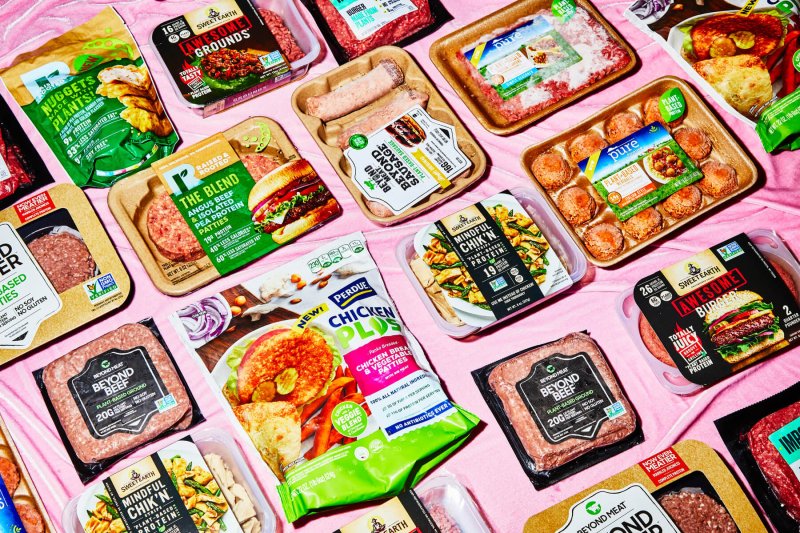
Plant-based meat: Wholesome food, science experiment—or both?

Credit: Amy Lombard/New York Times

Makers of plant-based meat deal with a constant balancing act between promoting their products as simple, wholesome food and also extolling the amount of science and technology that goes into them. Impossible Foods recently hired a new chief science officer who will spend a lot of time advancing that science while also working to convince more scientists that food is the most interesting and important problem they can work on.

“Firstly, I’m a discovery scientist and curiosity-driven researcher,” says John D. York, who is joining Impossible from his current post as biochemistry chair at Vanderbilt University, with previous experience as an Investigator at the Howard Hughes Medical Institute. “The other aspect of my life, since childhood, is that I’ve been a foodie and love the science of food.”

But he knows that neither modernist cuisine simpatico nor a shared love for the perfect Ligurian focaccia is going to attract the 50 or so scientists that Impossible wants to hire to work on projects that will show the plant-based movement isn’t just a bunch of burgers and sausages.

Follow the latest news and policy debates on sustainable agriculture, biomedicine, and other ‘disruptive’ innovations. Subscribe to our newsletter.

“It’s simple,” says Impossible Foods CEO Pat Brown. “We are working on the most urgent and important science and engineering project: climate change and a catastrophic collapse of biodiversity. The use of animals in food tech is by far the most destructive technology in human history.”


Read the original post

{{ reviewsTotal }}{{ options.labels.singularReviewCountLabel }}
{{ reviewsTotal }}{{ options.labels.pluralReviewCountLabel }}
{{ options.labels.newReviewButton }}
{{ userData.canReview.message }}

Related Articles

Infographic: Global regulatory and health research agencies on whether glyphosate causes cancer

Infographic: Global regulatory and health research agencies on whether glyphosate causes cancer

Does glyphosate—the world's most heavily-used herbicide—pose serious harm to humans? Is it carcinogenic? Those issues are of both legal and ...

Most Popular

wuhan institute of virology main entrance
​​COVID lab leak? Making a case that the Wuhan market origins theory is wrong
Screenshot-2026-06-17-at-9.44.03-AM
Viewpoint: Embryos are becoming the newest battleground of love, loss, and legal uncertainty
Screenshot-2026-06-18-at-11.41.51-AM
Viewpoint—Protecting baloney science: Far right senators move to protect the phony homeopathy industry
ChatGPT-Image-Mar-10-2026-01_39_01-PM
Viewpoint—“Miracle molecule” debunked: Why acemannan supplements don’t work
Screenshot-2026-06-17-at-11.57.12-AM
Viewpoint: Raw milk and the myth of safety—ProPublica exposes the growing anti-homogenization movement
ChatGPT-Image-Jun-9-2026-01_11_37-PM
Turmeric supplements: More risks than benefits
Screenshot-2026-06-18-at-2.52.05-PM
Activist organization accuses Trump of protecting methane-generating stripper wells to benefit billionaire and donor Jeffrey Hildebrand 
Screenshot-2026-06-16-at-10.02.22-PM
Viewpoint: ‘Industrial food’ primer—Challenging the dangerous delusions of the alternative food movement
ChatGPT-Image-Jun-16-2026-10_01_45-AM-2
Viewpoint—Recursive self-improvement: AI leader Anthropic calls for AI slowdown
ChatGPT-Image-Jun-18-2026-02_32_04-PM
Can illegal social media content be stopped before it goes viral? UK is going to try.
ChatGPT-Image-Jun-4-2026-03_07_27-PM
AAP v. Kennedy: While a court challenge grinds on, RFK Jr. quietly advances his anti-vaccine conspiracy agenda
glp menu logo outlined

Get news on human & agricultural genetics and biotechnology delivered to your inbox.