How RNA-based vaccines will revolutionize medicine and disease treatments

Credit: Financial Times

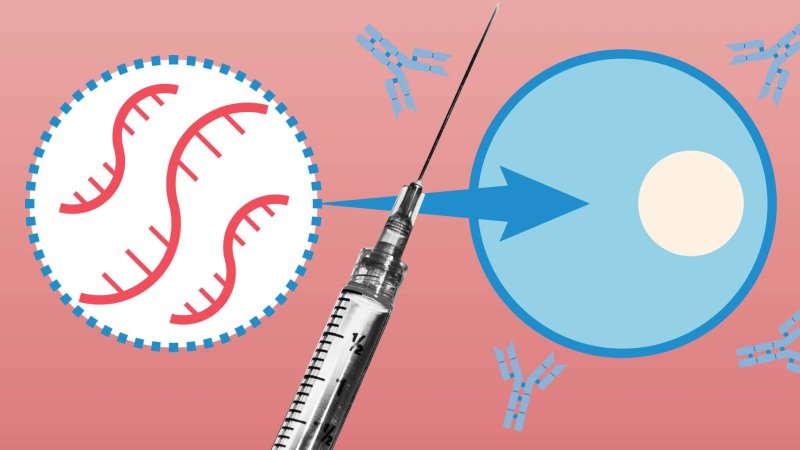
The two vaccine candidates produced by Pfizer/BioNTech and Moderna are unlike any other vaccine that’s come before. Should they achieve commercial success, it could usher in a new era of medical science — not just for vaccines, but for cancer treatments, blood disorders, and gene therapy.

The two new vaccines are the first ever to use mRNA, which stands for “messenger RNA,” to generate immunity.

An up-and-coming strategy for fighting cancer is a so-called “cancer vaccine,” which uses immune cells called dendritic cells (DCs). DCs perform surveillance for the immune system. When they detect something that shouldn’t be there, whether it’s a virus, a bacteria, or even a cancer cell, the DCs chew it up, break it into its component molecules, and then show those foreign molecules to the immune cells that make antibodies.

Follow the latest news and policy debates on sustainable agriculture, biomedicine, and other ‘disruptive’ innovations. Subscribe to our newsletter.

Using mRNA to deliver the tumor antigen information to the DCs could provide a way to make this process easier, cheaper, and safer. BioNTech is currently conducting clinical trials on cancer vaccines for triple-negative breast cancer, metastatic melanoma, and HPV-positive head and neck cancers. Called FixVac, the vaccines include multiple tumor antigens that are frequently found across different patients.


Read the original post

{{ reviewsTotal }}{{ options.labels.singularReviewCountLabel }}
{{ reviewsTotal }}{{ options.labels.pluralReviewCountLabel }}
{{ options.labels.newReviewButton }}
{{ userData.canReview.message }}

Related Articles

Infographic: Global regulatory and health research agencies on whether glyphosate causes cancer

Infographic: Global regulatory and health research agencies on whether glyphosate causes cancer

Does glyphosate—the world's most heavily-used herbicide—pose serious harm to humans? Is it carcinogenic? Those issues are of both legal and ...

Most Popular

ChatGPT-Image-Mar-10-2026-01_39_01-PM
Viewpoint—“Miracle molecule” debunked: Why acemannan supplements don’t work
afb-a-b
As the EU loosens restrictions on agricultural gene editing, it remains years behind the rest of the world on equally-safe GMO foods
ChatGPT-Image-Jul-8-2026-12_32_48-PM
Viewpoint: SCOTUS strikes a blow against junk science in Bayer glyphosate case. Will it deter mass tort litigators?
Screenshot-2026-07-10-at-2.02.54-PM
Viewpoint: In abortion-restricting Florida, misinformation abounds when Republican congresswoman faces an ectopic pregnancy
ChatGPT-Image-Jul-7-2026-01_57_55-PM
Viewpoint: Europe’s rejection of air conditioning is the poster child for misunderstanding how to mitigate the impact of climate change
ChatGPT-Image-Jun-25-2026-12_23_17-PM
No, Bill Gates did not secretly engineer ticks to promote veganism
Screenshot-2026-07-10-at-3.10.50-PM
Snake-oil cures throughout history
Screenshot-2026-07-10-at-3.25.10-PM
Using AI for health questions? Here are 4 tips for the most accurate answers.
Screen-Shot-at-PM-pe-vra-kipgaprbdo-vd-ms-jpule-n-jqqaxf-l-e
Viewpoint: Will new breeding techniques help make European agriculture more competitive?
Screenshot-2026-07-10-at-12.55.21-PM
Cancer health facts are particularly susceptible to online misinformation
ChatGPT-Image-Jul-1-2026-03_33_49-PM
‘Alternative’ cancer treatments that could kill you
d a ca e c c beb x
Facts & Fallacies podcast: The 'woke' crusade against anthropology? Dr. Elizabeth Weiss
Screenshot-2026-07-08-at-11.25.14-AM
AI being mobilized to target misinformation about vaccines–on AI
glp menu logo outlined

Get news on human & agricultural genetics and biotechnology delivered to your inbox.